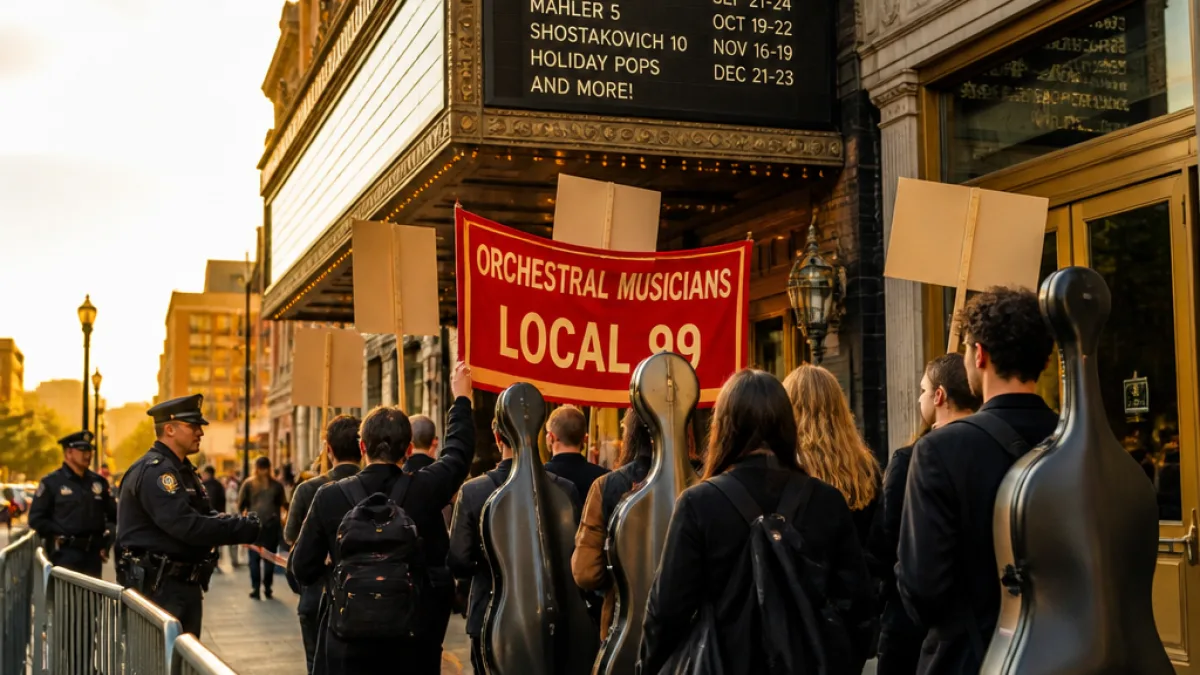
Musicians with the Boston Symphony Orchestra have authorized what union leaders described as the first strike in the ensemble’s 145-year history, a dramatic escalation in labor tensions that could affect Symphony Hall performances as the new season approaches.
Contract talks reach a critical point
The Boston Musicians’ Association announced the authorization ahead of the musicians’ three-year contract expiring at 11:59 p.m. Sunday. The move follows months of strained relations between players and management, including discord after the organization’s decision in March to remove music director Andris Nelsons at the end of next season after 13 years.
In its statement, the union said management had not accepted the musicians’ request for a mediator and criticized leadership decisions that it said have undermined trust. The union framed the authorization as part of the negotiating process designed to press for a fair collective bargaining agreement.
"In spite of the turmoil of the last six months caused by BSO’s leadership decision to terminate the orchestra’s musical director, Andris Nelsons, they have failed to agree to a collective bargaining agreement that would begin to restore the trust that they have destroyed and offer a fair contract to the musicians who are at the heart and soul of the BSO."
Management response and stakes for the season
Boston Symphony leadership expressed respect for the musicians’ decision while emphasizing its own commitment to ongoing negotiations. CEO Chad Smith said the organization remains focused on talks and seeks an agreement with competitive pay and benefits that will strengthen collaboration between management and players.
The BSO’s regular season is scheduled to begin Sept. 17, leaving limited time for an agreement that would avoid concert disruptions. The authorization does not automatically trigger a work stoppage; it allows the union’s bargaining committee to call a strike if it concludes that the talks are at an impasse.
- Contract status: Three-year agreement expires at 11:59 p.m. Sunday.
- Season opener: Scheduled for Sept. 17 at Symphony Hall.
- Primary issues: Mediation request, pay and benefits, trust after leadership change.
What this means for Boston’s cultural calendar
Symphony Hall is a major draw for Boston’s cultural and tourism economy. Any canceled or postponed performances would affect not only ticket holders but also venue staff, nearby restaurants and hotels that rely on pre- and post-concert traffic. Local audiences who plan to attend early-season programs now face uncertainty as negotiators work to avoid a work stoppage.
Beyond immediate scheduling concerns, the dispute underscores tensions between artistic staff and institutional leadership that can ripple through philanthropic and community relationships. The high-profile nature of the BSO and the prominence of its music director position have put added public scrutiny on negotiations.
| Fact | Detail |
|---|---|
| Orchestra age | 145 years |
| Contract expiration | 11:59 p.m., Sunday |
| Season opening | Sept. 17 |
Both sides signaled an interest in continuing dialogue. The union’s authorization is a lever in bargaining but also a sign of significant frustration among the musicians, who described themselves as being central to the orchestra’s work. Management, while acknowledging the step, said it remains committed to negotiation and hopes to reach terms that are competitive and collaborative.
For now, Boston audiences and the local arts ecosystem will be watching negotiations closely. With limited time before opening night, the coming days could determine whether the BSO’s tradition of uninterrupted performance at Symphony Hall is preserved or broken for the first time in its long history.