
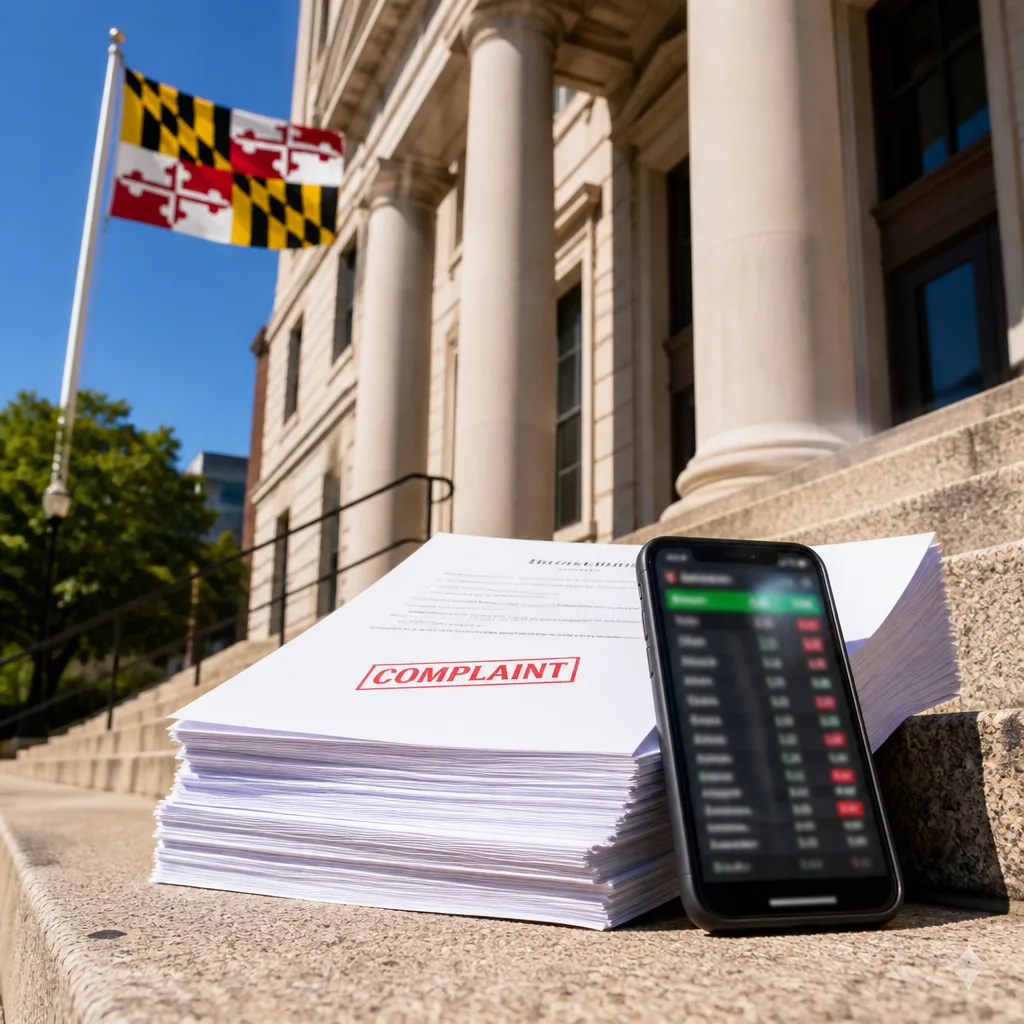
Baltimore filed lawsuits Thursday against prediction-market operators Kalshi and Polymarket, alleging the companies run unlawful sports-wagering platforms in the city and mislead consumers about the regulatory status of their services. The complaints, announced by Mayor Brandon Scott's office, claim the firms offered a range of sports bets to city residents without the licenses required under Maryland law.
City alleges wagering disguised as event contracts
According to the mayor's office, the lawsuits contend the companies marketed offerings that allow Baltimore residents to wager on game winners, point spreads, point totals, player statistics and other propositions commonly provided by licensed sportsbooks. The complaints say Kalshi and Polymarket attempted to veil these wagers as "event contracts" or prediction-market trades while functioning as sports bets.
The suits further assert the firms competed with regulated sportsbooks while avoiding oversight, taxation, responsible-gambling requirements and consumer protections imposed on licensed operators.
What Baltimore says was offered
- Game outcomes — wagers on winners
- Point spreads and totals — traditional sportsbook-style propositions
- Player statistics — performance-based bets
| Alleged Product | How City Characterizes It |
|---|---|
| Event contracts / prediction-market trades | Functionally equivalent to sports bets, per complaint |
| Wagers on winners, spreads, totals, stats | Offered to Baltimore residents without required licensing |
Responses and legal context
A Kalshi representative provided a statement to WBAL-TV 11 News disputing the city's characterization of the services and framing the suits as politically motivated. In part, that statement said:
"This is nothing more than an effort to relitigate the same case that's currently under appeal before the Fourth Circuit. It's clearly political theater by Mayor Scott. Kalshi is not violating any consumer protection laws; it's operating lawfully under th"
The statement as released was incomplete in the source material. The Baltimore complaints, as described by the mayor's office, rest on the assertion that the firms are operating without the licenses required by Maryland law and are presenting their products in a way that creates a "false or misleading impression" about legality and regulation.
The lawsuits invoke Baltimore's Consumer Protection Ordinance, seeking to hold the companies accountable for the alleged violations. The mayor's office emphasized the regulatory and consumer-protection gap it says results when firms offer wagering-style products outside the licensed framework used by sportsbooks.
Potential national implications
The litigation raises broader questions about how prediction markets intersect with state sports-betting regimes, and whether the business models of event-contract platforms subject them to the same licensing, taxation and responsible-gambling obligations as traditional sportsbooks. Baltimore's action comes amid an expanding and evolving U.S. market for sports wagering and alternative-market products.
At issue for regulators and operators alike are the distinctions used to classify products, the consumer disclosures required, and the mechanisms states use to enforce licensing and consumer-protection standards. The lawsuits aim to test those boundaries in Maryland's largest city.
Neither the mayor's office nor the companies provided additional legal filings or a full timeline of expected court action in the source report. The Kalshi statement indicated the dispute relates to ongoing litigation before the U.S. Court of Appeals for the Fourth Circuit, though the news report did not supply further details about that appeal.
The suits mark a notable development in the intersection of sports, technology and regulation as municipalities and states continue to grapple with new forms of wagering and how they should be governed.

















