
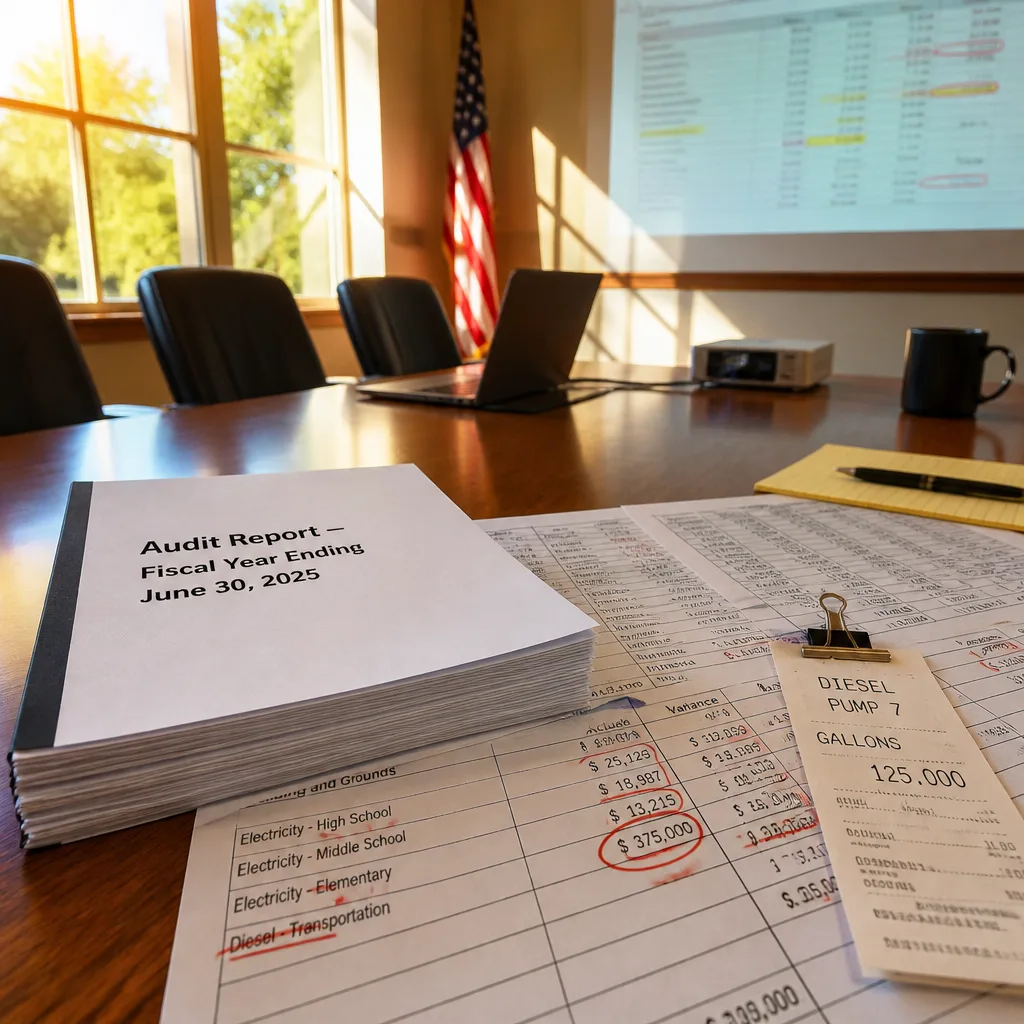
An external audit released this month says Fayette County Public Schools routinely miscalculated both the revenue it expected to collect and the actual costs it incurred, resulting in multimillion-dollar variances that went largely untracked by district leaders.
Audit details budgeting and approval lapses
The audit, conducted by Texas-based accounting firm Weaver and Tidwell, was summarized for the Fayette County Board of Education during a meeting on Aug. 3, and the district published the full report on Aug. 10. The review covered the school district’s budgeting practices, travel and procurement card controls for the fiscal year that ended June 30, 2025.
Weaver’s findings paint a picture of uneven financial management: the district at times overestimated how much tax revenue it would realize and in other instances dramatically underestimated spending needs. Several budget transfers lacked proper documentation and formal approval, the auditors reported, meaning the school board was not informed of a number of reallocations made during the year.
- Undocumented transfers: Some reallocations — including a $375,000 charge tied to higher diesel costs — were not properly documented or approved.
- Approval conflicts: In at least one instance, the same individual both initiated and approved budget transfers; the audit did not identify that person by name.
- Revenue and spending tracking: The district did not consistently follow standard practices for comparing budgeted amounts to actuals or for basing revenue estimates on prior-year tax receipts.
Electricity spending highlights budgeting gaps
Weaver highlighted significant swings in the district’s electricity budgeting as an example of the wider problem. For the 2023–24 fiscal year, the district recorded electricity expenditures of $10.4 million against a budgeted amount of $8.5 million. For 2024–25, the district set a budget of just $5 million for electricity — a decrease of about $3.5 million from the prior year’s budget — yet actual spending rose to $10.6 million, exceeding the 2024–25 budget by $5.6 million.
| Fiscal Year | Budgeted Electricity | Actual Electricity Spending | Variance |
|---|---|---|---|
| 2023–24 | $8.5 million | $10.4 million | $1.9 million over |
| 2024–25 | $5.0 million | $10.6 million | $5.6 million over |
The auditors said it was unclear why the district reduced its electricity budget so sharply between those years despite rising actual costs.
Implications for governance and oversight
Weaver’s report indicates shortcomings in internal controls and financial oversight that limited the school board’s ability to monitor fiscal activity. When transfers are not properly documented or when those executing transfers also approve them, standard separation-of-duties controls break down and elected trustees can be left without full visibility into district finances.
Not all of the budget errors the auditors identified led to shortfalls; in some cases the district underestimated expected tax or fee revenue, producing unexpected surpluses. In other instances, however, spending far outpaced the amounts set in budgets, creating material variances that the audit flagged as problematic.
The report does not assign criminality or specify personnel by name, but it does underscore the need for clearer procedures for budgeting, transfer approvals and reconciliation between budgeted figures and actuals. Strengthening those processes typically falls to district finance offices and school boards, which must ensure that policies are followed and that adequate checks are in place.
As districts nationwide face tight budgets, rising operating costs and increased scrutiny from taxpayers and state oversight agencies, the kinds of gaps identified by Weaver could prompt tighter internal controls or additional external reviews. Fayette County Public Schools has released the full audit, allowing the school board and the public to review the findings in detail.
Further actions the district may take — including any formal response, corrective measures, or policy changes — were not detailed in the summary released with the audit. The full report remains the primary source for the auditors’ complete findings and recommendations.














