
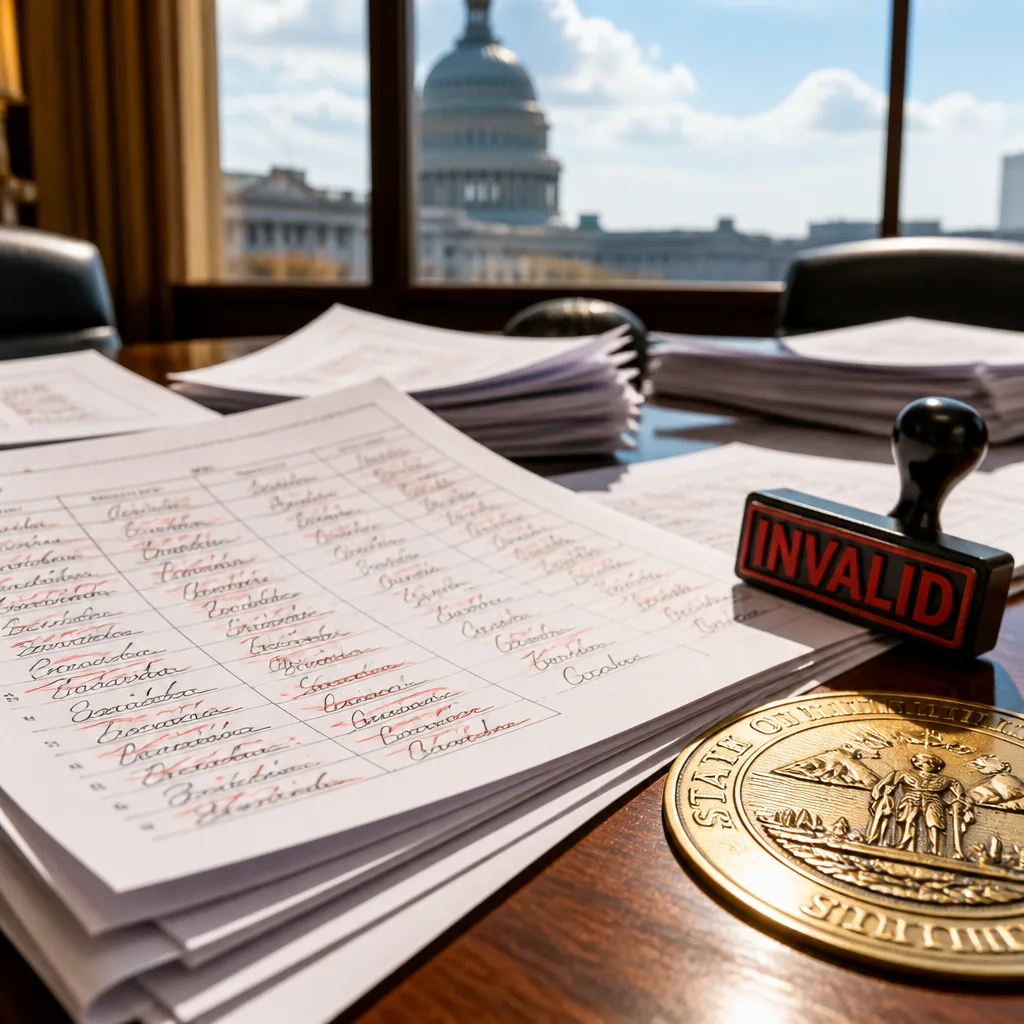
The Arizona Supreme Court on Tuesday upheld a lower court decision that removed a campaign to restrict the state's private school voucher program from the November ballot, dealing a major setback to public school advocates who had gathered more than 420,000 signatures in support.
What the ruling means
The court agreed with a trial judge that a significant number of the petition signatures submitted by the Protect Education campaign were invalid, largely because of double-counting. That finding reduced the verified total below the minimum threshold of roughly 256,000 valid signatures required to qualify a measure for the ballot.
The move prevents what had been proposed as the Protect Education Act — known as Proposition 212 — from going before Arizona voters this fall. The initiative sought to impose an income cap of $150,000 for eligibility to participate in the state's Empowerment Scholarship Accounts (ESA) voucher program and would have added measures such as standardized testing and fingerprint clearance for staff at voucher-funded schools.
Responses from advocates and officials
Supporters of the campaign, which included public school advocates and union members, had argued the number of invalidated signatures was miscalculated. In a statement, one leading group criticized the tactics used by opponents during the signature verification process.
“The lengths that the voucher lobby went to invalidate signatures with scorched-earth legal objections shows just how terrified they are of Arizona voters actually having a say in how our tax dollars are spent.”
The quoted comment came from Beth Lewis, president of Save Our Schools Arizona, a nonpartisan group that was among the measure’s primary backers.
Terry Leyba Ruiz, the Democratic nominee for Arizona superintendent of public instruction, said the decision was a disappointment but expressed confidence in voter support for public schools. Arizona House Democrats also criticized the ruling, accusing Republicans of defending the voucher program and lamenting the court’s majority decision.
Context: Arizona's voucher landscape
Arizona’s ESA program provides scholarships that can be used for private school tuition and other educational services. The program serves a substantial number of students across the state; more than 101,000 students currently participate in the ESA voucher program, according to campaign materials and public reports.
| Item | Figure |
|---|---|
| Signatures collected by Protect Education | ~420,000 |
| Minimum required for ballot | ~256,000 |
| Students in ESA voucher program | 101,000+ |
The Protect Education campaign had positioned the measure as a way to tighten oversight and target public funding to lower- and middle-income families by excluding households above the proposed income cap. Proponents also sought to introduce accountability measures tied to student testing and background checks for staff in schools receiving public funds.
Legal process and implications
Campaigns placing measures on the ballot must submit petitions with verified signatures; opposing parties can challenge the validity of those signatures in court. In this instance, legal challenges alleging problems with signature counts and other technicalities led a judge to disqualify a substantial portion of the submissions. The Supreme Court’s decision to uphold the lower-court ruling effectively halts the initiative’s progress for this election cycle.
The ruling underscores how signature verification disputes can determine whether high-profile measures reach voters. It also leaves intact the existing ESA program, which continues to be a major issue in Arizona politics heading into the November election, including education races and debates over school funding and oversight.
Supporters of the voucher program have long defended ESAs as expanding parental choice; opponents argue the program diverts resources from public schools and lacks adequate oversight. With the initiative off the ballot, those policy debates are likely to continue in the legislature, in courts and on the campaign trail.
- Key immediate outcome: Proposition 212 will not appear on the November ballot.
- Next steps: Backers may consider alternative legal or legislative avenues, though no new filings have been reported.
- Political impact: The ruling will sharpen focus on education policy in fall campaigns, particularly for state-level offices overseeing schools.
As Arizona moves toward the November election, proponents of both public schools and school choice programs are likely to intensify efforts to influence voters and lawmakers on the future of ESAs and the broader direction of K-12 funding and accountability.














