
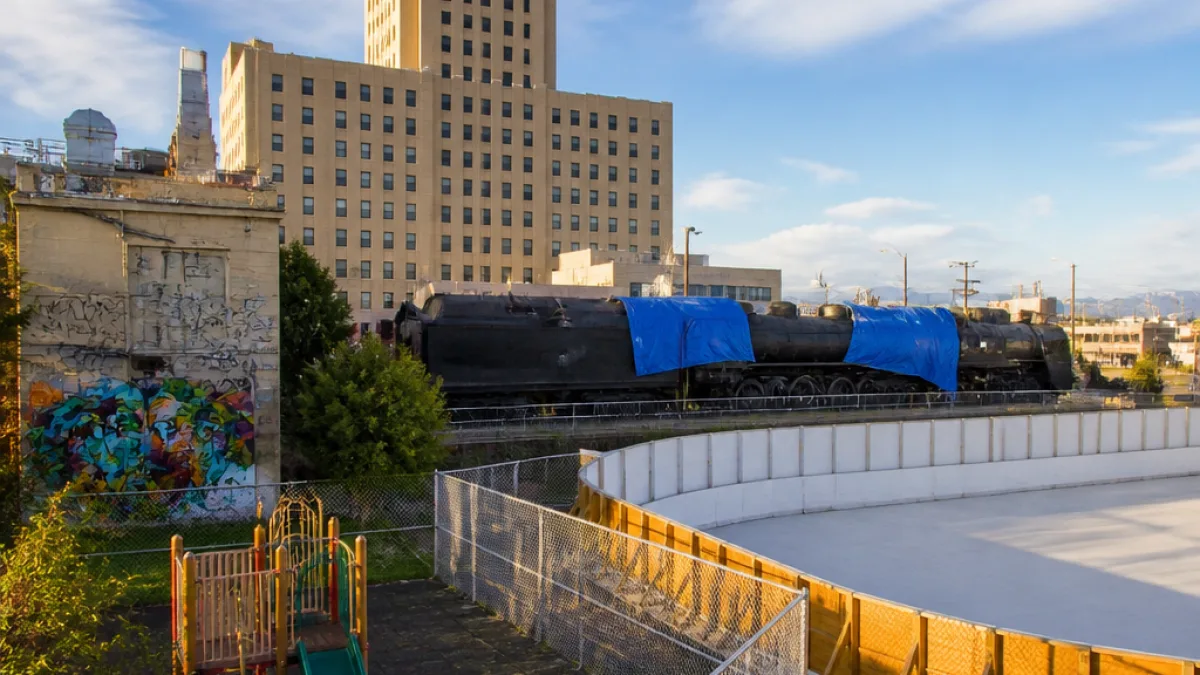
Frontierland Park, the small public space at 10th Avenue and E Street in the shadow of Anchorage City Hall, has become a visible example of the tensions surrounding homelessness, public safety and municipal upkeep in the city’s downtown core.
Visitors and residents this weekend found the playground surrounded by chain-link fencing, an adjacent municipal building boarded up and covered in graffiti, and tarps visible in the cab of the historic Alaska Railroad steam locomotive No. 556, where people have established temporary shelter. The site, which for years offered a playground, an outdoor rink and a historic locomotive as gathering points for families and downtown workers, now presents conditions many say feel unwelcoming and unsafe.
“This is what residents and visitors encountered this weekend at Frontierland Park.”
What’s happening at the park
Photographs and on-site observations show multiple layers of deterioration and makeshift habitation concentrated at the site. While the municipality still lists the outdoor skating rink among its maintained facilities, the playground equipment is inaccessible and the nearby building shows signs of vandalism and abandonment.
- Playground: Surrounded by chain-link fencing and not usable by children.
- Municipal building: Boarded up and covered with graffiti.
- Steam locomotive No. 556: Tarps visible in the cab; people have set up camp.
- Outdoor rink: Listed as maintained by the municipality; local hockey groups plan cleanup in winter.
Residents, downtown workers and visitors say the contrast between the visible conditions at the park and the administration’s public messaging is stark. The mayor’s office and city officials have cited statistics showing declines in homelessness and crime, and the Anchorage Police Department posts public dashboards tracking calls for service and crime trends. Yet downtown-level experiences, such as those at Frontierland Park, are not fully captured by citywide averages, community members say.
Local consequences and municipal response
The condition of Frontierland Park raises several immediate consequences for Anchorage’s downtown: fewer family visits to a once-child-friendly site, potential declines in perceived public safety, and questions about timely municipal maintenance of public assets. The outdoor rink remains listed as a maintained facility, and members of the local hockey community have indicated they will undertake cleanup work when winter returns.
Advocates and neighbors say the park’s present state undercuts downtown vitality and limits accessible recreational space for families close to City Hall. The situation also highlights the practical challenges city staff face in balancing cleanup, property maintenance and outreach to people living in public spaces.
| Feature | Current status |
|---|---|
| Playground | Fenced off, inaccessible |
| Municipal building | Boarded up, graffiti present |
| Locomotive No. 556 | Tarps in cab; encampment activity reported |
| Outdoor rink | Listed as maintained; community cleanup planned in winter |
City officials have pointed to improving metrics for homelessness and crime in recent months, and the Anchorage Police Department’s public dashboards show trends intended to demonstrate progress. Still, the experience at Frontierland Park demonstrates how neighborhood-level problems can persist despite improvements at the citywide scale.
For parents who once took children to the playground, the visual of tarps, boarded windows and graffiti is a reminder that statistics alone do not determine whether public spaces feel safe and welcoming. Downtown merchants and workers said the boarded and vandalized park contributes to a perception of surrendering a public asset, while youth and recreation groups noted the loss of a convenient gathering spot near the heart of municipal government.
The coming months will test whether municipal cleanup efforts, community volunteer action and outreach to people occupying public spaces can restore Frontierland Park to a condition where families again feel comfortable visiting. Until then, the site remains a focal point for debate about downtown cleanliness, safety and the limits of citywide statistics to reflect lived experience on Anchorage streets.

















