
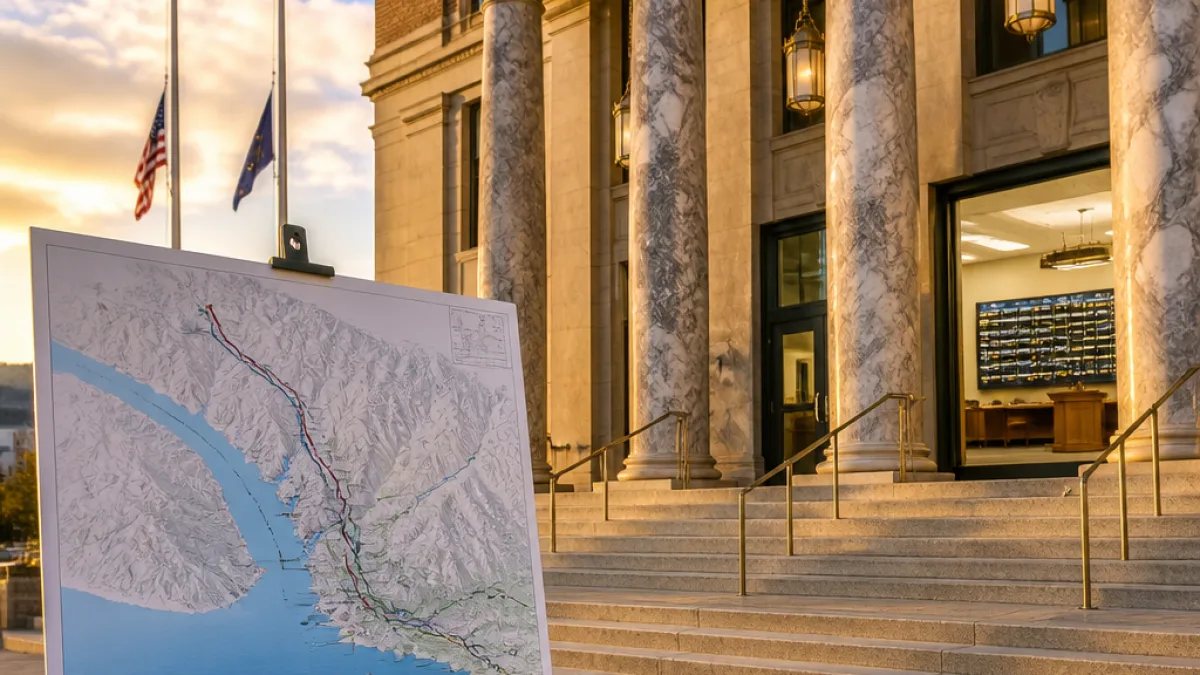
Gov. Mike Dunleavy on Thursday said he was "deeply disappointed" after the Alaska Legislature did not reconvene to vote on a tax modification tied to the proposed Alaska LNG project, a delay that he warned could imperil prospects for a multibillion-dollar export pipeline and terminal.
Governor warns delay will deter investors
In a post on X, Dunleavy said the legislature's decision not to return this session to approve the tax change needed to advance the project would send a "negative signal" to investors and potential partners. He urged lawmakers to reconvene on Aug. 20 to take up the measure.
"Alaska is running out of affordable, reliable natural gas," Dunleavy wrote, adding that "delaying action only increases risk, raises costs, and limits future options."
The Alaska LNG plan envisions a roughly $50 billion pipeline and export terminal to move natural gas from the North Slope to Asian markets, while also increasing domestic access to gas. Backers have pushed for legislative action to adjust state tax terms so the project can secure the investment commitments and financing necessary to proceed.
Where the project stands
Glenfarne, the lead developer, has said it needs binding purchase commitments for 80% of the planned export capacity — part of a schedule to reach a final investment decision and to start shipping by 2031. The overall export capacity is intended to be 20 million metric tons a year.
Developers reported having commitments covering 13 million tons a year, leaving roughly 3 million tons offtake still required before lenders and partners would be expected to sign on.
| Item | Figure |
|---|---|
| Estimated project cost | $50 billion |
| Planned export capacity | 20 million metric tons/year |
| Commitments announced | 13 million metric tons/year |
| Remaining target to reach 80% binding | 3 million metric tons/year |
| Target start of shipments | 2031 |
International interest, domestic implications
The Trump administration has previously highlighted Alaska LNG as a means to bolster national security and increase trade with allies, including Japan. Among prospective buyers, Japan's two largest LNG importers, JERA and Tokyo Gas, have signed preliminary deals to purchase a combined 2 million metric tons a year from the Alaska project, according to developers.
Officials at Glenfarne did not immediately respond to requests for comment following the legislative setback, and the White House and Department of Energy likewise did not offer immediate comment to Reuters.
Why lawmakers balked
Lawmakers cited insufficient support for the tax change as the reason they would not reconvene, according to reporting by KTUU. That shortfall prevented a clear path to the floor for a vote, leaving proponents scrambling to shore up backing or to pursue a special session.
- Investor confidence: The governor stressed that uncertainty will drive up financing costs.
- State energy supply: Proponents say the project would expand access to natural gas within Alaska.
- Timing pressures: Developers aim for shipments to begin by 2031, a schedule that depends on timely approvals and binding offtake deals.
What comes next
Dunleavy is urging lawmakers to return to the Capitol on Aug. 20 to vote on the tax change. Without that approval, Glenfarne faces an increased burden to secure additional binding deals and to reassure lenders and international partners that the project can move forward on schedule.
Delays could also alter the competitive landscape as global demand for LNG shifts in response to geopolitical events and market developments in Asia and elsewhere. In March, Glenfarne executives said rising interest in Asian markets prompted by conflict in the Middle East had helped spur renewed attention to Alaska's gas potential.
For now, the failure to reconvene leaves a major Alaska energy initiative in limbo. How quickly lawmakers, developers and prospective buyers can bridge the remaining gaps — on taxes, contracts and financing — will determine whether the state can still meet the ambitious timeline set for the Alaska LNG project.
Erik Lindgren is a state correspondent for WE NEWS in Alaska.
















