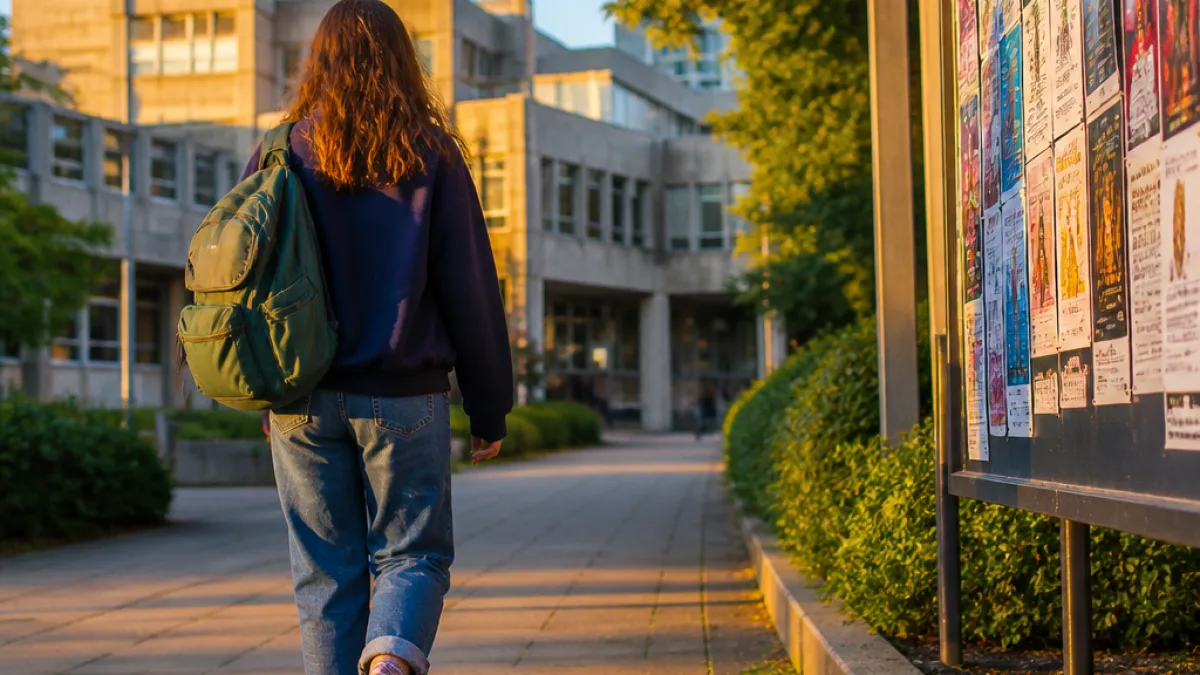
The official curriculum at the University of Warwick tells incoming students what lectures and seminars they will attend. It does not, however, spell out the informal education that comes from daily campus life — the late nights, minor injuries, club commitments and the friendships that shape a degree as much as any reading list.
Learning beyond the module catalogue
In a feature reflecting on the experiences of the class of 2026, one student spoke candidly about a chaotic first year that ended up teaching lessons not found on any syllabus. The account underscores how Warwick’s social and extracurricular environment can be as transformative as its academic offering.
That student, Josephine Greenhalgh, recalled a run of mishaps that included misplacing campus accommodation keys an eye-catching 31 times and a domestic accident that resulted in a trip to A&E. The latter — caused by stepping on a three-pin plug head — left her with stitches and crutches, and forced a break from competitive rowing.
“The main thing I’ve learnt from Warwick is to not go into things with expectations,”
The enforced pause from rowing proved revealing. Greenhalgh realised that despite a background in competitive sport she no longer enjoyed the activity in the same way at university. That recognition prompted a re-evaluation of how she spent her time and ultimately prompted new directions.
From setbacks to new commitments
One notable outcome of that re-evaluation was deeper involvement with Warwick’s Jewish Society (JSoc). Greenhalgh — who had previously struggled to feel fully comfortable within her earlier Jewish community — described the society as an arena where she found belonging and a different expression of identity while at university.
The narrative is familiar to many students in Warwick and other university towns: a year of experimentation, missteps and recalibration leads to mental and social growth. It also highlights the role that campus societies play in providing alternative support networks when established activities no longer fit.
What this means for students and the city
For Warwick residents and local institutions the account carries a simple message: university life is not only about academic delivery but also the community structures that surround students. Local sports clubs, faith groups and student societies together form a support ecosystem that can mitigate the pressures of study and welfare needs.
Practical implications include stronger collaboration between the university and local services — from healthcare providers to society-run welfare initiatives — to ensure that students have access to prompt assistance when small accidents or welfare issues arise. The story also emphasises the importance of encouraging students to explore a range of activities without the fear of failure.
- Key experience: repeated small mishaps (lost keys, minor injury).
- Turning point: enforced break from rowing leading to reassessment.
- Outcome: increased involvement in JSoc and finding belonging.
| Experience | Lesson |
|---|---|
| Recurring small accidents | Resilience and flexibility in daily life |
| Break from sport | Opportunity to reassess priorities |
| Joining societies | Stronger sense of community and identity |
Warwick’s campus culture, with its mix of rigorous study and an active student community, routinely produces stories like this — accounts where growth comes from adaptation rather than straightforward success. They matter to the city because many of these students remain in the area as alumni, volunteers and workers, carrying the social capital developed during their degrees into local organisations.
These personal narratives also serve as a reminder for prospective students and families: the university experience will likely contain unanticipated challenges and opportunities. Being open to change, joining societies and seeking help when necessary are as important to a successful student year as attending lectures.