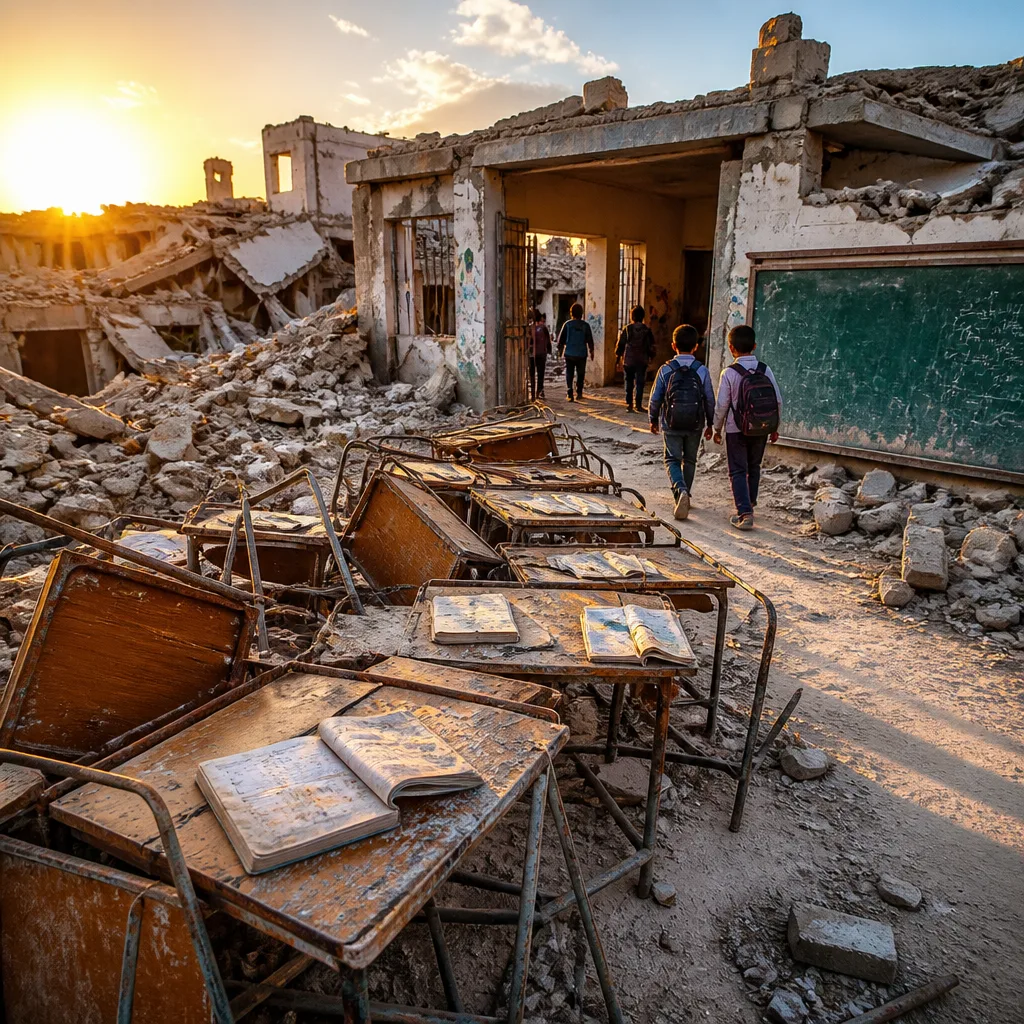
The education system in the Gaza Strip has been devastated by the ongoing conflict, with an estimated 80% of school buildings reported as out of service and more than 127,000 children identified as currently deprived of formal schooling, senior education officials said.
Scale of destruction and displacement
The director of education for eastern Gaza described a situation in which the majority of school infrastructure has been damaged, destroyed or repurposed as shelters for people forced from their homes. Authorities say only around 21% of classrooms remain usable for teaching.
"approximately 80% of schools in the Gaza Strip are out of service"
The Gaza Strip had an estimated 584 school buildings overseen by the Ministry of Education, UNRWA and private providers before the latest wave of fighting. Officials report that roughly 307 of those schools have been destroyed or their condition cannot currently be established, while a further 161 have suffered total or partial destruction.
| Metric | Reported figure |
|---|---|
| Total school buildings (pre-conflict) | 584 |
| Destroyed / fate unknown | 307 |
| Total or partial destruction | 161 |
| Classrooms usable | 21% |
| Teachers killed | Approximately 535 |
| Students killed (school age) | About 20,000 |
| Students who have left Gaza | Approximately 19,500 |
Human cost and education workforce
Officials reported heavy losses among education staff. Out of an estimated teaching workforce of around 22,000, about 535 teachers were said to have been killed, further undermining efforts to maintain any form of instruction even where buildings remain intact.
The human toll extends to pupils: authorities put the number of school-age children killed at roughly 20,000, and nearly 19,500 students are reported to have left the Strip, reducing the cohort of learners remaining within Gaza and complicating any attempts to plan a resumption of schooling.
Education delivery under strain
With large numbers of schools operating as displacement centres, the limited number of usable classrooms is concentrated unevenly; some areas, notably Gaza City, have seen most spare capacity taken up by shelters. Education officials and humanitarian agencies have been attempting to set up temporary learning alternatives, but these efforts face immense logistical, security and resource constraints.
Even where makeshift provision is possible, the combination of damaged facilities, bereavement, displacement and the decimation of the teaching workforce presents a long-term barrier to recovery. Re-establishing a functioning education system will require rebuilding infrastructure, replacing and training staff, and addressing the psychosocial needs of children who have experienced traumatic events.
- Immediate impact: Vast majority of buildings unusable and children out of school.
- Workforce loss: Hundreds of teachers killed, reducing capacity to deliver lessons.
- Displacement and mortality: Large numbers of students killed or forced to leave Gaza.
The scale of destruction has wider implications beyond classrooms. Education is a protective and normalising service for children in emergencies; prolonged absence from school can increase long-term risks to learning, mental health and social cohesion. For policymakers and international agencies considering response plans, the priorities will include restoring safe learning spaces, recruiting and supporting teachers, and ensuring that displaced children can access education wherever they are now located.
For parents and teachers in Gaza, the immediate concern is basic safety and shelter. For the international education community, the crisis will demand a coordinated response that balances emergency relief with planning for the long process of rebuilding schools and restoring a permanent, well-supported system of education.