
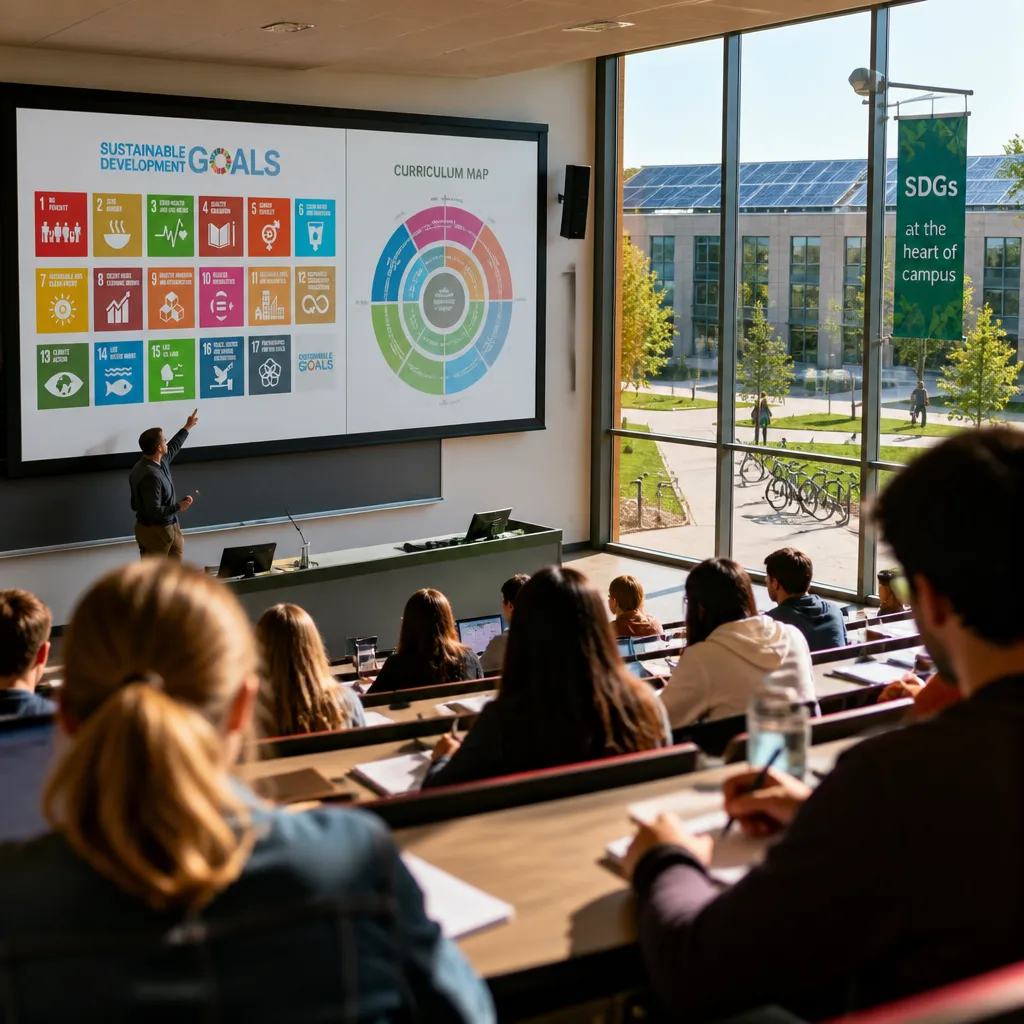
Universities are being encouraged to place the UN Sustainable Development Goals (SDGs) at the heart of teaching, research and campus management, with advocates arguing that the sector can accelerate both climate action and the skills young people need to address global challenges.
Curriculum integration, not an add‑on
Policy experts and educators propose that sustainability should be integrated into existing modules rather than taught as a separate course. Embedding the SDGs across disciplines, they say, helps students connect sustainability issues with subject-specific knowledge and consider problems from multiple angles.
Proponents argue this approach has two practical advantages: it makes sustainability relevant to students’ chosen fields, and it avoids overburdening departments with standalone modules that attract limited uptake.
- Better engagement: Teaching SDG‑linked examples in core courses helps students see real‑world applications.
- Cross‑disciplinary perspective: The SDGs offer a common language to bring global and local issues into diverse subjects.
- Faculty buy‑in: Support strategies are needed to help already stretched academics incorporate new material.
How to bring staff along
Although the educational benefits are widely accepted, several commentators stress that successful implementation depends on persuading and supporting teachers. Institutions highlighted a range of practical steps to embed the goals without adding to lecturers’ workloads, including curriculum mapping against the SDGs, sharing teaching resources across departments and offering targeted professional development.
One suggested model is to use the SDGs as a framework to frame existing learning outcomes, rather than create extra assessment tasks. Another recommendation is to identify and champion early adopters who can illustrate workable approaches to colleagues across a university.
Research, industry links and community engagement
Beyond the classroom, universities are encouraged to use their research strengths and relationships with industry to drive innovation on sustainability. That includes fostering partnerships that translate academic findings into practical solutions, and giving students opportunities to work on real projects with external organisations.
Those who support the strategy also emphasise the role of campuses as demonstrators of sustainable practice — from reducing waste and lowering emissions to reshaping procurement and estate management. For many institutions, visible on‑site action helps reinforce teaching and research priorities.
| Area | Examples of action |
|---|---|
| Teaching | Embed SDG case studies in core modules; map curricula to goals |
| Research | Prioritise interdisciplinary projects linked to SDGs; strengthen industry partnerships |
| Campus operations | Cut waste and emissions; use estate as living lab for students |
Advocates also warn against a simplistic “tick‑box” approach where institutions merely state SDG relevance without critical reflection. Curriculum mapping, they say, should be paired with a robust, reflective pedagogy that questions assumptions and exposes students to multiple perspectives.
Embedding sustainability is framed not only as an ethical responsibility but as a strategic opportunity: graduates who can apply SDG thinking are likely to be attractive to employers seeking staff who understand systems, resilience and global interconnections.
As the climate crisis intensifies, the argument for higher education to act across research, teaching and operations gains urgency. The practical challenge for universities now is to translate broad commitments into sustained changes in how courses are taught, how research agendas are set and how campuses model the low‑carbon, socially inclusive futures they aim to serve.











