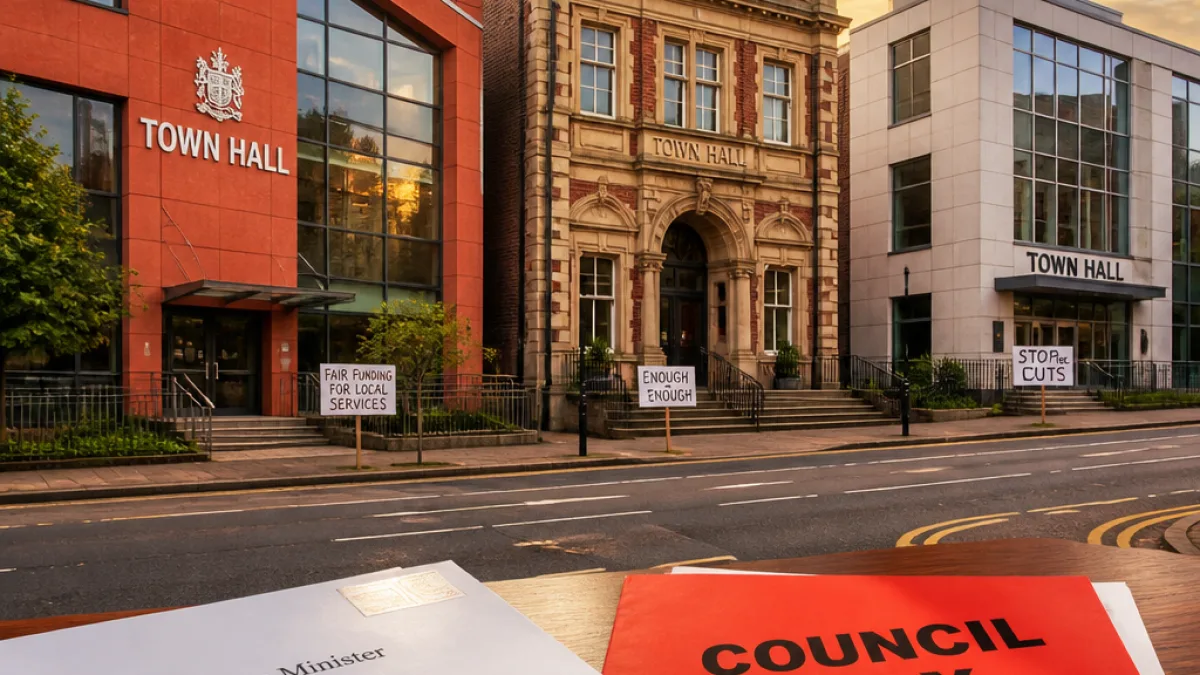
Three Conservative-run London boroughs have written to the prime minister to protest changes to the local government funding settlement that they say will drive up council tax or force deep cuts to services.
Local leaders say funding formula punishes prudence
Westminster City Council’s leader Paul Swaddle, Wandsworth’s Robert Morritt and Kensington and Chelsea’s Elizabeth Campbell argue that the government’s new funding calculations “punish low tax councils”, singling out their authorities for harsher treatment.
“This is not just devolving blame, it is devolving council tax rises and government cuts.”
The trio say the Department for Levelling Up, Housing and Communities assumed large increases in council tax in their areas when it published the Local Government Finance Settlement. They warn that if their councils do not raise council tax, residents will face “considerable cuts in funding for local services”.
Ministers have granted a small number of councils temporary scope to raise rates above the usual cap. Six authorities have been given two-year “funding realignment powers”, allowing them to increase council tax beyond the standard 5% threshold – a move that has stoked political tensions in the capital.
What the councils say and who is affected
The three Conservative leaders told the prime minister, through their letter, that their areas had been “singled out” for the measure alongside the City of London, Hammersmith and Fulham and Windsor and Maidenhead. They criticised what they described as a Whitehall-manufactured funding fix that leaves town halls to carry the political cost.
Backing the council leaders, the shadow local government secretary, Sir James Cleverly, said the changes undermined the rhetoric of devolution and accused ministers of effectively imposing higher council taxes from central government.
“London's taxpayers are being forced to pay a Burnham penalty on their council tax,” he said.
A government spokesperson told reporters the reforms were intended to target funding where “need is greatest” and to correct perceived historical imbalances in support for wealthier areas. The department also said it would provide protection for councils during the transition.
Implications for residents and services
For households, the row raises a stark choice for local politicians: increase council tax to protect services such as social care, bin collections and youth provision, or hold rates steady and implement cuts. The councils warn that without additional local revenue, the quality and range of services could be materially reduced.
- Who wrote: Westminster, Wandsworth and Kensington & Chelsea council leaders
- What powers granted: two-year funding realignment powers
- Threshold normally in place: 5% council tax cap
Councils with relatively low council tax rates have argued for years that their fiscal prudence should not be punished by central redistribution. Ministers counter that past grant allocations favoured some areas and that a fresh formula will redistribute funds towards greater need.
Which councils are involved
| Council | Role |
|---|---|
| Westminster | Signatory |
| Wandsworth | Signatory |
| Kensington and Chelsea | Signatory |
| City of London | Also granted powers |
| Hammersmith and Fulham | Also granted powers |
| Windsor and Maidenhead | Also granted powers |
Residents I spoke to in central and south-west London expressed frustration at being caught between Whitehall policy and local decision-making. One Westminster resident said council tax rises would hit ordinary households already feeling the strain of rising costs, while another in Wandsworth warned that cuts to youth services would be deeply damaging.
At street level, the issue also has political consequences. Conservative-run town halls are now publicly confronting ministers from their own party, a sign of how acute the financial pressures have become.
Next steps
The matter will now be part of ongoing discussions between the affected councils and the Department for Levelling Up, Housing and Communities as the local government finance settlement is implemented. Councillors must decide whether to exercise the new powers to raise council tax or to find savings elsewhere in their budgets.
For Londoners, the immediate watchpoints will be council budget meetings in the autumn, when any proposed tax changes are likely to be debated and, if agreed, set for the coming financial year.
Reporting from the capital, the dispute underscores the tensions between national attempts to rebalance funding and the accountability of local leaders to residents who ultimately bear the cost.