
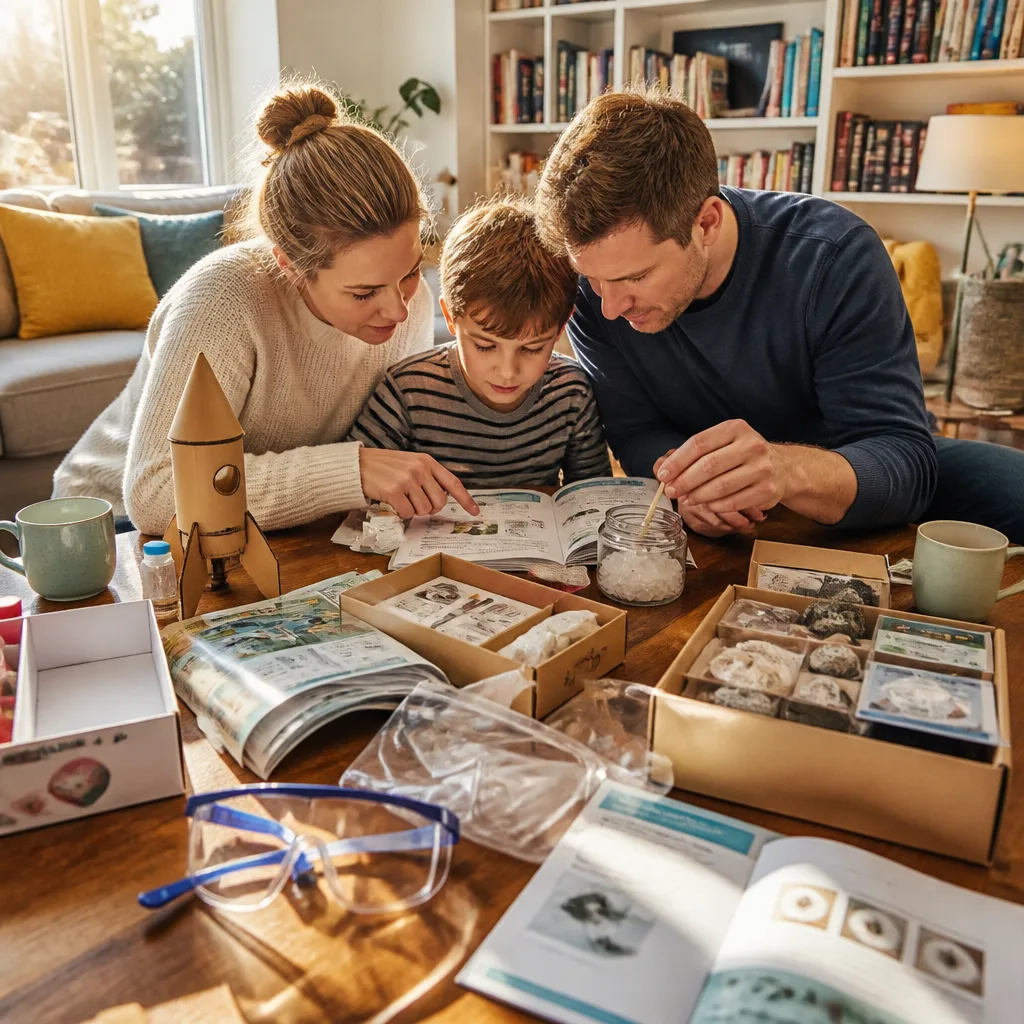
Manufacturers and cultural institutions are reporting growing demand for STEM and educational toys that combine genuine play value with clear learning benefits, a survey of suppliers for Toy World magazine has found. The category is increasingly shaping how children engage with science, technology, engineering and maths outside the classroom, with parents looking for products that deliver both enjoyment and skill development.
Parents want learning that feels like play
Retailers and brand partners told Toy World that children’s enjoyment remains paramount, but caregivers are more selective about spending and are prioritising items that build confidence, curiosity and practical skills. Products that encourage hands-on exploration — where children do not necessarily realise they are learning — are proving especially successful.
“At the Science Museum, we’ve long believed that science should be accessible to everyone,”
said Amy Harbour, Head of Licensing and Commercial Partnerships at the Science Museum. She added that toys and games serve as an "exciting entry point" into STEM subjects, making them feel approachable and relevant to everyday life.
Discovery themes and shared experiences
Suppliers highlighted a set of recurring themes that are resonating with families. Products tied to discovery and exploration — space, geology, crystals, fossils, dinosaurs, chemistry and nature — continue to perform strongly because they tap into subjects children are already fascinated by.
Sarah Clark, Founder and Managing Director at KidAntics, said there is also a rising appetite for toys that create moments to share between children and parents rather than simply occupying time. Her company’s National Geographic STEM range exemplifies this approach: activity kits that encourage children to dig, build, experiment and explore.
- Key consumer priorities: fun for children, clear educational value for caregivers.
- Top-performing themes: space, geology, crystals, fossils, dinosaurs, chemistry and nature.
- Design trend: products that facilitate shared parent–child experiences.
| Trend | What it delivers |
|---|---|
| Discovery kits (crystals, fossils) | Hands-on experimentation and curiosity |
| Space and dinosaurs | Strong intrinsic interest leading to sustained engagement |
| Shared activities | Family interaction and confidence-building |
Implications for educators and policy
The convergence of play and pedagogy has implications for schools and informal learning providers. As parents increasingly expect educational return on consumer purchases, museums, after-school clubs and primary classrooms can draw on commercially available kits to supplement learning and stimulate enquiry-based activities. The Science Museum’s involvement in licensing and partnerships suggests museums remain important intermediaries, helping to translate scientific topics into accessible products.
For schools facing pressure on time and budgets, high-quality STEM toys can provide low-cost, curriculum-linked opportunities for practical science and cross-curricular projects. However, suppliers and museum partners emphasise that product design must make activities approachable and contextually relevant so that learning is sustained beyond an initial novelty phase.
Manufacturers told Toy World that the most successful products are those that balance entertainment with authentic learning outcomes and that support shared experiences between children and carers — a dynamic that both bolsters purchase decisions and extends the educational impact of play.
As families become more discerning about where they spend, the STEM and educational toys sector appears set to consolidate around products that make science accessible, enjoyable and directly connected to the kinds of inquiry and practical thinking valued in classrooms and beyond.











