
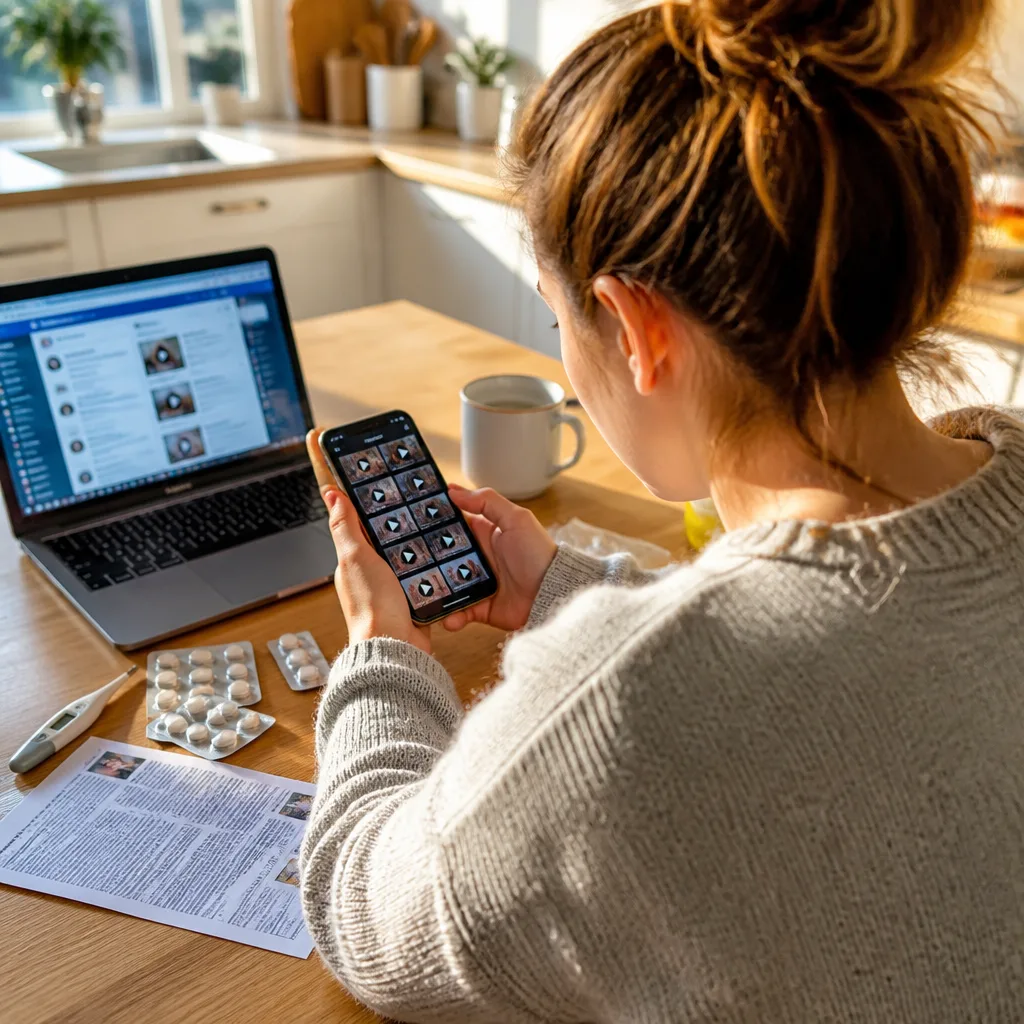
The latest Bupa Wellbeing Index, which surveyed 8,000 people across the UK, finds that an increasing proportion of the public are turning to social media for health information — and that habit is associated with reports of confusion and anxiety about health.
Where people are looking for answers
Respondents identified digital video platforms as prominent sources of health material, with 25% citing YouTube and 20% naming TikTok. The survey also found that 20% of people believe influencers hold more up-to-date health information than doctors, while 38% said they had encountered online health content that later proved to be misleading.
Comparable research from the United States echoes this pattern. Surveys by the Pew Research Center reported that 40% of US adults — and around half of adults under 50 — regularly consult social media influencers or podcasts for health advice.
Benefits and pitfalls of health content online
Clinicians and researchers acknowledge that social platforms can expand access to health information, particularly for younger people who may not routinely engage with traditional healthcare channels. In the Bupa feature, Dr Stephanie Hicks, a general practitioner specialising in mental health, highlighted the positive potential for qualified professionals to reach large audiences quickly.
“I think there are a lot of positives about social media [in the health space]. It’s a powerful tool for speaking to lots of people, particularly younger people, and it’s a great way to get information out there quickly,”
However, the same reach that makes social media valuable also amplifies content of mixed quality. The Bupa Index indicates a sizeable minority of adults have encountered misleading material, and the perception that influencers may be better informed than clinicians introduces risks: patients may delay seeking professional assessment, pursue unproven remedies, or experience increased worry about symptoms after exposure to alarming or decontextualised posts.
Practical implications for clinicians and the public
Public health experts say this environment increases the need for clear, accessible, evidence-based communication from trusted sources and for better public education on how to appraise online health claims. Clinicians should be prepared to discuss patients’ online information-seeking without judgment and to help distinguish reliable guidance from anecdote or misinformation.
Key practical steps to reduce harm include:
- Developing and promoting authoritative, understandable content on popular platforms.
- Encouraging clinicians to ask about patients’ online sources and to signpost reputable resources.
- Teaching basic digital health literacy skills, such as checking authorship, sourcing and whether content cites credible evidence.
Evidence-led public messaging should emphasise that correlation does not imply causation: a personal story or a viral clip does not equate to proof of safety or efficacy. Peer-reviewed research remains the bedrock of clinical guidance, and systematic review processes exist to minimise bias and error — safeguards not present in most social-media posts.
What the numbers tell us
The Bupa and Pew figures together paint a picture of shifting behaviour with concrete consequences for health services and communication strategies. To illustrate the headline findings:
| Measure | Proportion |
|---|---|
| UK respondents citing YouTube for health information | 25% |
| UK respondents citing TikTok for health information | 20% |
| UK respondents who think influencers are more up-to-date than doctors | 20% |
| UK respondents who found online health information misleading | 38% |
| US adults regularly using influencers/podcasts for health advice (Pew) | 40% |
These figures should be interpreted cautiously. Surveys measure self-reported behaviour and perceptions at a point in time; they cannot by themselves establish causation between social media use and clinical outcomes. Nonetheless, they reveal substantial engagement with platforms that are not subject to the editorial and regulatory checks typical of medical publications.
Policymakers and health organisations face a twofold task: to ensure clinicians and public health bodies engage effectively on the platforms people already use, and to equip the public with the skills to distinguish evidence-based advice from persuasive but unsupported claims. Without those measures, clinicians may increasingly encounter patients whose concerns — and sometimes unnecessary anxiety — have been shaped online.
As social media continues to evolve, so must the strategies to protect and inform the public. Clear, evidence-based communication that meets people where they are online is likely to be the most effective counter to the harms reported in these surveys.














