
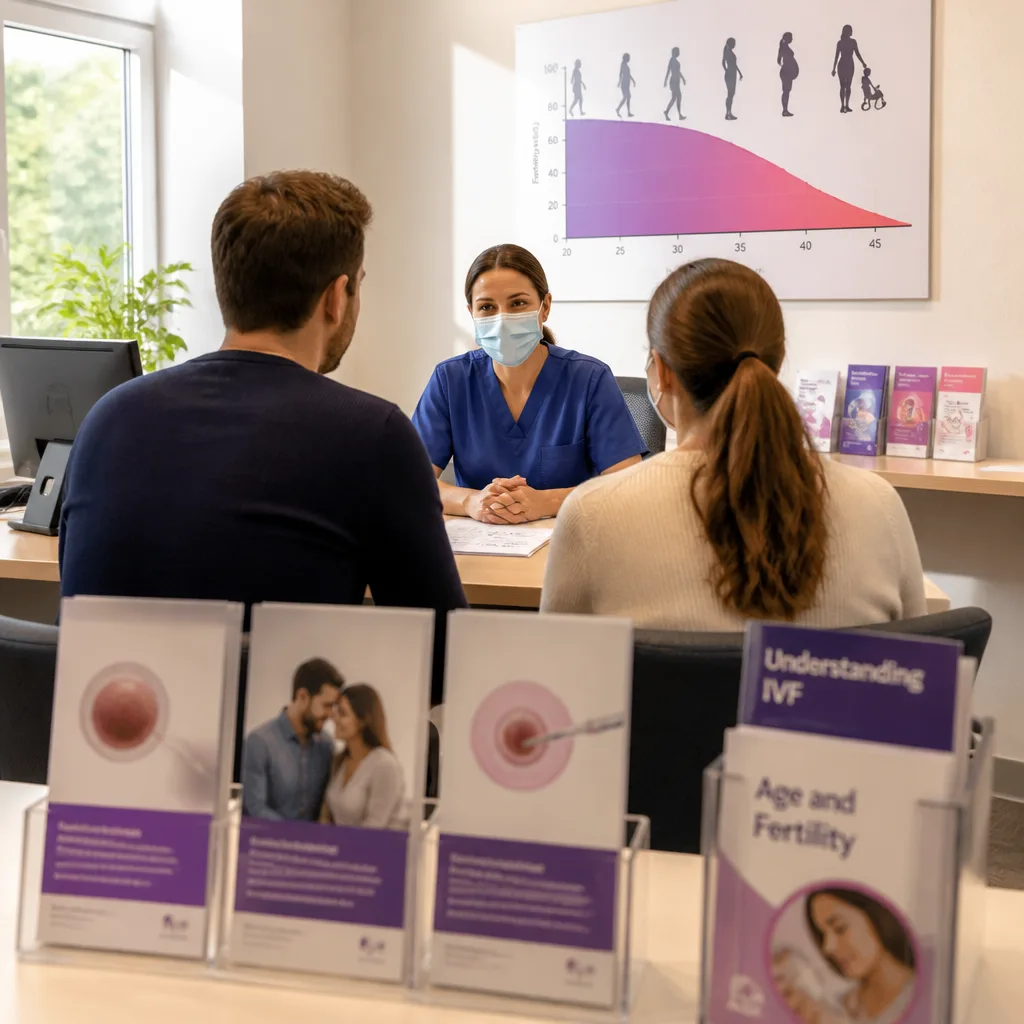
People trying to conceive are being misled by persistent myths about fertility and in vitro fertilisation (IVF), a senior UK reproductive medicine specialist has warned. After three decades in clinical practice, the consultant who helped pioneer milder IVF techniques says misunderstandings about age, treatment risks and necessity of high-dose interventions are causing avoidable stress, cost and delays to appropriate care.
Expert calls fertility part of general health
The clinician, who has worked extensively to make fertility care safer and more accessible, emphasises that fertility is intimately linked to wider health and should be treated as healthcare. As she recently put it:
“Reproductive health is general health. Fertility treatments, including IVF, are healthcare. What I don’t want is people to be hearing these myths around IVF and fertility treatment and doing something unnecessarily expensive, unnecessarily invasive, or unnecessarily high dose.”
That message underpins a series of common misconceptions she says she encounters repeatedly in clinics. Chief among these is the idea of a sudden, cliff-like fall in fertility at a particular age. While age is a key factor, decline is typically gradual and interacts with other medical issues.
Age matters, but context is vital
The specialist warns that celebrity stories of late motherhood can create a distorted impression of what is typical. Such high-profile cases often involve donor eggs or pregnancies achieved with eggs frozen earlier in life, she notes. Natural conception in the late forties is uncommon and treating isolated celebrity examples as a rule can give people false reassurance and delay timely assessment and treatment.
She also highlights the importance of taking a thorough medical history. Conditions such as thyroid disease, endometriosis, a family history of early menopause, and certain medications all influence fertility trajectories and should be considered alongside age when assessing chances of conception.
Common errors patients make
From her experience, patients often make decisions based on partial information. The specialist lists a number of avoidable mistakes, including postponing medical evaluation, opting for overly aggressive treatment regimes when milder options may suffice, and misunderstanding the realistic outcomes of different interventions.
- Waiting too long to seek assessment when fertility concerns arise.
- Assuming celebrity pregnancies reflect the typical chances of natural conception in later life.
- Choosing high-dose or invasive fertility treatments without exploring milder, evidence-based options.
She stresses that early evaluation can clarify the factors acting on an individual’s fertility and allow tailored, less invasive approaches when appropriate. Public education, she says, should focus on accurate risk communication and accessible pathways to fertility assessment.
Implications for patients and policy
The specialist’s comments come amid ongoing public and political discussion about access to fertility services in the UK. Clearer messaging about what affects fertility, and better access to early assessment, could reduce unnecessary procedures and costs for some people and steer others towards timely, effective treatment sooner.
For patients, the practical takeaway is straightforward: don’t rely on headlines or celebrity anecdotes when making decisions about family planning. Seek medical review if you have concerns, and ask about alternatives to high-dose protocols. Clinicians can advise on individual risk factors and the relative merits of different approaches, including milder IVF programmes that aim to reduce medication exposure while maintaining effectiveness.
| Common belief | Reality |
|---|---|
| There is a sudden fertility "cliff" at a specific age | Fertility usually decreases gradually; other health factors also influence decline |
| Celebrity late pregnancies are the norm | Many such cases involve donor eggs or previously frozen eggs and are not typical |
| Higher-dose or more invasive treatment is always better | Milder, evidence-based approaches can be effective and carry fewer risks for some patients |
Accurate, accessible information and early clinical input are the most reliable ways to navigate fertility concerns. The specialist’s view is that reframing reproductive health as part of routine healthcare will help people make better-informed, less costly and less invasive choices when planning a family.














