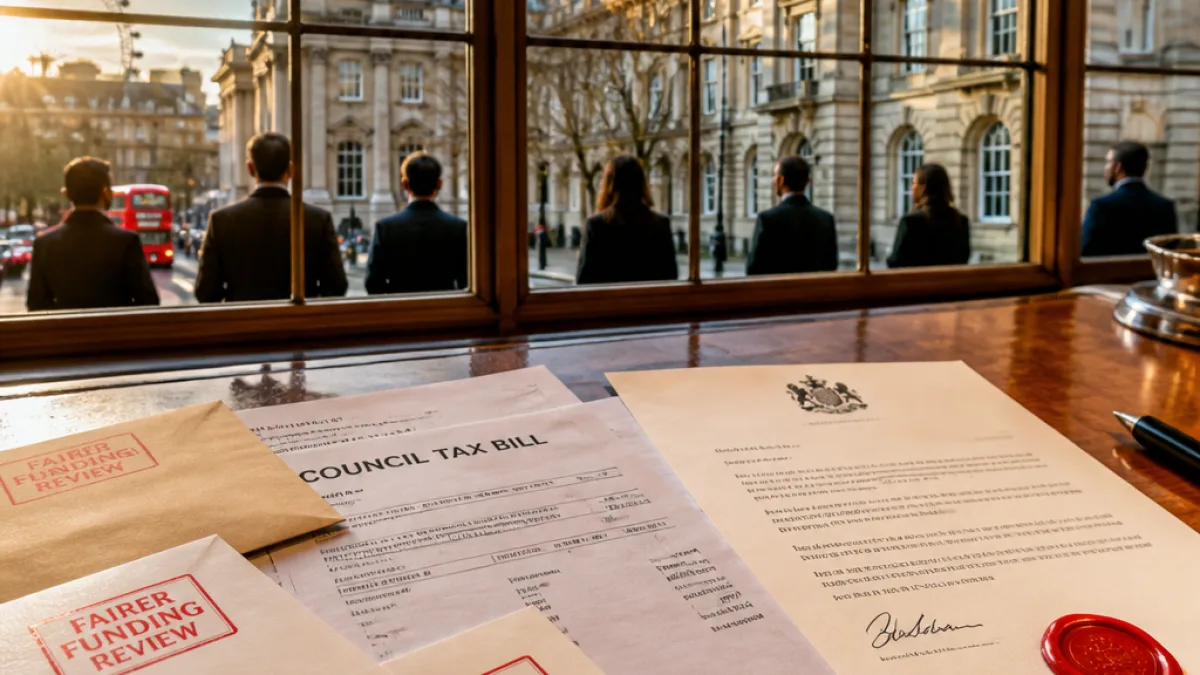
Several London boroughs are warning that a new national funding formula will compel them to impose substantial council tax increases or make severe cuts to local services, after Conservative leaders in Westminster, Wandsworth and Kensington and Chelsea wrote to Mayor Andy Burnham and central government.
Councils say funding review punishes low‑tax areas
The boroughs argue that Labour’s Fairer Funding Review will reduce their central government settlements and that ministers have effectively assumed councils can raise revenue by increasing council tax. Under current rules, most councils can only increase bills by up to 5% without special permission, but the Government has allowed exceptional rises in recent years.
In their joint letter, the three town halls — joined in wider concern by Hammersmith and Fulham, the City of London and Windsor and Maidenhead — say the formula “punishes low tax councils” and warned that, unless permitted to raise more revenue, they will be forced to curtail services.
“If our councils do not impose council tax rises, our communities face considerable cuts in funding for local services,”
The leaders added:
“This is not just devolving blame, it is devolving council tax rises and government cuts.”
How big could increases be? Historical precedents
Local authorities have previously sought and been granted exceptional permission to exceed the usual cap. The letter highlights that when budgets could not be balanced otherwise, councils have pushed tax increases well above 5%.
| Council | Exceptional rise granted | Year |
|---|---|---|
| Croydon | 15% | 2023 |
| Slough | 10% | 2023 |
| Worcestershire | 9% | 2025 |
| Newham | 8% | 2024 |
What borough leaders say
Westminster’s leader, Paul Swaddle, Wandsworth’s Robert Morritt and Kensington and Chelsea’s Elizabeth Campbell told the Mayor and ministers the funding changes will force choices between increasing council tax, cutting services or both. They also criticised the new “top‑up” council tax on higher‑value homes, noting that revenues from that levy will not be kept by London councils or the Mayor.
“There is nothing local about it,” the letter states, arguing that Whitehall’s formula has been devised centrally while leaving local authorities to carry political and financial consequences.
What this means for Londoners
If councils are unable to secure greater funding or permission to raise more revenue, residents could see:
- Higher council tax bills, potentially well above the usual 5% increase cap if special permission is granted.
- Reduced spending on local services such as waste collection, libraries, youth services and adult social care.
- Increases in the number of discretionary service charges or reductions in investment programmes.
For residents already feeling pressure from the cost of living, the prospect of larger council tax hikes will be unwelcome — while in low‑tax boroughs, local politicians warn the impact on frontline services would be acute.
Political fallout and next steps
The dispute pits London’s local Conservatives against Labour ministers and the Mayor, illustrating friction over how national redistribution policies affect local autonomy. The letter accuses the Government of “devolving blame” for budget gaps while designing a funding mechanism that presumes higher local taxation.
Local authorities can apply to the Department for Levelling Up, Housing and Communities for permission to increase council tax beyond the cap; ministers have granted such applications in recent years in exceptional circumstances. Council leaders say they prefer not to pursue that route but feel they have little alternative if funding shortfalls remain unresolved.
As the capital approaches the next budget cycle, boroughs will be under intense pressure to set balanced plans. For residents wanting to know how proposals might affect them, councils typically publish draft budgets and hold consultation periods ahead of final decisions — information that is usually available on borough websites.
From the streets of Westminster to estates in Wandsworth, the warning from town halls is clear: without changes to the funding settlement, local taxpayers or essential services will bear the cost.
Aisha Rahman, London correspondent, WE NEWS.