
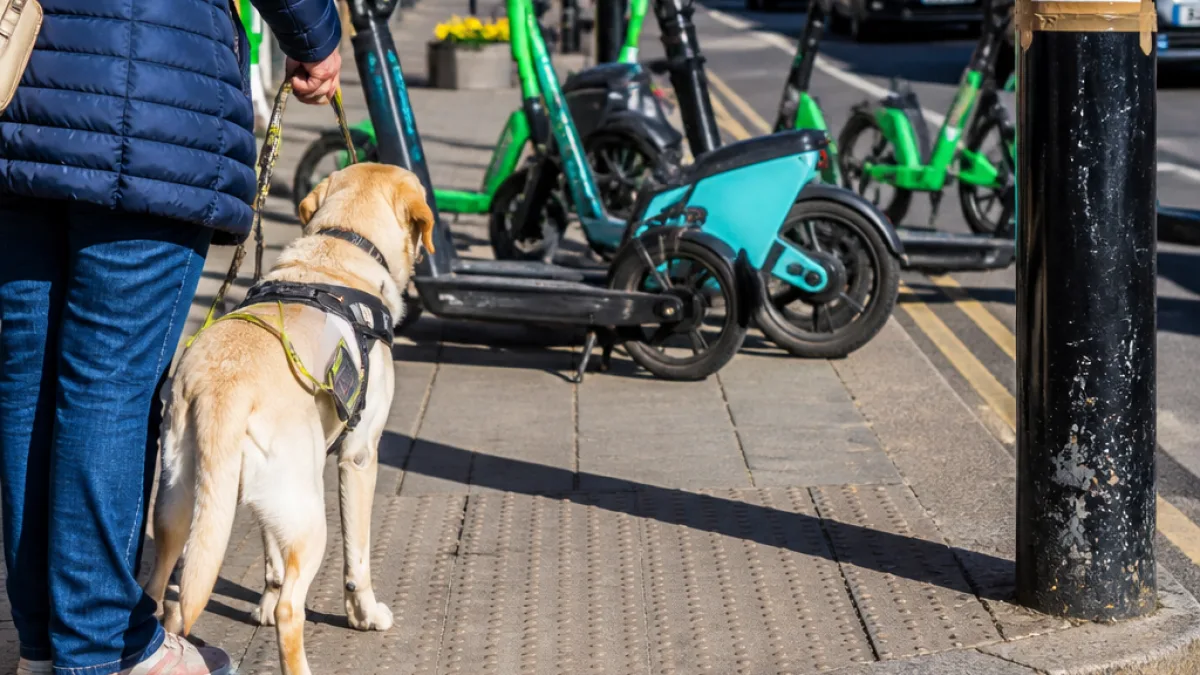
Bromley residents who are blind have warned that Lime's dockless e-bikes left on pavements have created dangerous obstacles, in one case forcing a guide-dog user to step into a busy road. The company has since apologised and said it will stop hires in the borough after the council ordered the immediate removal of the bikes.
Local people left exposed on busy streets
Jason Beal, 53, who uses a Labrador Retriever guide dog called Caine, described repeated incidents in which e-bikes were parked across pavements around Penge and Kent House Road. He said Caine would refuse to lead him into the carriageway, leaving Mr Beal to make a choice between turning back or taking his guide dog into traffic while listening for vehicles.
"That's a very frightening experience for myself."
His wife, Jessica Beal, 45, who walks with a white cane, said she had injured herself after colliding with e-bikes left on footways. The couple told their local MP, who raised the issue with Bromley Council and Lime.
Company and council response
Bromley Council has told Lime to remove its bikes from the borough immediately after finding the firm was operating without a contract. Lime apologised to the Beals and confirmed it has changed its app to prevent hires in the borough.
The Beals acknowledged that bicycles and e-bikes are useful for many journeys, but said they felt it was unfair that devices were routinely left in locations that created particular hazards for people with sight loss.
Where the problem has been reported
| Location | Issue reported |
|---|---|
| Penge (near Penge East station) | Bikes blocking tactile paving and pavements |
| Kent House Road | Obstructions forcing pedestrians towards carriageway |
Impacts and wider questions
- Immediate safety risk for visually impaired pedestrians forced into traffic.
- Potential for personal injury from collisions with poorly parked e-bikes.
- Concerns about private operators running services in boroughs without formal agreements.
Residents and campaigners for accessibility have long argued that micromobility firms must take greater responsibility for how and where vehicles are left. Dockless systems rely on users to park considerately; left unchecked, they can obstruct pavements, tactile paving and dropped kerbs—key features that help people with sight loss navigate the city.
Local people I spoke to around Penge said they welcomed the council’s intervention but wanted clearer, enforceable rules so the issue did not arise again. One neighbour said she had noticed bikes leaning against trees and piled in clusters outside the station, making the path narrow for pedestrians and particularly hazardous for parents with prams and people using mobility aids.
Transport and accessibility campaigners have called on boroughs across London to ensure operators hold contracts setting parking standards and penalties for breaches. Councils, they say, should also have powers to remove vehicles quickly where they pose an obstruction or danger.
For the Beals, the problem was not the existence of e-bikes but where they were left. "You never know when they are going to crop up and if you are going to hit one, or are they going to fall on you," Mrs Beal said, stressing how sudden encounters with parked bikes had left her frightened and injured.
Bromley Council’s order to Lime underlines the limits of voluntary codes when it comes to street safety. As micromobility continues to expand across London, residents in vulnerable groups and the councils that represent them will be watching how operators and regulators respond to ensure public spaces remain accessible for everyone.
















