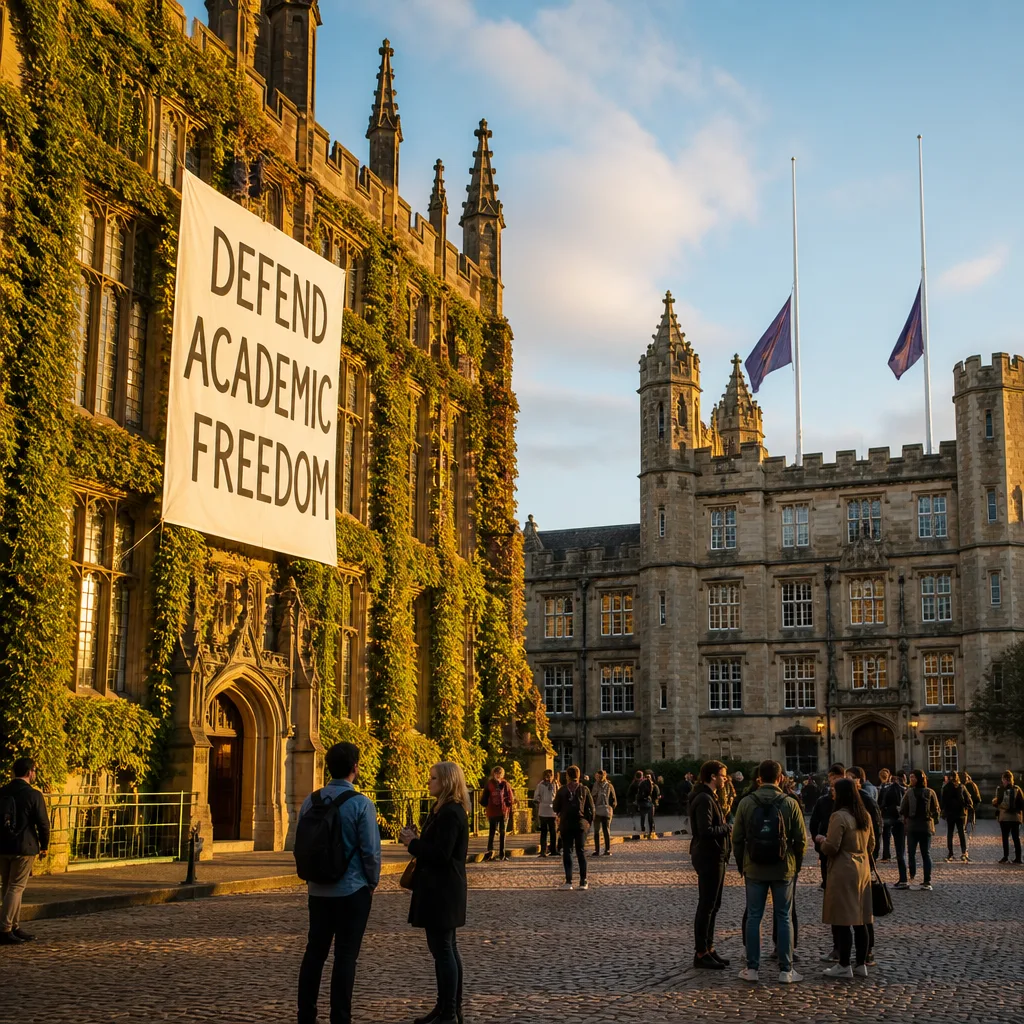
Top American universities have reacted in markedly different ways to a series of federal measures introduced since President Donald Trump began his second term. While some institutions have mounted public defences of academic freedom, others have pursued agreements to restore funding or have adopted elements of the administration’s rhetoric.
Princeton and vocal defiance contrasted with conciliatory moves
Princeton University has been among the most visible critics. In the spring of 2025 its president published an opinion piece in The Atlantic and gave extensive media interviews after the university had grant money suspended, insisting Princeton would refuse funding that threatened its capacity to pursue research without constraint. The president also helped launch a fundraising initiative called “Stand Up” to promote higher education.
By contrast, a group of other Ivy League schools took different paths. Cornell, Brown, Columbia and the University of Pennsylvania reached arrangements with the federal administration to have funding restored. Some institutions, including Vanderbilt, have shown willingness to embrace parts of the White House messaging on debate around free speech and gender definitions.
Why universities have softened public opposition
Scholars and faculty observers say there has been a shift in how universities present themselves publicly. Some senior academics argue that institutions have concluded broad publicity about federal measures brings limited advantage and may even jeopardise the restoration of resources.
“One thing that’s been clear is that a lot of universities have felt that publicity would bring no advantage or do them no good,”
The comment was made by a historian who has been outspoken about federal actions towards higher education. Another academic noted the significance of the Princeton president’s interventions, saying colleagues were grateful for his willingness to take a public stand.
Implications for campus life and research
Those differing institutional responses carry practical consequences for students, staff and research programmes. Negotiations to restore funding can safeguard immediate financial support for projects and scholarships; public resistance highlights concerns about institutional autonomy and the protection of academic inquiry. The choices made by leaderships reverberate across campus communities and can shape recruitment of international students, postdoctoral researchers and faculty.
- Public pushback by some universities emphasises academic freedom and transparency.
- Negotiated settlements have secured restored funding for several institutions but may involve concessions.
- Alignment with government messaging by some universities signals a pragmatic or ideological convergence on issues such as free speech and gender definitions.
Where this leaves the sector
The divergence in strategy reflects a broader dilemma for higher education leaders: balance the defence of institutional values against the practical necessity of preserving funding and operational continuity. For students and staff, the landscape is likely to remain uncertain as institutions weigh public advocacy against private negotiation.
Observers say the coming months will test whether those universities that opted for quiet diplomacy regain sufficient resources without long-term compromises, and whether more visible resistance from others can deter further federal action. The sector’s response will be watched closely by academics internationally, particularly in areas that rely on federal research grants and international collaboration.
| Institution | Response reported |
|---|---|
| Princeton | Public opposition; op-ed, media interviews; launched fundraising programme |
| Cornell | Made deal to have funding restored |
| Brown | Made deal to have funding restored |
| Columbia | Made deal to have funding restored |
| University of Pennsylvania | Made deal to have funding restored |
| Vanderbilt | Embraced some White House messaging on free speech and gender definitions |
The choices coming from the leadership of these universities will shape not only how the sector is seen in Washington but also how students, scholars and international partners judge the stability and values of America’s elite higher-education institutions.