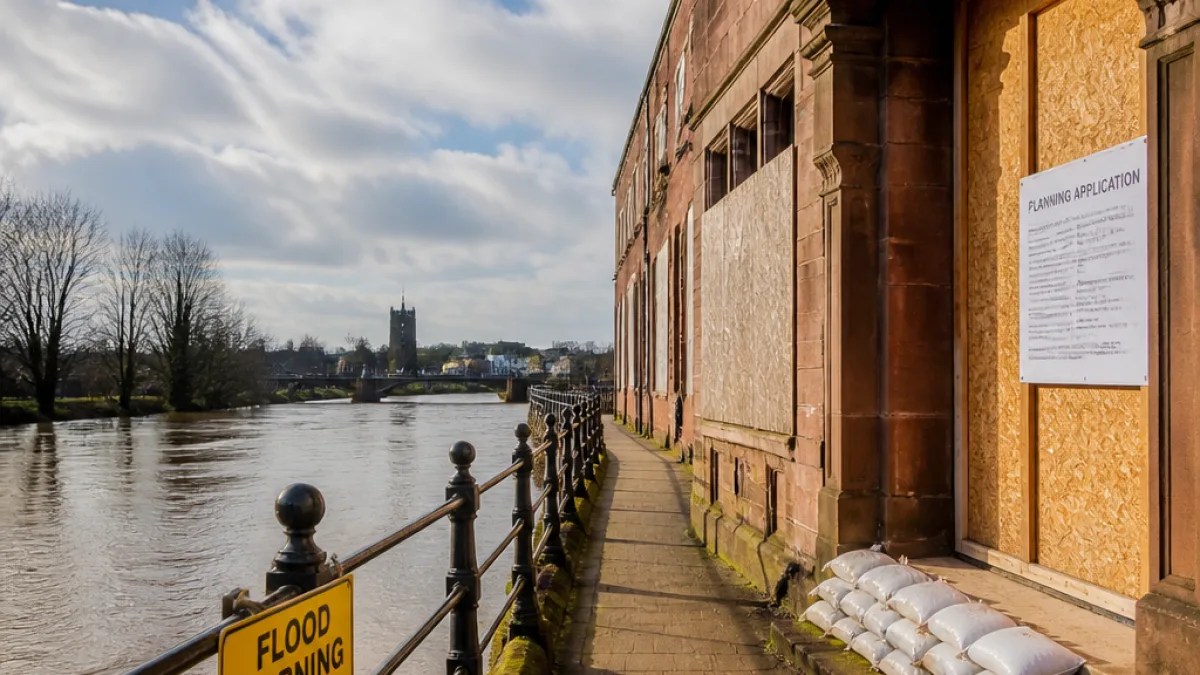
Scottish ministers asked to decide on riverside reuse
Plans to transform the vacant Dumfries Standard newspaper offices on Park Lane into a specialist school have been referred to the Scottish government after the environment regulator raised concerns about flood risk.
The application, brought forward by care home operator Greenleaf, would see the riverside building repurposed to provide a trauma‑informed education for children and young people who have experienced trauma and neurodiversity. Dumfries and Galloway Council granted support for the proposals, but the Scottish Environment Protection Agency (SEPA) lodged a holding objection on the grounds that the scheme would change the site's use classification.
SEPA said the proposal represented a change of use from "least" to "most" vulnerable at the site next to the River Nith.
Because of SEPA's objection, planning officials have asked ministers to determine whether the application should be "called in" for a decision by the Scottish government rather than being finalised at local level. Ministers have until the end of the month to indicate whether they will take the case, although that period may be extended.
What the proposals would deliver locally
The proposals would retain and reuse the former newspaper premises, which have stood empty since the Covid pandemic. Under the submitted plans, the school would primarily cater for pupils who live in Greenleaf's own homes, with capacity for a small number of day pupils drawn from the Dumfries and Galloway council area.
- Maximum pupil numbers: 15
- Staffing: up to 5 staff
- Primary function: specialist trauma‑informed education
Council planners acknowledged that flood risk was a "significant consideration" in their deliberations but concluded that local policy support for the reuse of existing buildings outweighed that concern in this case. That local recommendation is now effectively paused pending the Scottish government's decision on whether to call the application in for their consideration.
Local context and implications
The Park Lane premises lie adjacent to the River Nith and were occupied by the Dumfries and Galloway Standard until they were vacated during the pandemic. The building's prominent riverside location makes any change of use particularly sensitive to flood‑risk policy, which aims to restrict highly vulnerable uses in locations at risk of flooding.
Reusing an existing town centre building carries clear benefits for placemaking and can help revivify empty premises, particularly in a post‑pandemic context when many local commercial sites remain vacant. However, the SEPA objection highlights the tension between those redevelopment objectives and national environmental safeguards designed to manage flood risk for occupants.
If ministers decide to call in the application it would be considered by the Scottish government rather than being determined solely by the local authority. Such a referral would allow ministers to weigh national planning policy and flood‑risk guidance alongside local priorities for reuse and provision of specialist services.
Key facts at a glance
| Item | Detail |
|---|---|
| Location | Former Dumfries Standard offices, Park Lane (next to the River Nith) |
| Applicant | Greenleaf (care home company) |
| Proposed use | Specialist trauma‑informed school |
| Pupil and staff numbers | Up to 15 pupils; up to 5 staff |
| Current status | Referred to Scottish government due to SEPA holding objection |
| Decision window | Ministers have until the end of the month to decide whether to call in the application (deadline may be extended) |
What happens next
Until ministers say whether they will call in the case, the council's approval cannot be finalised. If the Scottish government takes the application, it will make the final decision; if it does not, the local authority will be able to proceed to determine the matter. Either outcome will carry implications for how similar riverside redevelopment proposals are judged against flood‑risk policy in Dumfries and across the region.
The case highlights the competing priorities in local planning: the desire to reuse vacant buildings and expand specialist support for vulnerable children, set against statutory responsibilities to protect people and property from flood hazards. Residents and stakeholders in Dumfries will be watching the ministerial decision closely, given the building's visibility and the potential for the site to provide locally based specialist provision.