A three-decade record of design
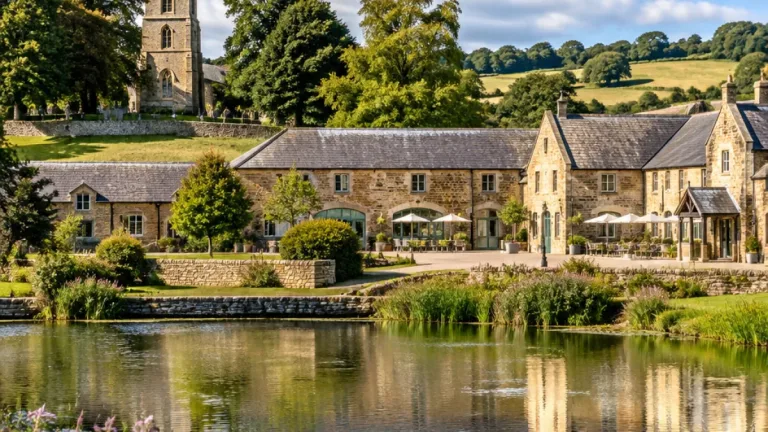
The RIBA Stirling Prize has marked its 30th anniversary after three decades of recognising architecture judged to make a meaningful contribution to the built environment. Its history is presented not simply as a record of striking buildings, but as an account of how design can influence learning, care, culture, work and everyday life.
For readers in Stirling, the prize’s name carries an obvious local resonance, although the anniversary message is focused on the wider role of architecture rather than on a single Scottish project. The schemes associated with the award have included civic landmarks, cultural institutions, schools, hospitals, universities and entire neighbourhoods. Together, they illustrate the breadth of places in which architectural decisions can affect communities.
Beyond appearance
The anniversary reflection argues that architectural quality remains central, but can no longer be considered in isolation. The account places equal importance on social value, the ability of buildings and places to adapt, the responsible use of resources and their environmental performance over time. That approach presents design as a long-term public concern, rather than an exercise limited to visual impact at the point of completion.
Buro Happold said it has worked with architects, clients and delivery teams on projects recognised by the prize, both as winners and shortlisted schemes. Its involvement has covered more than 12 projects across the history of the award. The work described includes a wide range of technical and specialist disciplines:
- Structural, civil and building services engineering
- Fire, facade, acoustics and lighting expertise
- Sustainability, accessibility and specialist advisory services
Collaboration at the centre
The account places particular weight on collaboration from the earliest stages of a project. Architects establish a vision, clients define purpose and ambition, while engineers and specialist consultants test, refine and help deliver the proposal. In that model, creative and technical decisions are developed together rather than treated as separate stages.
| Focus | Contribution described |
|---|---|
| Design | Creating places that are useful, valued and responsive to their setting |
| Technical expertise | Testing, developing and delivering architectural proposals |
| Long-term performance | Supporting adaptability, accessibility and responsible resource use |
The anniversary material describes the most successful projects as those built around a shared ambition and sustained cooperation. It says the contribution of engineering and specialist teams varies from one scheme to another, while maintaining a common objective: helping create places that perform well, enrich communities and remain useful as needs change.
Changing expectations of the built environment
The projects celebrated during the prize’s first 30 years are also portrayed as a snapshot of changing public priorities. The range from education and healthcare to culture, civic life and neighbourhood planning reflects an understanding that good design is experienced through everyday use. A building’s value is therefore linked not only to how it looks, but to how it serves people and how responsibly it operates.
That emphasis has particular relevance to any discussion of future development in Scotland, where questions of place, access, environmental responsibility and public benefit sit alongside the demand for high-quality design. The anniversary does not set out a single blueprint for achieving those aims. Instead, it points to a process in which different disciplines work together from the outset and where performance over many years is considered alongside the initial architectural idea.
After 30 years, the Stirling Prize’s central message is consequently broader than the celebration of individual buildings. Its record, as outlined by Buro Happold, supports the view that architecture has its greatest impact when it combines ambition with practical expertise, responds to changing needs and contributes positively to the communities that use the places created.