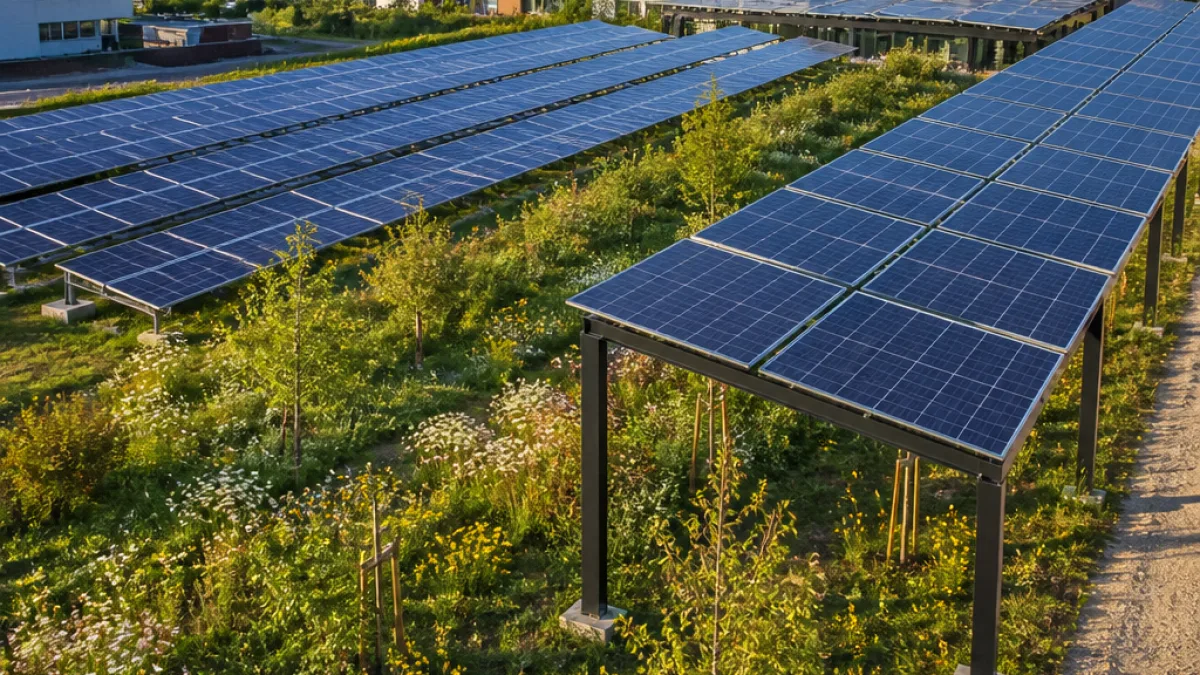
QMU plans ground-mounted solar array on Musselburgh campus
Queen Margaret University (QMU) has put forward plans to install solar panels on part of its Musselburgh campus in a move intended to cut reliance on grid electricity and strengthen the institution’s energy resilience. Feasibility work suggests the combined ground- and roof-mounted scheme could produce approximately 1.08 million kilowatt hours (1.08 GWh) of electricity annually — around 25% of the university’s current annual demand.
The proposal covers about 1.18 hectares of low-grade grassland that had previously been identified as potential land for future buildings. Instead of hard development, the university says the panels would sit within the existing landscape and be elevated off the ground, leaving green space below. The highest panels would reach a maximum of three metres.
Design aims to balance energy and biodiversity
QMU is working with renewable specialists Locogen on the project. The plans include landscaping and ecological measures around and beneath the arrays — including species-rich grassland and native hedgerow planting — intended to enhance habitat rather than replace it.
"This proposal is a practical way to make better use of a small area of land that is currently unused, while supporting the University’s wider plans for a more sustainable campus," said John Walker, head of estates and engineering at QMU.
John Walker added that the university had examined how the installation would sit within the landscape and sought to “strike a good balance between generating renewable energy and maintaining the character and biodiversity of the surrounding area.”
Climate targets and local context
The proposals form part of QMU’s broader Climate Change and Net-Zero Strategy, which sets a target of achieving net-zero operations by 2044, with interim emissions reductions of 42% by 2030 and 63% by 2038. The university says the scheme will reduce reliance on grid-supplied electricity and provide greater resilience against fluctuations in energy prices.
For Musselburgh residents, the plan represents a local example of how educational institutions are responding to energy and environmental pressures. The use of previously unused grassland rather than built development may be of particular interest to neighbours and environmental groups concerned with green space and biodiversity.
Key project figures
| Item | Figure |
|---|---|
| Estimated annual generation | 1.08 GWh |
| Share of university electricity | ~25% |
| Land area | 1.18 hectares |
| Maximum panel height | 3 metres |
What the proposal includes
- Ground-mounted solar panels on a small area of low-grade grassland
- Complementary roof-mounted installations
- New planting: native hedgerows and species-rich grassland beneath and around arrays
- Panels elevated off the ground to retain green space beneath
The planning submission indicates QMU intends the development to be sensitive to the campus setting while contributing materially to its climate commitments. The university contends the scheme will help deliver cost and carbon savings and improve resilience to energy price volatility.
As the planning process progresses, local residents and campus stakeholders will have the opportunity to review detailed drawings and environmental assessments submitted with the application. The final design and any conditions attached by the planning authority will determine how the scheme looks on the ground and the precise ecological measures implemented.
For Musselburgh, the proposal underlines the role of neighbourhood institutions in local decarbonisation efforts and offers a tangible example of meeting net-zero commitments through on-site renewable generation.