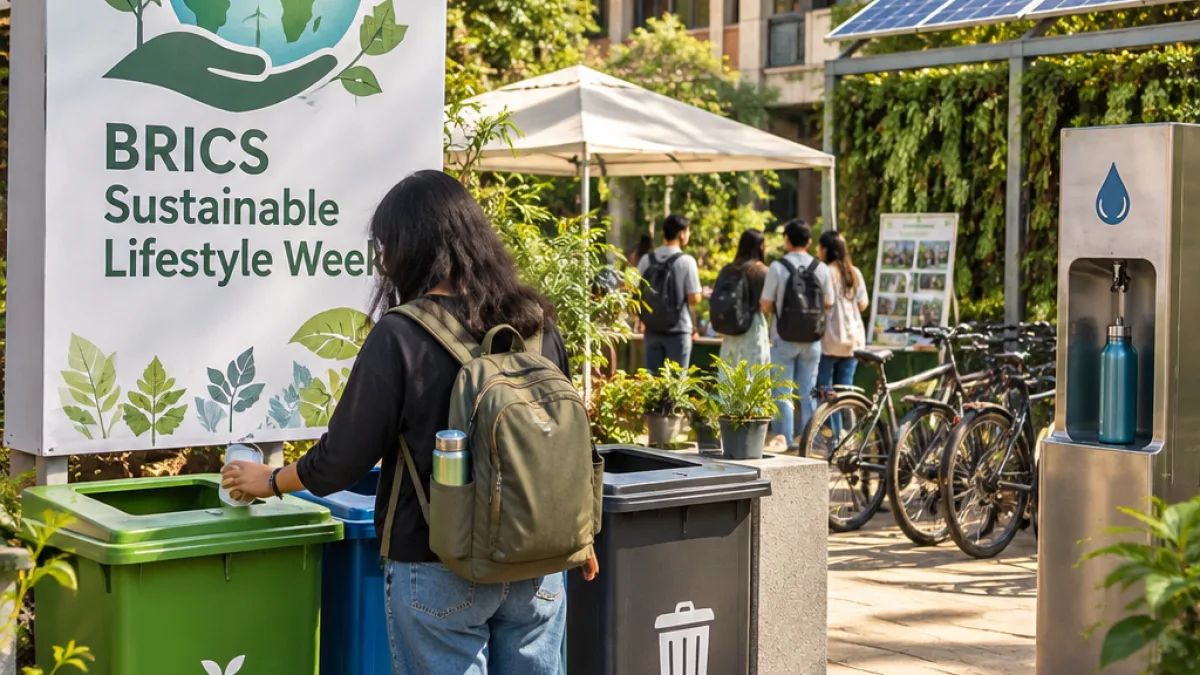
Universities and colleges across India have been asked to promote environmentally responsible habits during a week of campus and community activities beginning on November 1.
The University Grants Commission (UGC) has called on higher educational institutions to take part in the BRICS Sustainable Lifestyle Week 2026, which will run until November 7. The programme is being organised under Mission LiFE, or Lifestyle for Environment, as part of India’s BRICS Chairship in 2026.
In a communication dated October 30, the UGC encouraged institutions to arrange awareness programmes, activities on campus and community initiatives. The request applies to universities and colleges, with students, teaching staff and other employees being invited to engage with the programme.
A week built around everyday choices
The initiative is designed around seven themes, covering areas that affect daily life as well as wider environmental pressures. They include healthy lifestyles, conserving energy, managing water, sustainable food systems and cutting waste.
The Ministry of Environment, Forest and Climate Change has supplied a day-by-day activity plan for institutions that choose to participate. The suggested programme combines individual actions, educational sessions and practical projects, giving campuses several ways to take part rather than limiting the week to formal talks.
| Date | Suggested focus |
|---|---|
| November 1 | Healthy lifestyles, including yoga, walkathons, tree planting and a LiFE pledge |
| November 2 | Energy saving, including switching off non-essential appliances for an hour |
| November 3 | Water conservation, including rainwater harvesting and repairing leaks |
| November 4 | Sustainable food, including millets, traditional diets and reducing food waste |
| November 5 | Reducing single-use plastic through plogging and reusable bags and bottles |
| November 6 | Waste reduction through e-waste collection, recycling and repair awareness |
| November 7 | Community clean-ups and waste-to-art installations |
Practical activities for students and staff
For participants, the plan sets out a series of straightforward actions that can be adapted to a college or university setting. The opening day combines physical activity with tree planting and a pledge linked to Mission LiFE. The next two days turn attention to electricity use and water, including awareness work and measures such as leak repairs and rainwater harvesting.
Food is given a dedicated focus on November 4. Institutions have been asked to promote millets and traditional diets, while also highlighting ways to prevent food from being wasted. The following day moves to the problem of single-use plastics, with plogging drives and encouragement to use refillable or reusable items such as bags and bottles.
The final two days concentrate on waste. Suggested activities include collecting electronic waste, explaining recycling and repair, organising community clean-up drives and creating waste-to-art installations. These activities place both disposal and reuse on the agenda, while giving participating institutions options suited to their own campuses and surrounding communities.
Participation across the education system
The UGC has asked institutions to involve all departments, constituent units and field centres in the week’s activities. That direction broadens the programme beyond a single student society or environmental group and encourages participation across the wider education network.
- The programme runs from November 1 to 7, 2026.
- It is being held under Mission LiFE during India’s BRICS Chairship.
- Suggested activities range from walkathons and tree planting to e-waste collection and community clean-ups.
The emphasis on accessible actions means the week is intended to connect environmental awareness with routines that students, staff and institutions can practise in everyday settings. Its themes cover personal wellbeing, household-style resource use, food choices, plastics and the handling of waste.
By asking universities and colleges to combine awareness programmes with practical work, the UGC is placing sustainable living within campus life and community engagement. Institutions taking part have been given a clear seven-day structure, while retaining a range of activities through which departments, constituent units and field centres can contribute.