
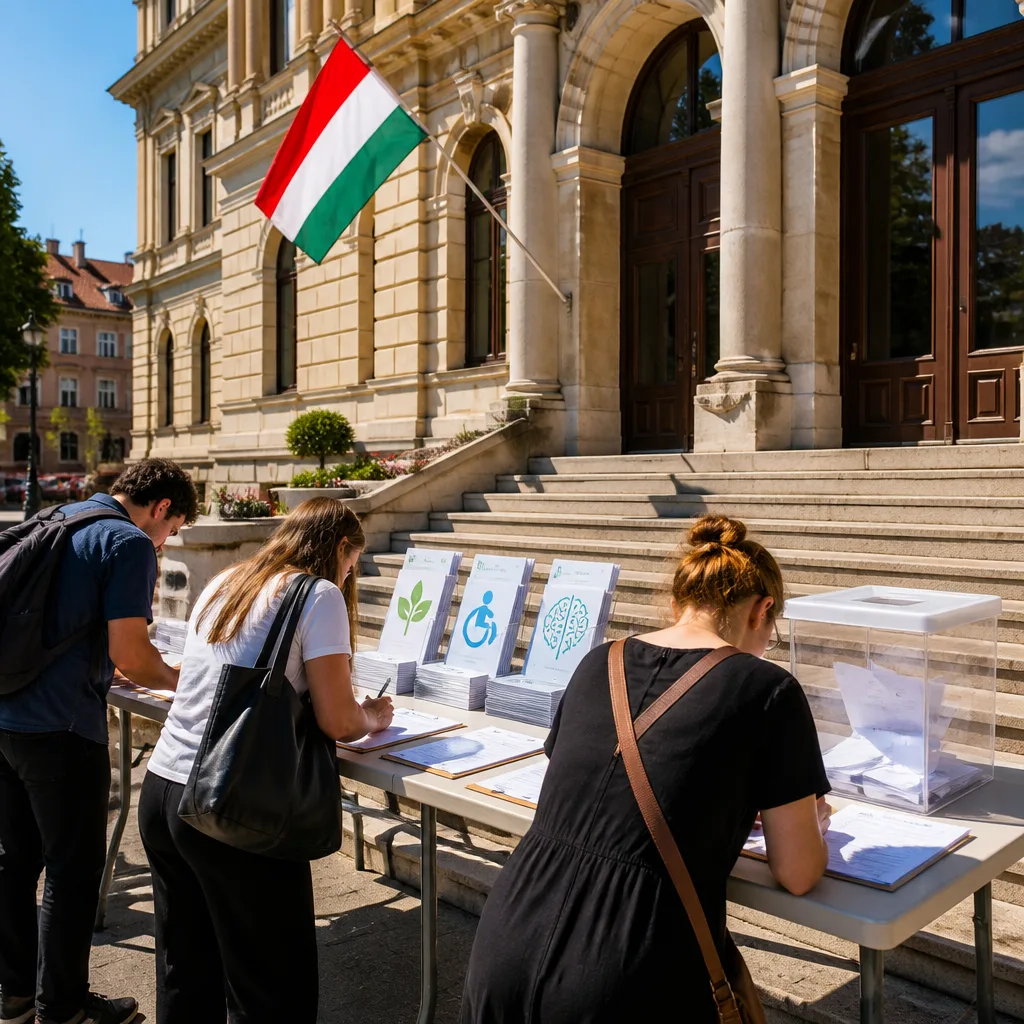
The Hungarian government has opened a public consultation on a draft amendment that would add three new higher education programmes to the national register and formally recognise a Master’s in Artificial Intelligence Informatics.
What has been proposed
The amendment, published on Monday, would introduce two higher education vocational programmes and one new master’s course. The measures were initiated by Hungary’s higher education institutions and set out distinctly practical and professional aims.
| Programme | Proposer | Focus |
|---|---|---|
| Higher education vocational programme in organic farming | Hungarian University of Agriculture and Life Sciences (MATE) | Training in sustainable, environmentally friendly agricultural and food production systems; preparing graduates to establish and manage organic farms |
| Master’s in Rehabilitation Specialists | Hungarian University of Agriculture and Life Sciences (MATE) | Professional training to address losses in cognitive, social and daily living skills and to support rehabilitation and care in healthcare and social welfare settings |
| Higher education vocational programme in biotechnology | University of Debrecen | Preparation for roles in biotechnology production, research, innovation and education; foundation for further study with theoretical and practical lab training |
Course content and intended outcomes
The proposed organic farming programme is framed around equipping students with both modern theoretical knowledge and practical skills to run environmentally sustainable agricultural enterprises; graduates would be prepared to establish and manage organic farms.
The rehabilitation specialists master’s, also proposed by MATE, is aimed at training professionals to help people who have lost cognitive, social or everyday living skills because of ageing, illness or other causes. According to the draft, graduates would work to prevent further deterioration, strengthen social connections and improve the effectiveness of rehabilitation and care within healthcare and social welfare systems.
The biotechnology vocational course from the University of Debrecen would deliver classroom and laboratory instruction across subjects including molecular biology, microbiology, genetics, biochemistry, analytical chemistry and bioanalysis. The programme is described as preparing specialists to support activity in biotechnology production, research, innovation and teaching, while also offering a pathway for continued studies.
Artificial Intelligence Informatics master’s added to register
Separately, the draft would add a Master’s in Artificial Intelligence Informatics to Hungary’s official list of higher education programmes. The proposal cites the need for the programme in the official register, reflecting a growing policy emphasis on AI-related skills and qualifications.
- Public consultation on the draft amendment began on Monday.
- MATE initiated two of the proposed programmes; the University of Debrecen proposed the biotechnology course.
- The proposals combine vocational training with professional master’s education targeting health, agriculture and biotechnology sectors, and an AI-focused master’s for informatics.
Why this matters
At a practical level, the measures would broaden Hungary’s officially recognised higher education offer into sectors identified as strategically important: sustainable food production, rehabilitation and care, biotechnology, and artificial intelligence. The vocational nature of two of the proposals indicates an emphasis on employability and technical skills, while the master’s programmes target specialised professional and research-oriented roles.
By placing the Artificial Intelligence Informatics master’s on the official programme register, policymakers signal an intent to formalise AI study within the higher education landscape. For institutions and employers, recognition on the register can influence curriculum development, funding eligibility and the perceived value of qualifications.
With the consultation under way, stakeholders — including universities, professional bodies, employers and members of the public — have the opportunity to comment on the detailed content and structure of the courses before any change is enacted.
Further details of the consultation period and next steps were published with the draft amendment.