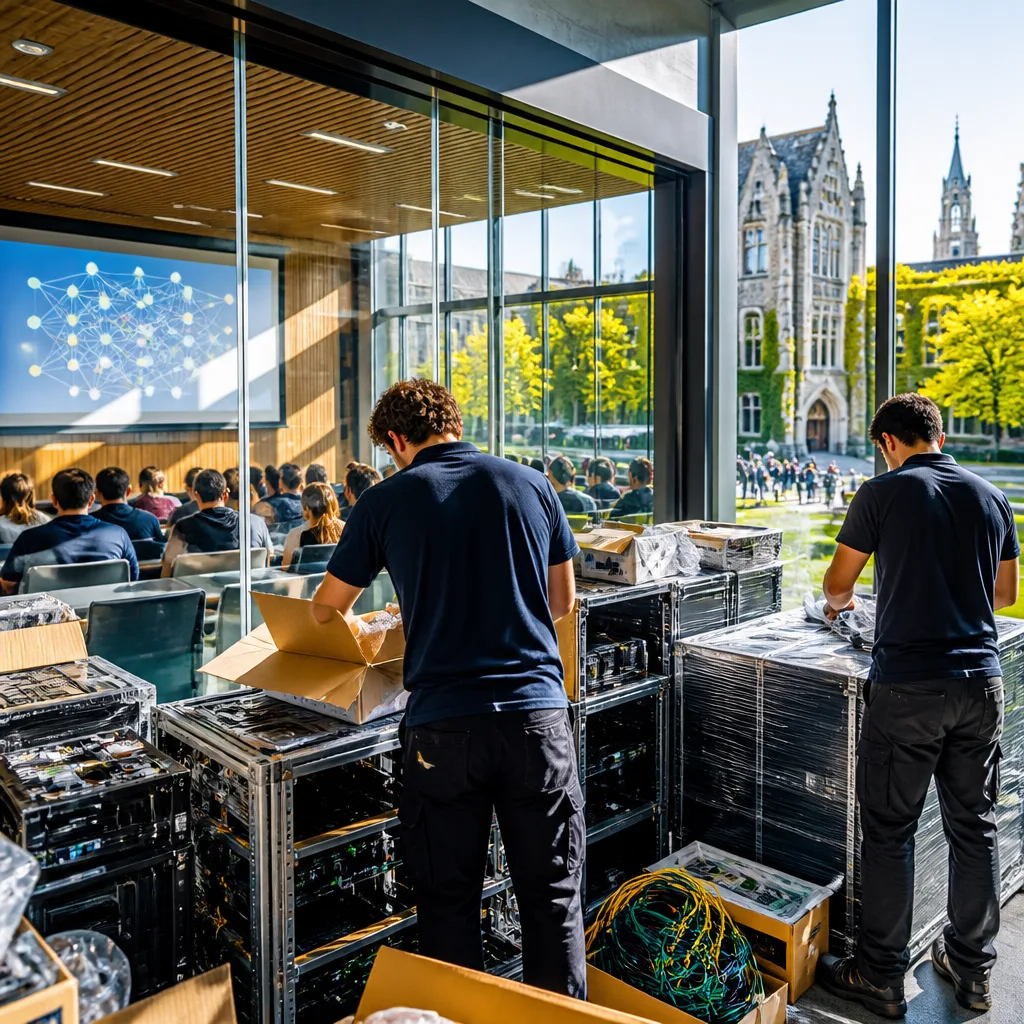
The South Dakota Board of Regents has put forward a fiscal 2028 budget request that would inject a total of $24.5 million into technology across the state’s public university system, aiming to modernise ageing digital infrastructure, improve cybersecurity and expand capacity to teach and research with artificial intelligence.
Plan targets maintenance, modernisation and AI readiness
The proposal combines $4.5 million in ongoing base funding for essential maintenance and repair with a separate $20 million one‑off ask to launch the “Future Ready Technology Initiative”, a multi‑year effort to rebuild the digital backbone that supports learning, research and university operations. The system serves more than 35,000 students, according to the Board.
Officials say the package is intended to create a sustainable funding model. Ongoing funds, together with annual allocations from a dedicated technology tuition adjustment, would be used to routinely refresh hardware and software, reduce cybersecurity risk and avoid waiting until systems fail before replacing them.
“Technology is no longer simply a support function for higher education; it is the foundation for teaching, research, and developing successful career-ready students,” said Dakota State University President John Ballard.
Board officials told meeting attendees the one‑off investment would provide the infrastructure necessary to "support artificial intelligence in classrooms, research laboratories, administrative operations, and student services", enabling campuses to adopt new teaching practices and research tools while centralising core services.
- Ongoing funding: $4.5m annually for maintenance, repair and routine updates.
- One‑off request: $20m to fund the Future Ready Technology Initiative.
- Coverage: Technology support for a system educating more than 35,000 students.
Why the investment matters
The Board framed technology as foundational rather than ancillary. In practice, that means shifting from episodic, crisis‑driven replacements to a planned lifecycle approach for enterprise systems, classroom technology and cybersecurity protections. The move mirrors trends in higher education nationwide where institutions are wrestling with the cost and complexity of introducing AI tools while protecting student data and campus networks.
Investments aimed at AI readiness typically include upgrading compute and networking capacity, deploying secure data platforms for research, training staff and faculty, and implementing governance to manage risks such as data privacy, bias and misuse. The Board’s request does not detail specific vendor agreements or technical architectures, but the stated objectives align with those common components.
| Fund type | Amount |
|---|---|
| Ongoing base funding | $4.5m |
| One‑time Future Ready Initiative | $20m |
Board members also highlighted the potential workforce impact: equipping graduates with AI‑related skills and exposing students to modern tools may make them more attractive to employers. Dakota State University’s president emphasised that these investments are intended to ensure graduates possess skills demanded by the labour market.
Next steps and implications
The request will form part of the Board’s FY28 budget submission. If approved by state legislators and the governor, the funds would be distributed across the public university system according to the Board’s implementation plan. The scale of the one‑off ask suggests the initiative will be phased over multiple years.
For now, the proposal represents a common challenge for public higher education: balancing limited state resources with the rising cost of maintaining secure, modern technology environments and responsibly integrating AI into teaching and research. How lawmakers respond will signal whether South Dakota prioritises upfront modernisation to avoid higher long‑term replacement costs and to advance AI education across its universities.