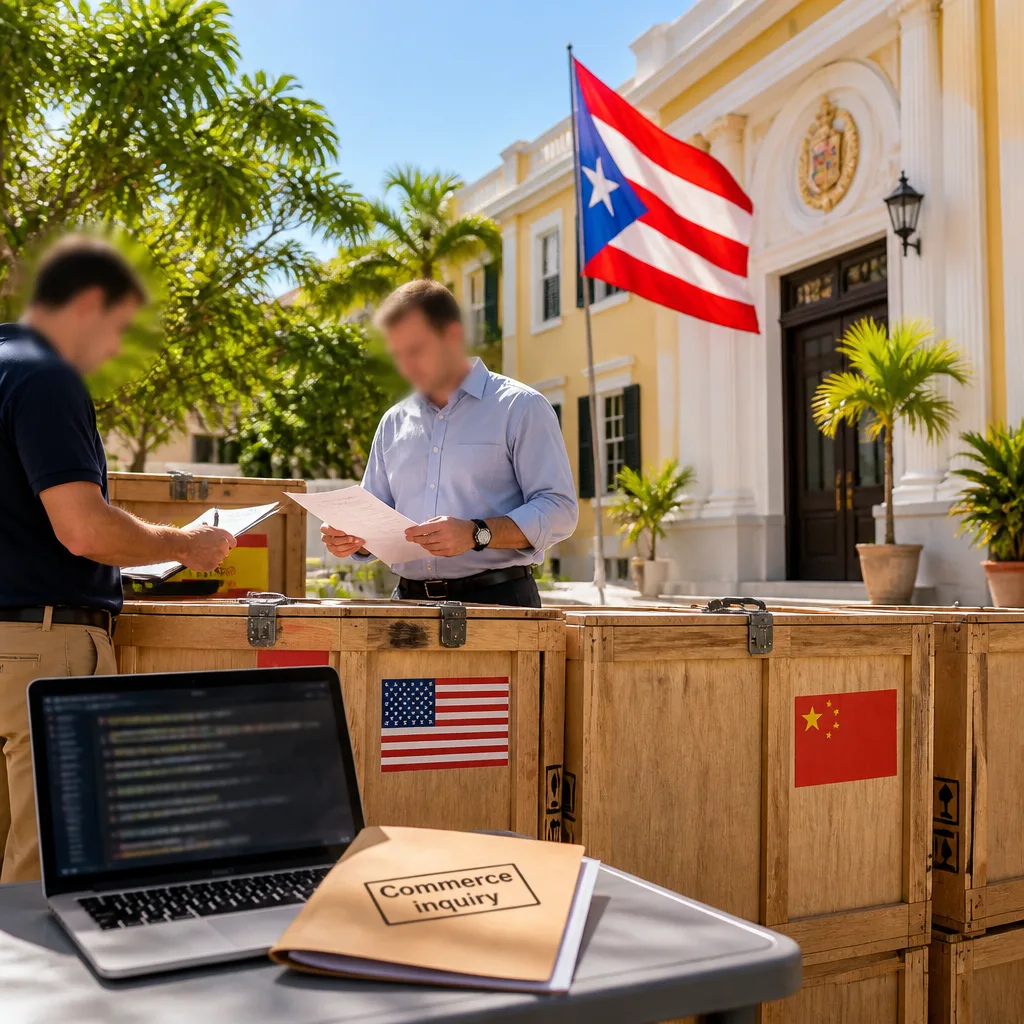
The US Department of Commerce has opened an inquiry into allegations that the Spanish defence group Indra assisted the transfer of US-origin military and airport infrastructure software to Chinese companies, after complaints from American defence entrepreneurs. The probe centres on claims that Indra resold or supplied product records and code that allowed Chinese firms to market the technology as their own.
Allegations from US defence businessmen
According to correspondence cited in published reports, US-based defence contractors raised concerns that Indra provided Chinese industry with detailed product information for strategic high-technology systems. The complaints say the material enabled later commercialisation of similar products by Chinese companies.
"sold equipment sourced from China that copied one of his products at roughly half the price, without informing him."
One US businessman, who had partnered with Indra to distribute a weather-prediction programme used in military and aviation-safety operations across Europe and much of Latin America, said he discovered a rival product marketed at about half his price. He said this material related to LIDAR-based software central to the dispute and that he had ended an exclusivity agreement with Indra and resumed selling directly.
Scope and areas of concern
The claims reportedly cover both software and hardware for airport infrastructure and extend to questions about Indra’s work on electoral systems. Complainants alleged that Indra’s behaviour undercut competitors and raised trust issues where election processes were involved.
Business sources in Puerto Rico have also voiced unease about the Spanish Consulate’s commercial activity. According to the same reporting, local entrepreneurs believe trade attachés in San Juan may be using the island as a gateway to US suppliers — activity some described as corporate espionage rather than standard commercial diplomacy.
- US Department of Commerce has begun an investigation based on complaints from American defence firms.
- Allegations include resale of product records and software enabling Chinese firms to replicate US-origin technology.
- Complaints touch on airport infrastructure systems, LIDAR-based weather prediction software and electoral technology.
- Puerto Rican business contacts have raised concerns about Spanish consular activity in San Juan.
Implications and unanswered questions
If the Commerce Department finds evidence that Indra facilitated the transfer of US-origin dual-use or military technology to China, the consequences could be wide-ranging. Such a finding would raise questions about export controls, compliance with US national security rules, and the responsibilities of state-linked contractors when operating internationally.
The published reports do not present findings from the Commerce Department, only the fact that it is examining complaints lodged by US businessmen. At this stage, the details remain allegations and the government enquiry will determine whether any laws or export controls were breached.
| Allegation | Area |
|---|---|
| Resale of product records | Strategic high-technology, including LIDAR software |
| Provision of equipment sourced from China | Airport infrastructure hardware and software |
| Questionable electoral technology practices | Election systems |
The situation underscores wider anxieties about the global supply chain for sensitive technologies and the risk that commercial relationships can become conduits for technology transfer to geopolitical rivals. Regulators in Washington will now establish whether the complaints merit sanctions, referrals to other agencies or further legal action.
For the UK and other partners, the case is a reminder of the complexity of monitoring dual-use technology flows and the role that commercial and state-linked actors can play in facilitating transfers — intentionally or otherwise. The Commerce Department inquiry will be watched closely by defence firms, export-control authorities and governments concerned about safeguarding strategic systems.