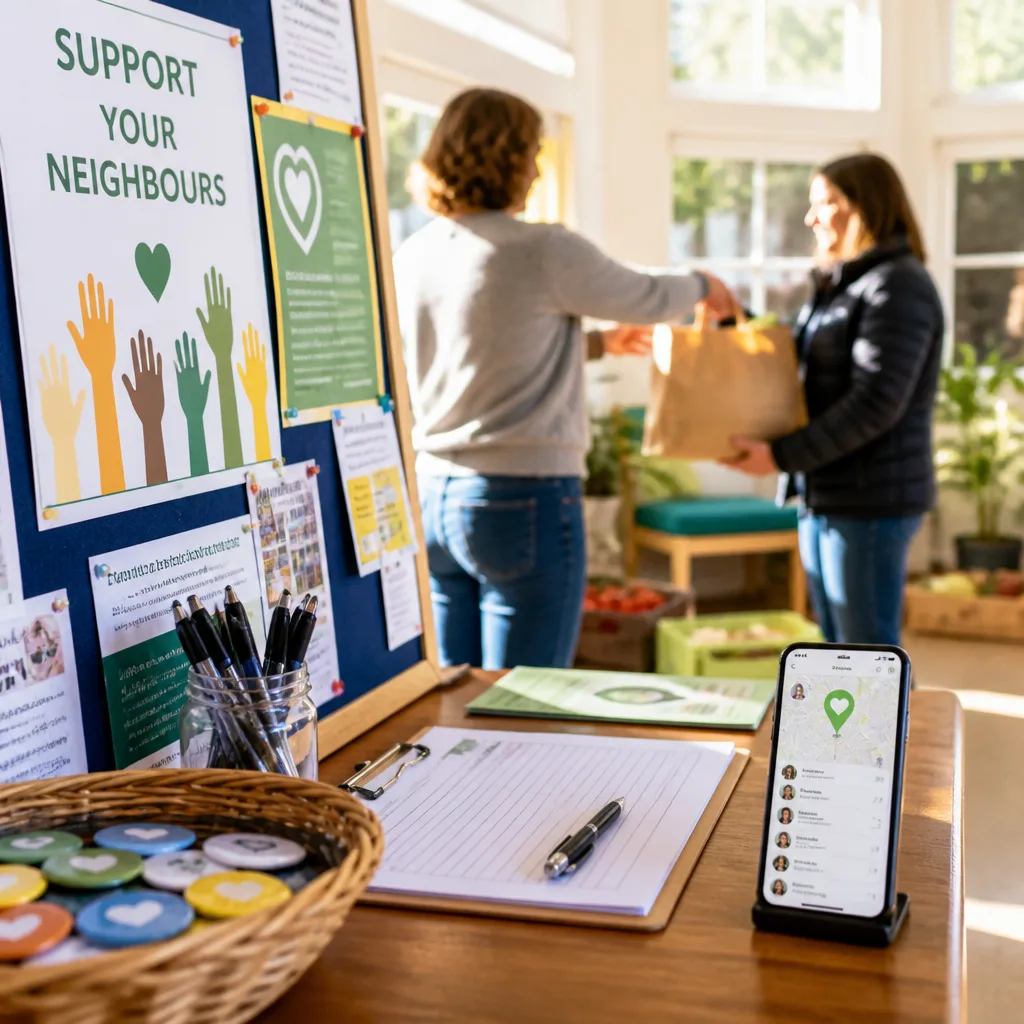
A tech solution born out of a son's need has become a modest test of how digital tools can support social ties that machines cannot replace. Faced with the practical problem of helping his father, who had Parkinson's, a founder built an app named OnHand to link volunteers and neighbours with older or isolated adults requiring simple assistance — shopping, errands or just someone to talk to. The project’s trajectory, and the surge in demand during the Covid pandemic, offers a clear lesson: technology can remove friction, but it cannot substitute for human companionship.
From a personal problem to a public need
The app began as a pragmatic fix. The founder lived away from his father and juggled work and family commitments; he wanted an easy way for neighbours to pick up groceries or run small errands for older people in the community. When the pandemic struck, the model was stress-tested — and widely needed.
Thousands of people volunteered their time during lockdowns, demonstrating that public goodwill exists at scale if it can be channelled. The app’s experience supports a simple proposition: many people are willing to help, they just need a convenient way to do so.
What the story says about AI and work
As artificial intelligence reshapes jobs and workplace practices, the founder’s account underscores a cautionary point for businesses and policymakers. AI will change how quickly tasks are done and which skills are valuable, but it does not re-create the spontaneous, everyday interactions that sustain communities and workplaces.
Key tensions include:
- How new hires build relationships across an organisation when so much interaction is mediated by screens and automation;
- Where employees practise leadership and empathy in an environment with fewer face-to-face moments;
- How social infrastructure for older and isolated people can be designed to complement — not replace — human contact.
"Most people want to do good. They just need someone to make it easier."
The quote, drawn from the founder’s reflections, is the simplest manifesto for civic tech: reduce transactional friction and the public will act. But reducing friction is not the same as eliminating human relationships — and policy should reflect that distinction.
Design choices matter
There are practical design implications for those building tech in this space. An app that links helpers and recipients must prioritise trust, ease of use and safeguarding. It should keep human contact at the centre of interaction design rather than treating it as a secondary outcome of efficiency gains.
For example, features that promote repeat, localised engagement — such as reminders, simple messaging and profiles that highlight verified neighbours rather than anonymous ratings — can nudge enduring relationships rather than one-off transactions.
| Feature | Purpose |
|---|---|
| Local matching | Encourages repeated, neighbourly contact |
| Simple verification | Builds trust without heavy bureaucracy |
| Basic messaging | Supports coordination and relationship-building |
Policy and the public interest
As the UK debates the social consequences of automation and AI, this example points to actionable priorities. Government and local authorities should recognise that digital services aimed at social care must be measured not only by efficiency but by their capacity to sustain human contact. Funding models, regulation and procurement should favour platforms that demonstrably protect and foster community ties.
That will mean resisting the temptation to treat AI as a cure-all for social problems. AI can speed up administrative tasks, triage requests and personalise services — all useful roles — but it cannot make a cup of tea, sit with someone for an hour, or watch subtle changes in a neighbour’s behaviour in the way another human can.
The pandemic highlighted both the fragility and the depth of social infrastructure. Digital tools like OnHand can extend that infrastructure if they are designed to support human-to-human contact rather than displace it. The founder’s experience is a reminder to designers, business leaders and policymakers: technology must make it easier for people to do good — and to remain human while doing it.