Water conservation plan could stop boats passing through Gloucester Lock
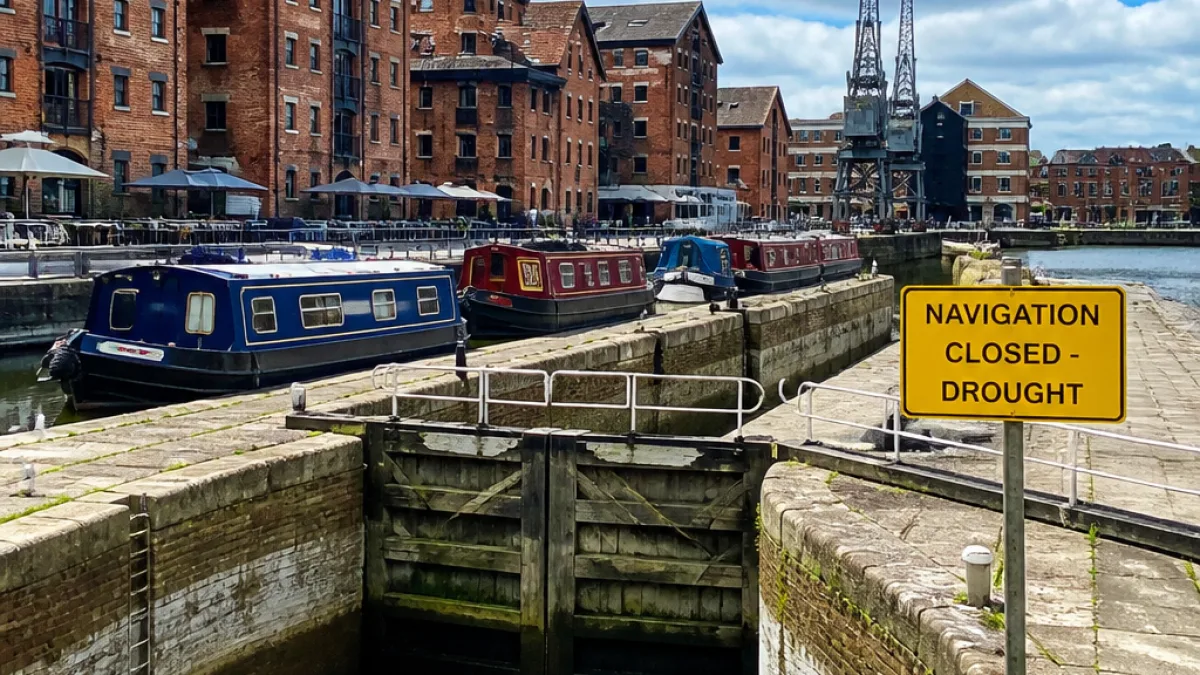
Navigation through Gloucester Docks could be restricted for up to six months under a proposed drought order aimed at conserving precious supplies in the River Severn and the Gloucester and Sharpness Canal.
The Environment Agency and Natural Resources Wales have applied for the order after an unusually dry summer left the Severn with seriously reduced flows and low water levels. Reservoir and groundwater releases have been used extensively to support the river this year, but those measures have drawn down storage at the headwaters to levels that trigger drought action.
'The impact of the drought order will result in the closure of navigation through Gloucester Lock in order to maintain essential water in the canal'
Under the proposals, an abstraction cap would be placed on the amount of water taken from the docks for the canal. When river flows drop below a set threshold at Deerhurst or Haw Bridge gauge, abstraction at the docks would be capped at 300 million litres per day.
At present, the Canal and River Trust pumps around 245 million litres per day into the docks, which then flows along the canal and is diverted to Bristol Water’s treatment works at Purton, more than 14 miles downstream. Around half of Bristol’s drinking water is supplied via the Gloucester and Sharpness Canal.
Local impact and who would be affected
The Canal and River Trust has warned that closing the lock would reduce the significant water losses that occur each time the lock is used at Gloucester and at Sharpness. While passage at Sharpness would be limited to commercial traffic, the trust says it may try to accommodate leisure vessels alongside commercial shipping where possible.
For Gloucester this means practical and economic consequences for a variety of local users:
- Leisure boat owners and hirers who use the docks and canal for recreation would face restricted movement and potential cancellations.
- Businesses that rely on canal traffic — boat yards, marinas and tourism operators — could lose trade during the period of closure.
- Commercial shipping through Sharpness may continue but with tighter controls, possibly affecting timetables and cargo movements.
Officials say the drought order is intended to avoid abrupt and severe falls in river levels that could harm ecology and migratory fish, by keeping supported water resources available for longer at reduced quantities.
Numbers that matter
These are the key figures being used to judge the need for the order and its operational limits:
| Measure | Figure |
|---|---|
| Abstraction cap at docks | 300 million litres/day |
| Current pumping into docks | 245 million litres/day |
| Flow threshold at Deerhurst/Haw Bridge | 1,200 million litres/day (below this triggers cap) |
Officials say the situation at Llyn Clywedog Reservoir in Wales — which feeds the headwaters of the Severn — has reached drought action triggers, necessitating a change in operations that a drought order would permit.
Locally, the proposal illustrates how interconnected the region’s water systems are: reservoirs and groundwater releases upstream, daily pumping through Gloucester Docks, and treatment works many miles downstream together sustain supplies for communities beyond the city. For Gloucester, the balance between protecting river ecology and supporting local navigation and businesses will be tested over the coming months.
Decisions on the drought order and any lock closures will be made by the relevant authorities after considering flows, reservoir levels and environmental impacts. Until then, river users and the businesses that rely on canal traffic are preparing for a period of uncertainty and potential disruption.