Employers should harness artificial intelligence (AI) to deliver more personalised and measurable workplace health benefits, advisers from global risk firm Marsh told listeners this week, arguing the technology can improve engagement and help employers see what is actually working.
AI moved beyond automation to personalisation
In a discussion about digital transformation in employee benefits, Marsh speakers outlined how AI is shifting from simple automation into more predictive and tailored applications. The panellists — Kate Brown, Marsh's Global Digital Leader for Health and Benefits; Andrew Owens, a senior business leader focused on agile transformation; and Nicholas McMenemy, Region Leader and Managing Director, UK, for Marsh Health and Benefits — argued that the primary opportunities are better-targeted offers, increased participation in health programmes and clearer measurement of outcomes.
They framed AI as a tool to address three persistent problems in employer-provided benefits: poorly targeted benefits, low employee engagement and limited visibility into impact. According to the speakers, AI-driven approaches can tailor communications and interventions to employee needs and behaviours, nudging people towards healthier choices and making the return on investment for benefits more transparent to employers.
Potential gains and practical applications
Marsh's experts described several practical applications where AI can add value:
- Personalised recommendations — using data to match individuals to the right mix of services.
- Predictive insights — identifying employees at risk of deterioration in physical or mental health so interventions can be offered earlier.
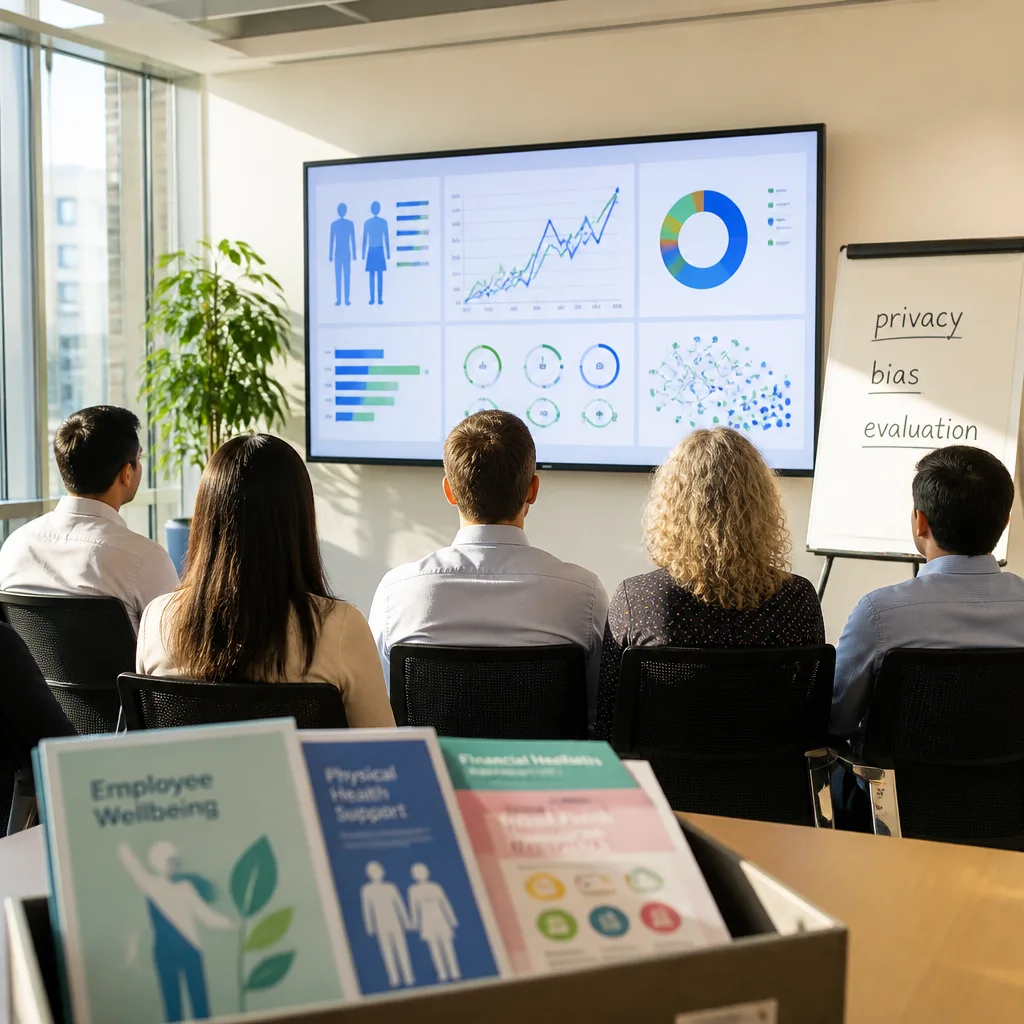
- Measurement and evaluation — analysing which benefits drive improved outcomes and engagement.
They emphasised that these capabilities could help employers move beyond one-size-fits-all provision and toward a model of benefits that supports mental, physical, financial and social wellbeing more effectively.
Risks remain: privacy, bias and effectiveness
The panellists were also candid about the challenges and risks of using AI in health and benefits. They warned that without careful design and governance, AI can exacerbate existing problems such as poorly targeted offers or create new harms through biased models or inadequate protection of employee data.
Key concerns included data privacy and consent, the risk of algorithmic bias leading to inequitable access to services, and the challenge of demonstrating true clinical or wellbeing benefit rather than short-term engagement metrics. They argued employers must couple technological solutions with strong ethical frameworks and rigorous evaluation to avoid unintended consequences.
Roles and expertise guiding adoption
Marsh positioned the discussion in the context of its advisory role, highlighting the multidisciplinary expertise needed to implement AI-driven benefits programmes safely and effectively. The speakers’ backgrounds span digital transformation, benefits strategy and leadership in the UK market, reinforcing the message that implementation requires both technical and sector knowledge.
| Speaker | Role |
|---|---|
| Kate Brown | Global Digital Leader, Marsh Health and Benefits |
| Andrew Owens | Senior business leader specialising in agile transformation |
| Nicholas McMenemy | Region Leader and Managing Director, UK, Marsh Health and Benefits |
Consequences for employers and health services
The debate has immediate relevance for employers, large and small, as they look to control costs while supporting workforce health and productivity. If AI can indeed improve targeting and measurement, it may help organisations allocate limited resources more effectively and support employees who would otherwise fall through the cracks.
For the wider health system, better workplace health interventions — if evidence-based and equitably delivered — could reduce pressure on primary and occupational health services. Yet the panellists were careful to say that technology alone is not a panacea: employers must invest in governance, evaluation and employee trust to ensure benefits translate into real improvements in health and wellbeing.
As AI becomes more prevalent in workplace health, independent evaluation and transparency about methods and outcomes will be essential. Employers and advisers should demand robust evidence that AI-driven approaches not only increase engagement but also produce meaningful, measurable improvements in employee health.