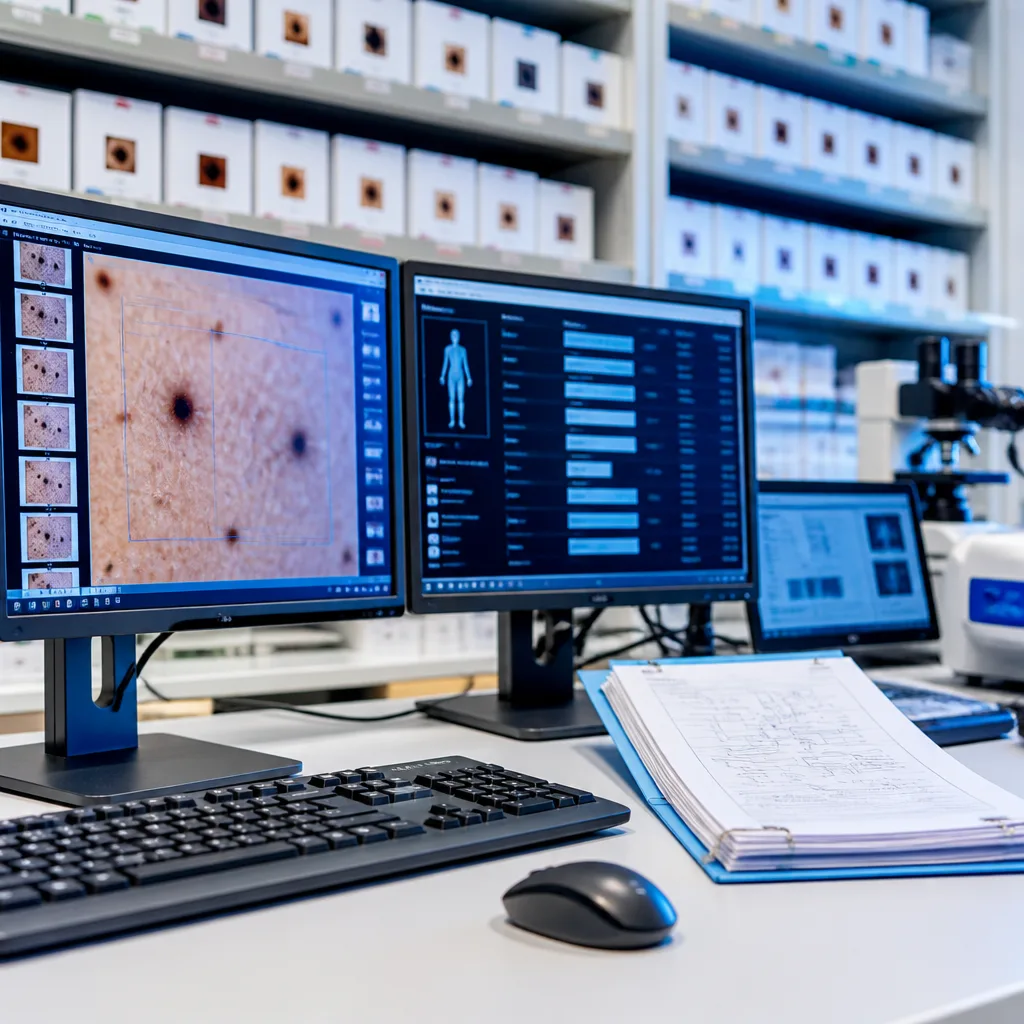
George Mason University has secured a patent for an artificial intelligence system designed to detect and assess bruises by analysing skin images together with clinical and demographic information held in electronic health records (EHRs). The tool, developed by the university's Injury Analytics Lab (IAL), is intended to support clinicians, forensic practitioners and researchers who need accurate documentation of skin injuries.
How the system works
The technology pairs computer vision trained on a dedicated repository of injury photographs with contextual data drawn from EHRs. That combination is modelled on consumer applications that blend visual input with supplementary information — for example, plant‑identification apps that use location data to improve accuracy.
| Component | Role |
|---|---|
| Image repository | Supplies computer‑vision systems with varied injury photographs for detection and analysis |
| AI algorithms | Detects bruise lesions and assesses visual features |
| Electronic health record data | Provides clinical and demographic context to refine assessment |
| Dedicated injury platform | Hosts the data, software and tools for real‑world application |
The project represents a multi‑disciplinary effort from IAL, drawing on nursing, health informatics and engineering expertise. The platform and related software development are led by Professor of Health Informatics and IAL co‑director Janusz Wojtusiak, with technical leadership in engineering from co‑director David Lat.
Intended benefits and use cases
Researchers say the system is intended to improve the accuracy and consistency of injury documentation — a need that spans medical treatment, research into injury patterns and legal proceedings where reliable evidence of harm is required. The IAL team highlights the difficulty of assessing bruises across different skin tones and the limits of relying solely on visual inspection.
"Documenting injuries accurately is essential for both medical treatment and seeking justice for victims of violence," said Associate Professor of Nursing and IAL Co‑Director Katherine Scafide.
- Support clinicians in distinguishing and characterising bruises from other skin findings.
- Provide forensic practitioners with standardised photographic assessment to aid investigations.
- Offer researchers a structured dataset linking images and clinical context for studies on injuries and outcomes.
What remains to be seen
The patent grants legal protection to the approach but does not, by itself, demonstrate clinical effectiveness. Key questions remain about how the system performs across the full range of skin tones, in different clinical environments, and when faced with variable image quality — all acknowledged challenges in injury assessment.
Other practical issues include integration with existing EHR systems, the level of clinician training required, and the procedures for safeguarding sensitive patient data when images are combined with health records. The source material describes the use of demographic and clinical variables to assist assessment, but it does not provide detail on data governance, consent or anonymisation approaches.
There are also legal and ethical considerations around deploying image‑based AI in contexts that can affect criminal investigations or child‑protection decisions. The team frames the platform as a tool to help professionals make informed choices, not as an autonomous decision‑maker.
Context and next steps
The move to patent an integrated image‑plus‑EHR approach reflects growing interest in artificial intelligence that combines visual data with contextual information to improve diagnostic accuracy. Translating a research prototype into a tool used in clinics and courtrooms will require robust validation studies, transparent reporting of performance across diverse populations, and carefully designed safeguards for privacy and data security.
For now, the patent marks a milestone in the Injury Analytics Lab's attempt to move research findings into a deployable system. The available information sets out the platform's architecture and the team behind it, but leaves open the timeline and regulatory steps needed before the technology becomes a routine aid for clinicians and forensic teams.