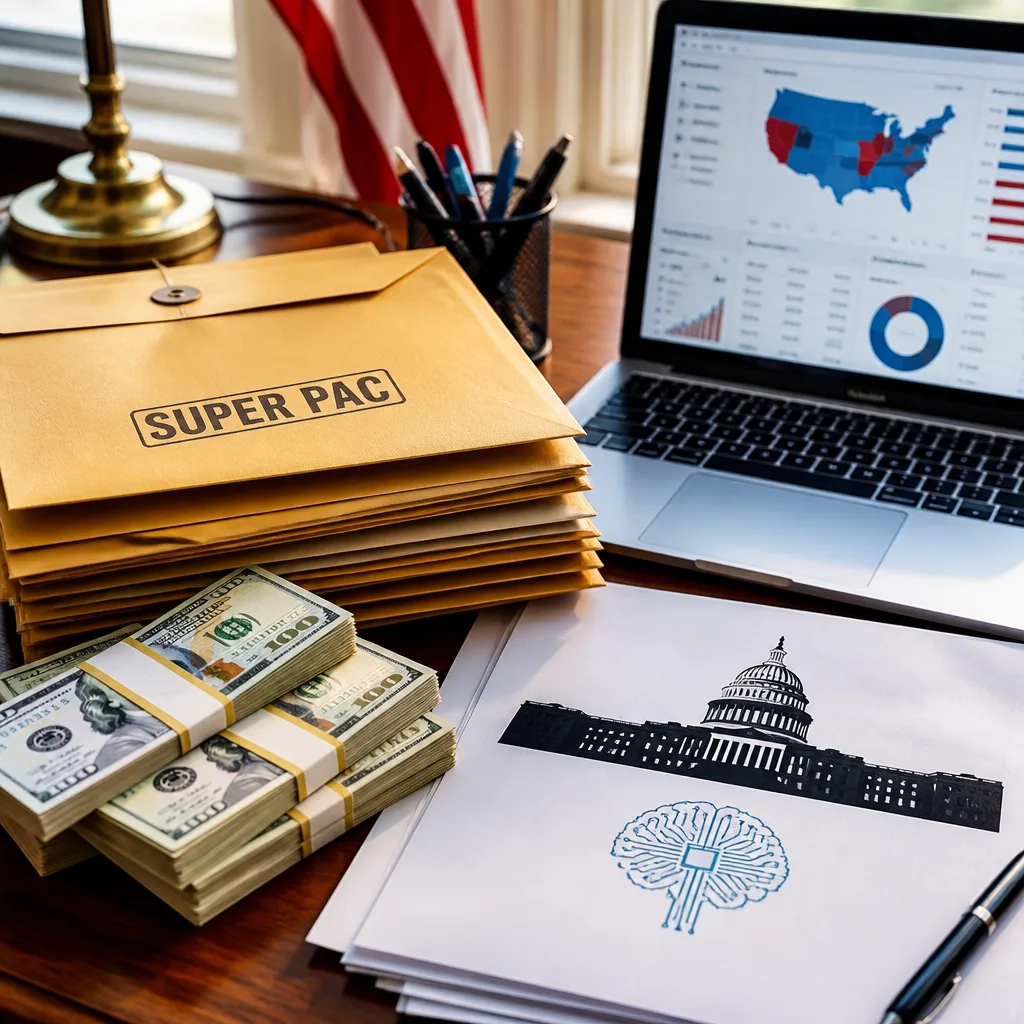
Senior executives and founders within the technology sector are deploying substantial financial resources to influence elections in the United States, seeking to shape the political agenda on artificial intelligence, according to reporting in The Guardian.
Industry funding targets AI policy allies
Companies and individuals connected with the development and deployment of advanced AI systems have backed independent spending groups and direct donations that, critics say, aim to elect candidates sympathetic to a deregulatory approach. The Guardian reports that funds directed to so-called Super PACs run into the "hundreds of millions" of dollars, and that high-profile figures have made significant personal contributions.
Among those named are Meta chief executive Mark Zuckerberg, who this week published a long essay arguing for a permissive environment for AI development, and the founders or leaders of several AI companies. The article identifies Greg Brockman, president and co‑founder of OpenAI, and Jo Lonsdale, a Palantir co‑founder, as donors to a political group called Leading the Future, which describes its purpose as "identifying, maintaining, and growing pro‑AI candidates".
"identifying, maintaining, and growing pro‑AI candidates"
Leading the Future has been active in campaign advertising, spending $6m this summer on a series of adverts that targeted Alex Bores, a New York state assemblyman who has been prominent in pushing for state‑level AI regulation, the report says. The adverts, according to The Guardian, attacked Mr Bores on broader progressive credentials rather than engaging with his AI policy record; Mr Bores has denied allegations made in the ads.
Concerns about tactics and transparency
Critics cited in the report liken the tactics to strategies used by cryptocurrency backers during the 2024 US election cycle, in which independent groups were funded to influence outcomes without formal party affiliation. The concern is twofold: that vast sums from a concentrated sector can skew which candidates are heard, and that some of the messaging may focus on personal or political vulnerabilities rather than substantive policy debate.
Supporters of a more liberal approach to AI regulation argue the stakes are high. In his essay, Mr Zuckerberg framed tighter restrictions as a potential drag on US competitiveness in technology. His position, observers note, aligns with business interests within the sector; critics say it is self‑serving and risks sidelining public interest concerns.
Impact on democratic debate
The Guardian argues the influx of tech money complicates the public conversation over AI. While open advocacy is preferable to covert lobbying, there are anxieties that the scale and style of spending may distort local races and obscure detailed scrutiny of candidates' positions on privacy, safety, labour and child protection—areas that the wider public associates with AI's social effects.
- Spending scale: "hundreds of millions" reportedly channelled into Super PACs and associated spending.
- Targeted advertising: Leading the Future spent $6m on ads attacking a New York assemblyman this summer.
- Key donors: Donations from Greg Brockman and Jo Lonsdale are named; Mark Zuckerberg’s public essay advocates a laissez‑faire approach.
Those defending industry involvement say investment in the political process is both legitimate and necessary, given the rapid pace of technological change. Yet the pattern raises familiar questions about the balance between private sector influence and democratic accountability, especially when opaque or aggressive messaging is used to influence electoral outcomes.
What happens next
As the US heads into further election cycles, the use of Super PAC money by tech companies and executives is likely to remain a feature of political life, particularly on issues where regulation could materially affect business models. The effect on individual contests will vary, but the episode underscores a broader problem for democracies grappling with politically potent emerging technologies: how to ensure informed public debate when powerful economic actors can underwrite the platforms that shape it.
| Item | Reported detail |
|---|---|
| Spending on ads (Leading the Future) | $6m |
| Overall Super PAC funding (reported) | Hundreds of millions |
| Named donors | Greg Brockman, Jo Lonsdale (and others implied) |
The debate over AI and politics is unlikely to be settled by essays or advertisements alone. Regulators, legislators and voters will be watching how money, messaging and policy interact in the months ahead.