
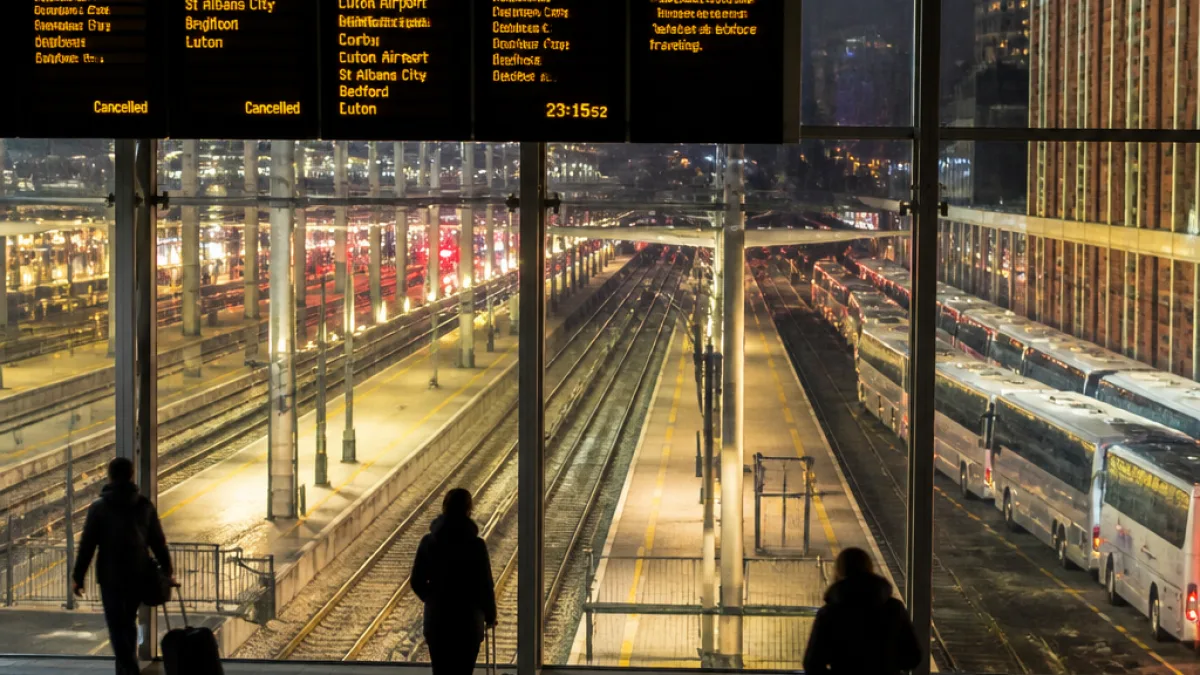
Rail passengers travelling into London over the August bank holiday have been warned to expect extensive disruption as engineers carry out final testing for a major digital signalling upgrade on the East Coast Main Line.
What is happening and why
Network Rail is preparing to introduce digital in‑cab signalling on the route and has scheduled work that will affect trains running south of Peterborough. The testing will require a closure of affected lines from the evening of Saturday 29 August until the morning of Monday 31 August, with rail replacement buses and revised timetables in place for some journeys.
The project is part of the wider £1.4bn East Coast Digital Programme, which replaces traditional lineside signals by delivering movement information directly into drivers' cabs. Network Rail says the system should improve both safety and the efficiency of services once fully rolled out.
"The work taking place involves the final preparations for us to begin a gradual introduction of digital in‑cab signalling on the East Coast Main Line," said Ricky Barsby, Network Rail's head of access integration for the project.
Barsby added that the changes will create a more resilient railway and that the engineering schedule was designed to avoid the busiest parts of the bank holiday, urging passengers to travel before or after Sunday 30 August where possible.
How journeys will be affected
Operators have been coordinating to reduce the impact but warn that passengers should expect altered routings and additional journey time. London North Eastern Railway (LNER) has arranged a diversion for two return services from Newcastle to run via Bedford instead of the usual route, with Thameslink providing onward travel to London St Pancras for those trains.
The operators estimate this arrangement will enable about 2,500 customers to complete their trips entirely by rail, rather than relying on buses for the whole journey.
Passengers are also being reminded that lift refurbishment work at London St Pancras presently means there is no step‑free access to or from the Thameslink platforms, which may affect those with reduced mobility or heavy luggage.
- Closure window: from 20:00 BST on Saturday 29 August until 08:00 BST on Monday 31 August
- Programme cost: £1.4bn for the East Coast Digital Programme
- Alternative arrangements: rail replacement buses on some routes; two LNER return services diverted to Bedford with Thameslink connection
Practical advice for passengers
Passengers planning bank holiday travel into or through London should check the latest journey information with their operator before setting out. Timetables and platforming may change at short notice during engineering blocks, so allow extra time and verify connections, particularly where onward Thameslink links are involved.
Those relying on step‑free access are advised to consider alternative stations or contact operators in advance for assistance because the current lift works at St Pancras mean limited accessibility to Thameslink platforms.
What the change means long term
Network Rail says the new signalling should ultimately make the East Coast Main Line more reliable by providing drivers with continuous, real‑time information — a shift from fixed trackside signals. The trial closure is the final preparatory phase ahead of a gradual introduction of the system.
| Item | Detail |
|---|---|
| Engineering closure | 20:00 BST Sat 29 Aug – 08:00 BST Mon 31 Aug |
| Programme cost | £1.4bn |
| Passenger mitigation | Rail replacement buses; two LNER services diverted via Bedford with Thameslink connection |
Network Rail and train operators say they have aimed to keep disruption to a minimum and will publish updates online. Travellers should check operator apps and National Rail Enquiries for service alterations and planned replacement transport before departing.
For people planning to travel through St Pancras over that bank holiday weekend, the combination of engineering work on the East Coast Main Line and ongoing lift refurbishment adds an extra layer of complexity — one that requires checking access and connections in advance rather than relying on usual routines.
Local transport staff will be on hand at affected stations to assist where possible, but during busy periods delays and longer journeys remain likely. Passengers with concerns about accessibility or time‑critical travel are advised to contact their operator directly.
















