Benchmarks are only the starting point for Rohtak buyers
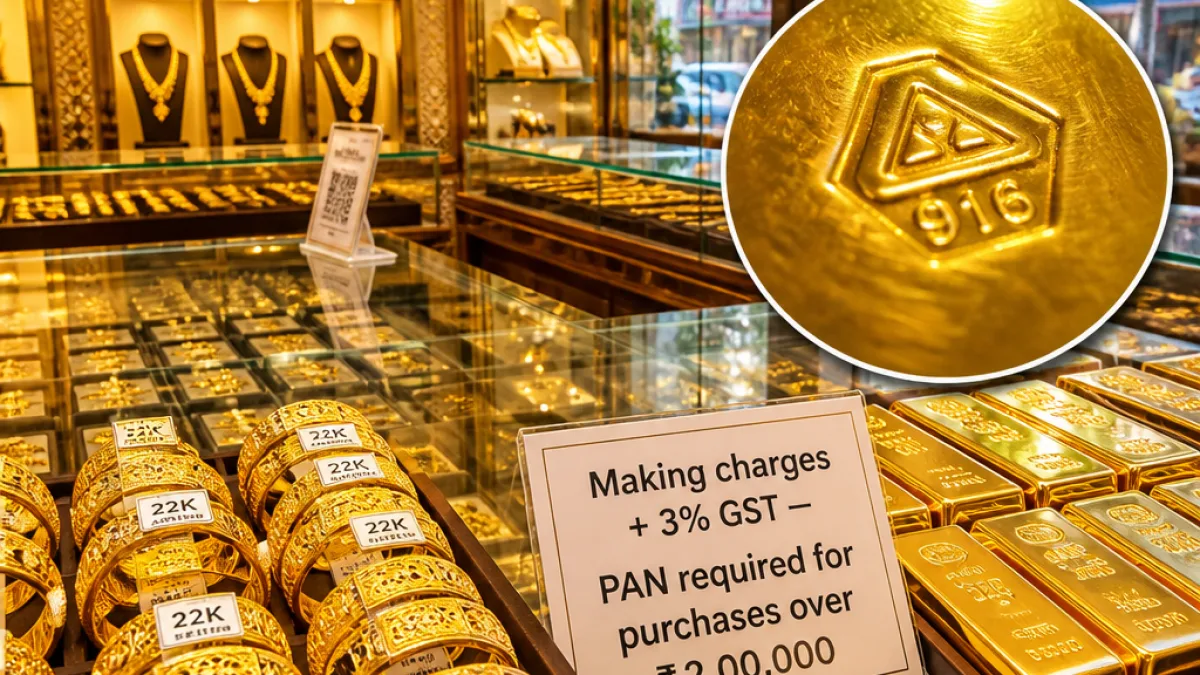
Gold rates quoted online serve as a market benchmark, not the final amount a buyer will pay at a Rohtak showroom or jeweller. The ultimate price of a piece of jewellery or a bar includes the base gold price plus variable making charges and statutory levies, with the 3% GST applied on the finished value.
Purity, common standards and what they mean for buyers
Understanding karat and purity is essential for Rohtak consumers deciding between jewellery and investment forms. The following is a standard breakdown:
| Karat | Purity | Typical use |
|---|---|---|
| 24K | 99.9% | Investment — coins and bars (too soft for most jewellery) |
| 22K | 91.6% | Traditional Indian jewellery (balanced for purity and durability) |
| 18K / 14K | Lower gold content | Stronger, more durable jewellery; different colours via alloys |
- Colour differs by alloy: Yellow, white and rose gold look different because of the metals mixed in; the karat value governs the actual gold content.
- Stoned jewellery: The net gold weight excludes embedded stones when calculating price—buyers should ask for a clear weight break-up on invoices.
- BIS hallmarking: Check for the BIS logo, the numeric purity mark (for example, 916 for 22K) and the six‑digit HUID code, which can be verified through the BIS Care app.
"The daily gold rate you see online is just a benchmark. The final showroom price will always be higher due to the following additions: Base gold price + making charges + 3% GST."
Alternatives to physical gold for Rohtak investors
For residents in Rohtak seeking exposure to gold without storage or making charges, the source outlines three main financial alternatives:
- Digital gold: Allows purchase in very small amounts (the note mentions starting from Re 1) and is useful for incremental investment.
- Gold ETFs and mutual funds: Paper assets that track the market price of physical gold and offer liquidity without the need for physical storage.
- Sovereign Gold Bonds (SGBs): Government‑issued securities that combine gold price returns with a fixed annual interest component.
Regulatory and tax points that affect purchases in Rohtak
Buyers in Rohtak should note the KYC and tax thresholds highlighted:
- KYC limits: PAN details are required for purchases exceeding ₹2 lakh. Cash transactions above ₹10 lakh trigger stricter KYC scrutiny.
- GST and capital gains: A flat 3% GST applies to gold purchases. Capital gains tax on sale depends on the holding period and applicable tax rules at the time of sale.
- Gifts and inheritance: Inherited gold is not taxed until sold. Gifts are tax‑free when received at marriage or from specified relatives; otherwise gifts exceeding ₹50,000 in a financial year may attract tax implications.
What this means for Rohtak consumers
For residents evaluating a purchase on 11 August 2026, the practical takeaways are:
- Use online gold rates as a reference, then seek a written invoice showing base rate, making charges and net weight.
- Insist on BIS hallmarking and verify the HUID code on the BIS Care app before finalising a purchase.
- Consider financial alternatives (digital gold, ETFs, SGBs) if avoiding making charges and storage is a priority.
- Keep PAN details ready for larger purchases and be mindful of cash transaction limits that trigger additional KYC.
Rohtak buyers who follow these checks will be better positioned to compare offers across jewellers and digital platforms and to decide whether physical jewellery or paper gold best suits their needs and budget.