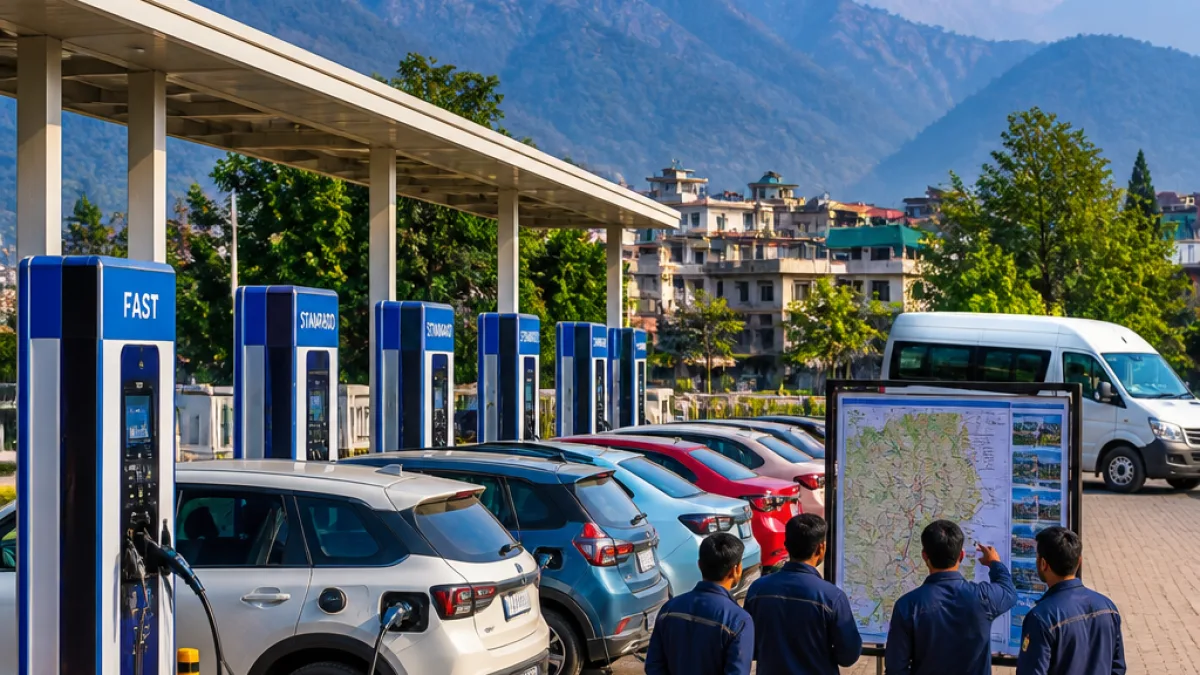
Dehradun: Uttarakhand has built a network of 221 electric-vehicle (EV) charging stations over the last five years, positioning the state ahead of its Himalayan peers, the state government said on Sunday. The tally comprises 84 fast chargers and 137 standard chargers, officials reported.
Numbers and comparative position
According to official figures released by the state, registered EVs in Uttarakhand have crossed the 1.04 lakh mark, with more than 58,000 of those vehicles added in the past three years. The government said the scale of installations places Uttarakhand ahead of other mountainous states on charging infrastructure.
| State | Charging stations |
|---|---|
| Uttarakhand | 221 |
| Jammu & Kashmir | 180 |
| Himachal Pradesh | 133 |
| Meghalaya | 62 |
| Manipur | 58 |
| Tripura | 55 |
| Sikkim | 12 |
| Ladakh | 1 |
Government focus and stated goals
Transport Minister Pradeep Batra said the state is prioritising fast-charging stations on busy tourist corridors and the pilgrimage routes leading to the Char Dham shrines. Officials added that 61 charging units were established under the Centre’s FAME-II scheme.
“As EV numbers grow, we are continuously expanding the charging network. Uttarakhand is significantly ahead of other Himalayan states in charging infrastructure,” said Transport Minister Pradeep Batra, according to the release.
Practical implications for residents and visitors
Officials told reporters that a wider charging grid aims to reduce range anxiety for private EV owners, commercial operators and tourists who travel seasonally to hill stations and pilgrimage sites. The government expects faster chargers to cut vehicle downtime and make longer intercity journeys more feasible.
- Residents: Improved access to fast chargers should shorten waiting times and support daily commuting by EV in urban and peri-urban areas.
- Transport operators: Expansion may encourage electrification of taxi and commercial fleets by easing refuelling logistics.
- Tourism and pilgrimage: Charging availability along high-traffic routes is intended to support peak-season movement to hill stations and Char Dham destinations.
Public transport and retrofitting plans
The state said its policy extends beyond public chargers to electrifying public transport. Officials reported plans for a phased conversion of State Transport Corporation buses to electric power and that authorities are examining possibilities to retrofit older buses as battery-operated vehicles. No timeline or financial outlay for the conversions was provided in the statement.
Challenges and context
Building charging infrastructure in mountainous terrain poses technical and logistical challenges, including difficult access, dispersed settlements and seasonal traffic surges. State authorities said their strategy is to concentrate fast chargers on high-traffic corridors where demand and turnaround are greatest, while continuing to add standard chargers to boost basic coverage.
Industry observers and EV users have in recent years cited the availability of fast chargers and reliable power supply as crucial for adoption in hilly regions. The state’s reported addition of more than 58,000 EVs in three years underscores rising consumer uptake, officials noted.
What to watch next
Further indicators to assess the scheme’s impact will include the number of operational fast chargers along specific tourist routes, uptime and maintenance records, and detailed plans or budgets for electrifying state bus fleets. Officials said the goal is a robust, convenient charging grid to support cleaner mobility across the state.
City: Dehradun