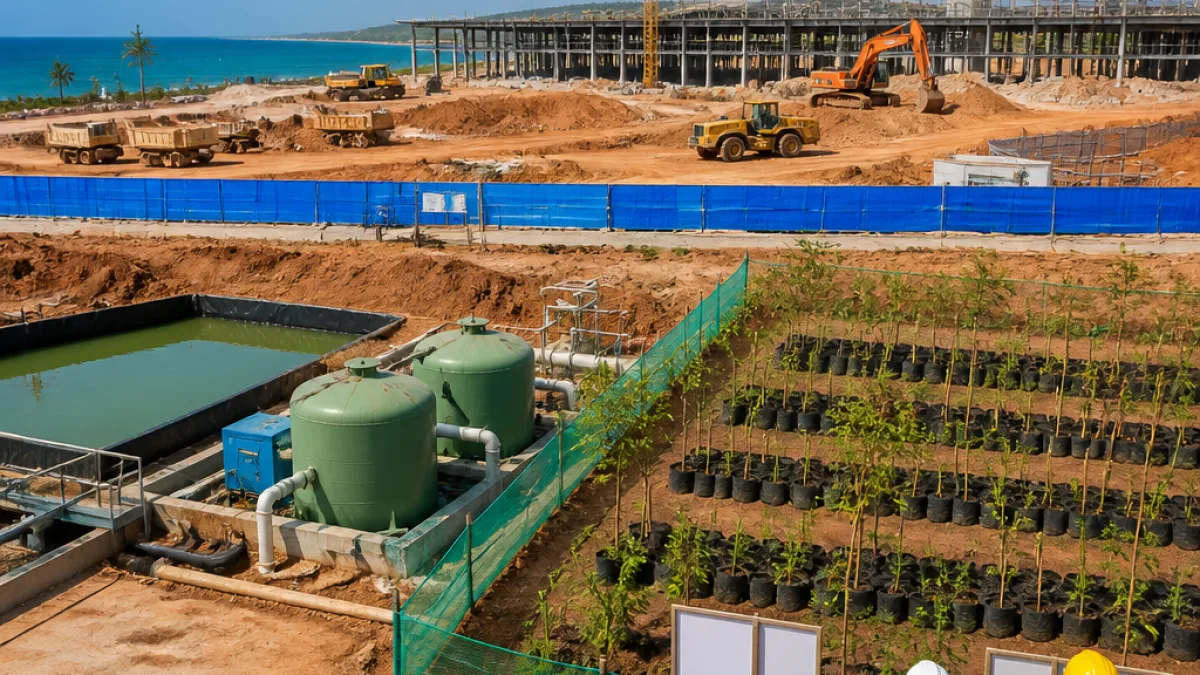
SEAC-1 grants conditional EC, sets mitigation and monitoring requirements
The State Expert Appraisal Committee-1 (SEAC-1) has recommended an integrated environmental clearance along with Coastal Regulation Zone (CRZ) clearance for the proposed expansion of Thiruvananthapuram International Airport, paving the way for the ₹8,707-crore redevelopment project. The clearance has been granted for a period of ten years and is subject to a set of stringent conditions laid down by the committee.
According to the SEAC-1 order, the expansion aims to boost the airport’s capacity to handle 27 million passengers per annum (MPPA) and to increase cargo throughput to 0.42 million tonnes per annum (MTPA). The project scope includes terminal redevelopment, a new cargo complex and upgraded apron facilities.
Environmental safeguards and coastal compliance
The committee has required the airport authorities to ensure that stormwater run-off from the site is routed through engineered oil–water separators and silt traps before discharge into the adjacent Parvathy Puthanar canal to prevent contamination of the waterway. The SEAC-1 emphasised adherence to CRZ norms while recommending the integrated clearance.
- A designated two-hectare green area must be maintained as per the project’s landscape master plan.
- Of the roughly 280 trees likely to be affected, priority should be given to transplanting timber-yielding species.
- Excavated material generated during construction is to be stored on-site and used for in-situ requirements such as land-raising, backfilling and other works; transport of spoil outside the site will follow prescribed procedures.
“Excavated material generated during construction would be stored within the project site and utilised to the maximum extent possible for in-situ requirements,” the project proponent told the SEAC, according to the committee record.
Corporate environmental responsibility and material sourcing
The SEAC-1 had earlier described the initial Corporate Environmental Responsibility (CER) plan as unsatisfactory and directed the airport authorities to submit a revised proposal. The committee has asked for clarification of earth-excavation requirements and the CER plan before final terms are formalised.
The clearance conditions specify that if excavated material needs to be transported beyond the site, the project must follow the procedures prescribed by the relevant agencies. The same rules will apply to any external sourcing of construction material, although the project is expected to prioritise the optimal use of material excavated on-site.
| Parameter | Planned capacity / Requirement |
|---|---|
| Passenger handling | 27 MPPA |
| Cargo handling | 0.42 MTPA |
| Project cost | ₹8,707 crore |
| Green area | 2 hectares |
| Trees likely affected | Approximately 280 |
Local implications and next steps
The SEAC-1 directives aim to limit environmental impacts during both construction and operations. For residents around the airport and along the Parvathy Puthanar canal, the most immediate concerns will be sediment and pollutant control during earthworks and the fate of trees on site.
The committee’s insistence on transplanting timber-yielding species and creating a two-hectare dedicated green area reflects attention to local biodiversity and urban greening. The project proponent’s assurance on using excavated material within the site, if implemented effectively, could reduce truck movements and associated dust and traffic on arterial roads leading to the airport.
Formal CRZ clearance and any additional permissions from coastal and forest authorities remain necessary before major construction can begin. The SEAC-1 has also required a revised CER and clearer accounting of excavation requirements as prerequisites for final authorisation.
With clearance now recommended, the airport expansion moves closer to implementation, but conditions set by the SEAC-1 will require close monitoring by regulatory authorities and local stakeholders to ensure that environmental safeguards and community concerns are addressed during the multi-year redevelopment.