Community outreach brings early eye care to Gujarat villages
Surat ophthalmology services are reaching deeper into rural Gujarat after a retina specialist based in the city developed an integrated screening-to-surgery model that, according to reporting by The Better India, has performed more than 30,000 free surgeries and organises nearly 40 screening camps every month.
The initiative, led by a retina specialist who began practice in Surat in 2008, responds to a common pattern seen in the region: patients present late to hospitals because of travel cost, limited awareness or lack of access to specialists. By the time many patients arrive, retinal and other sight‑threatening conditions have progressed to stages that are harder to treat.
Public-health data cited in the original report underline this urgency. A national survey conducted between 2015 and 2019 and published in PLOS ONE found that among people aged 50 and above, 92.9% of blindness and 97.4% of visual impairment were attributable to avoidable causes, with cataract accounting for 66.2% of blindness in that age group. The statistics reinforce the importance of early diagnosis, timely treatment and regular follow-up.
How the outreach model works
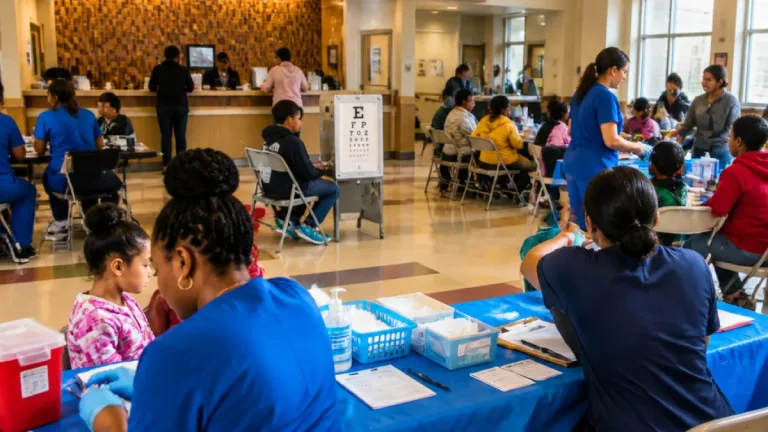
The programme moves beyond a clinic-centric approach by taking screening into villages, identifying patients who need intervention and transporting them to Surat for surgery when necessary. The model combines community camps, triage, surgical referral and postoperative care in a coordinated chain.
- Regular screening: nearly 40 camps per month to detect cataract and retinal problems early.
- Free surgical access: over 30,000 free operations reported to date, reducing financial barriers for low-income patients.
- Referral and follow-up: patients identified during camps are brought to Surat hospitals for treatment and monitored postoperatively.
The approach addresses two persistent barriers in rural Gujarat: physical access to specialists and the cost of travel or treatment. For retinal diseases in particular, delays can produce irreversible vision loss; the outreach aims to compress the time between detection and intervention.
Implications for local health systems and industry
For Surat — a city with a significant healthcare and medical-device market — the outreach has multiple implications. First, it demonstrates a scalable patient-flow model that links peripheral screening with tertiary care in an urban centre. Second, it highlights demand for surgical capacity, consumables and optical devices that local manufacturers and suppliers can service. Finally, the programme emphasises the role of private practitioners in supplementing government eye-care initiatives, potentially reducing the long-term burden on public hospitals by treating avoidable causes early.
| Activity | Reported figure |
|---|---|
| Free surgeries conducted | 30,000+ |
| Screening camps per month | ~40 |
| Key avoidable cause of blindness (50+ years) | Cataract — 66.2% |
Early detection and rapid referral are essential to prevent avoidable blindness, especially in regions where travel and awareness are limiting factors.
Local health administrators and civil-society groups in Gujarat may view the initiative as a complementary model for rural outreach. The combination of mobile screening and urban surgical capacity reduces loss-to-follow-up and, if sustained, can reduce the prevalence of avoidable visual impairment among older adults in surrounding talukas.
While the original report focuses on one practitioner's long-term efforts, its findings dovetail with national research pointing to a large proportion of blindness being preventable if detected early. For Surat, continued coordination between outreach programmes, municipal health services and suppliers of ophthalmic consumables could expand capacity and improve outcomes for thousands more patients across south Gujarat.
Further monitoring of postoperative outcomes, camp coverage and referral timeliness would help quantify the public-health impact and inform replication in other districts.