Isanpur clinic owner targeted with malicious APK after fake bill call
Ahmedabad — A 67-year-old doctor who runs a clinic in Isanpur has allegedly been defrauded of ₹4.51 lakh after receiving a WhatsApp call claiming an Adani Gas bill was unpaid, police said on Friday. Narol police have registered a case under provisions of the Information Technology Act and the Bharatiya Nagarik Suraksha Sanhita and launched an investigation.
According to the complaint lodged with authorities, the complainant, identified as Prakashbhai Darji, lives at Prerna Tenament on Isanpur-Vatva Road. On the morning of October 4, he received a call on WhatsApp from an unknown number. The caller claimed the doctor’s Adani Gas bill was "overdue" and threatened disconnection unless payment was made, the complaint said.
"The caller claimed that his Adani Gas bill was overdue and threatened to disconnect the supply if he failed to pay," the complaint said.
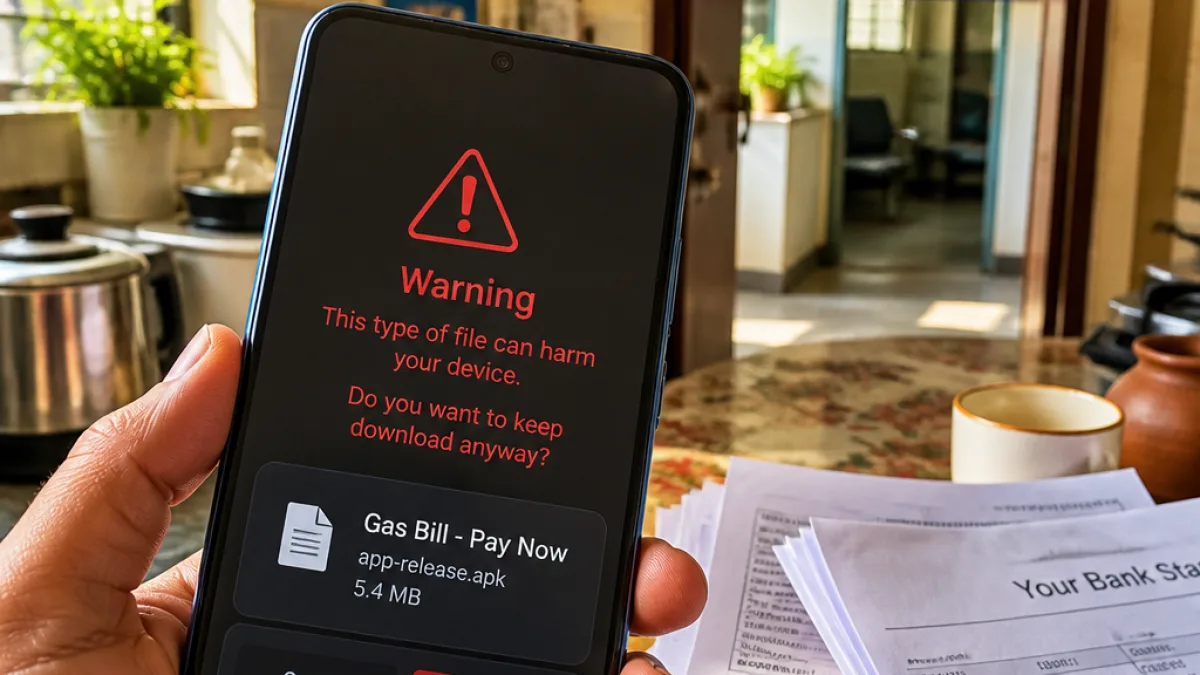
The caller followed up by sending a notice bearing the Adani Gas logo and an Android Package Kit (APK) file, purportedly required to effect payment. The complainant, who runs a neighbourhood clinic, downloaded the application after being told that only ₹13 remained unpaid and was instructed to keep the call active while entering details, the complaint states.
After installing and interacting with the APK, Darji entered his gas service number and his Bank of Baroda debit card details. He subsequently reported that his mobile phone froze for about one-and-a-half to two hours. Concerned, he checked his account at an ATM and found multiple unauthorised debit transactions totalling ₹4.51 lakh, according to the complaint filed with the cybercrime helpline and Narol police.
Police action and legal provisions invoked
Narol police registered the matter after it was initially reported through the cybercrime helpline (1930). The FIR cites applicable sections of the Information Technology Act and the Bharatiya Nagarik Suraksha Sanhita. Investigating officers have begun tracing the origin of the malicious file and the accounts used in the unauthorised debits.
- Victim: 67-year-old clinic owner, Isanpur (Prerna Tenament, Isanpur-Vatva Road).
- Method: WhatsApp call + Adani Gas-branded notice + malicious APK file.
- Financial loss: ₹4.51 lakh debited from Bank of Baroda account.
- Date of incident: Morning of October 4; complaint lodged with cyber helpline and Narol police.
Police are examining digital forensic traces from the complainant’s phone and the transaction trail through the bank to identify perpetrators. The case underscores a pattern in which fraudsters impersonate utility representatives, use credible logos to build trust, and deploy remote-install malware or APKs to harvest banking credentials.
Local context and implications for Ahmedabad residents
Ahmedabad has seen a steady rise in technology-enabled frauds targeting seniors and small-business proprietors who may rely on hybrid (online and offline) banking. The method used in this case — an APK sent over messaging apps and accompanied by an aggressive disconnect threat — mirrors tactics reported elsewhere in the state and nationally, where impersonation and social engineering are combined with malware to bypass two-factor protections.
Bank customers are advised to treat unsolicited payment links and application files with caution. Banks and payment-service providers often caution customers never to share debit/credit card details, CVV, PINs, OTPs or to install unknown applications on request. Losing funds through such means frequently requires a coordinated response involving the bank, cybercrime cell and, where relevant, payment intermediaries.
| Item | Detail |
|---|---|
| Victim location | Isanpur (Prerna Tenament, Isanpur-Vatva Road) |
| Alleged modus operandi | WhatsApp call, fake Adani Gas notice, malicious APK |
| Reported financial loss | ₹4.51 lakh (multiple unauthorised debits) |
| Police station | Narol police |
| Legal provisions | Information Technology Act, Bharatiya Nagarik Suraksha Sanhita |
Narol police and cyber investigators in Ahmedabad are pursuing digital leads. The case will likely involve coordination with the bank to trace recipient accounts and with messaging-platform records to identify the source number. Residents are urged to report similar suspicious messages and calls to the cybercrime helpline and local police to aid fast response and to limit further monetary loss.