ITRA conference explores ethical, scientific use of AI in Ayurveda
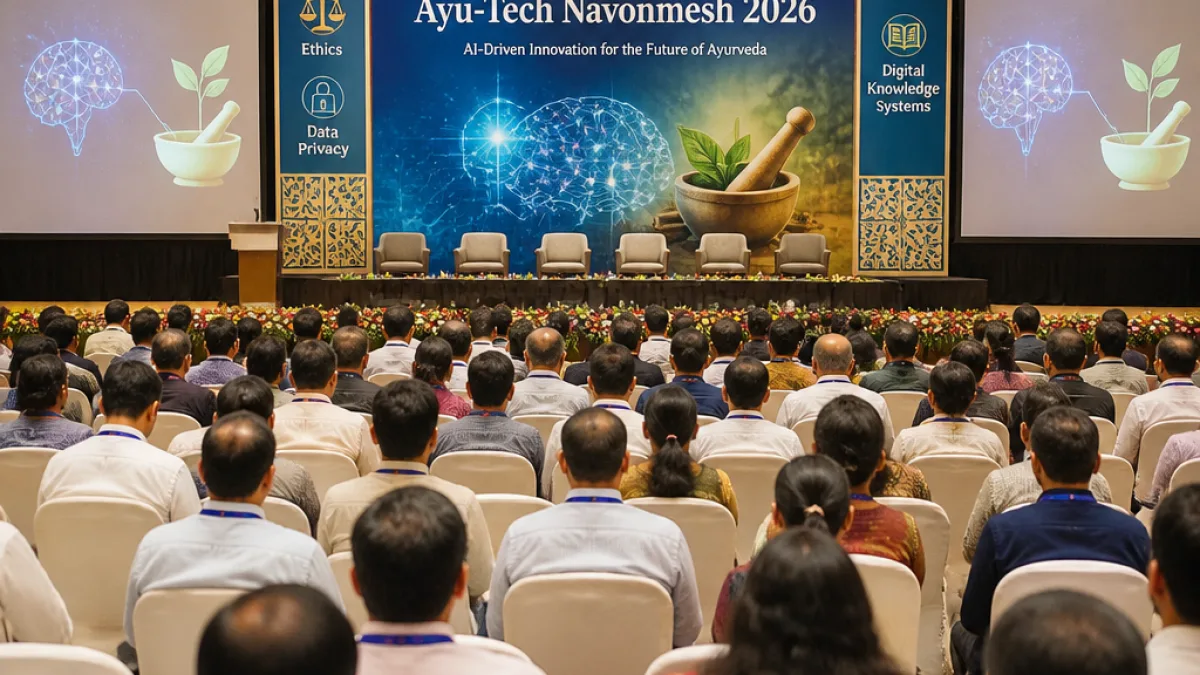
Jamnagar — The Institute of Teaching and Research in Ayurveda (ITRA), Jamnagar, on Saturday hosted a national conference titled “Ayu‑Tech Navonmesh 2026” to examine how artificial intelligence (AI) can be applied across Ayurvedic research, education, drug development and clinical services. The event formed part of ITRA’s sixth Foundation Day celebrations, organisers reported.
Speakers and panellists discussed the opportunities and constraints of introducing data‑driven tools into traditional medicine systems, placing strong emphasis on ethical safeguards, data privacy and scientific validation. Sessions showcased AI applications ranging from digital knowledge systems and intelligent healthcare services to AI‑driven chatbots and product development aids intended to strengthen Ayush services.
“AI could improve understanding and application of Ayurveda. However, technology must complement traditional knowledge rather than replace its core principles,”
said Dr Geetha Krishnan, Head of the Traditional Medicine Research, Data and Innovation Unit at WHO‑GTMC, according to the conference report.
ITRA Director Prof. Dr. Tanuja Nesari described the gathering as an important platform for innovation and collaboration, noting that discussions addressed ethical, scientific and practical aspects of deploying AI in Ayurvedic research, education and healthcare, the institute said.
WHO and Ayush officials outline collaboration and challenges
Speakers from international and national agencies outlined the contours of cooperation and the main hurdles to adoption. Sameer Pujari, AI Lead for Digital Health and Innovation at WHO headquarters, discussed the organisation’s efforts to preserve traditional knowledge using technology and referenced ongoing collaborations with the WHO, the International Telecommunication Union and the World Intellectual Property Organization that date back to 2018, according to the conference summary.
Naman Goyal, Officer on Special Duty at the Ministry of Ayush’s Ayush Grid, presented core AI and machine‑learning concepts, including approaches to data collection, processing, model training, testing and prediction. The presentation also featured demonstrations of digital tools and chatbots developed to support Ayush workflows.
- Responsible AI: Sessions emphasised governance, ethics and consent frameworks for working with traditional medicine data.
- Digital knowledge systems: Speakers recommended standards for digitisation of classical texts and clinical records to enable reliable model training.
- Product development and trials: Discussions covered how AI can assist in drug discovery, quality assurance and the design of clinical trials for Ayurvedic formulations.
Conference content and practical takeaways
According to the event programme, panels and demonstrations covered the following thematic areas:
| Theme | Focus |
|---|---|
| Responsible AI | Ethics, data privacy and regulatory barriers |
| Digital knowledge systems | Digitisation of classical texts, structured clinical data |
| Intelligent healthcare services | Chatbots, decision‑support tools for practitioners |
| Product development | AI‑assisted drug research and quality assurance |
Speakers highlighted practical barriers specific to traditional medicine, including heterogeneity in documentation, the need for standard ontologies of Ayurvedic concepts and concerns over ownership of digitised ethnomedical knowledge. Panel discussions called for multi‑stakeholder frameworks that include practitioners, researchers, regulators and technology specialists to ensure any AI application is both scientifically robust and culturally respectful.
While conference delegates acknowledged the promise of AI to accelerate research and expand access to Ayush services, they repeatedly underlined that technological tools must be used to complement — not supplant — established clinical judgment and the system’s underlying principles. Data governance, transparent model validation and regulatory clarity were identified as priorities before widespread deployment.
For Jamnagar, a city known for its concentration of Ayurvedic education and manufacturing, the conference could influence local research priorities and collaborations between ITRA, industry and government bodies. The event also signals a growing policy focus in Gujarat and nationally on integrating digital technologies with traditional health systems while protecting heritage knowledge and patient rights.
ITRA’s event materials said the conference included demonstrations of AI tools and panels addressing clinical trials, education reform and industry applications, reinforcing the institute’s aim to position Jamnagar as a hub for Ayu‑Tech innovation.