GANDHINAGAR: The Gujarat government has initiated a review to curb non‑academic duties assigned to primary and secondary school teachers, with a view to letting them concentrate on classroom teaching, Education Minister Dr Pradyuman Vaja said after a meeting in Gandhinagar on October 17.
Committee to study workload, submit report
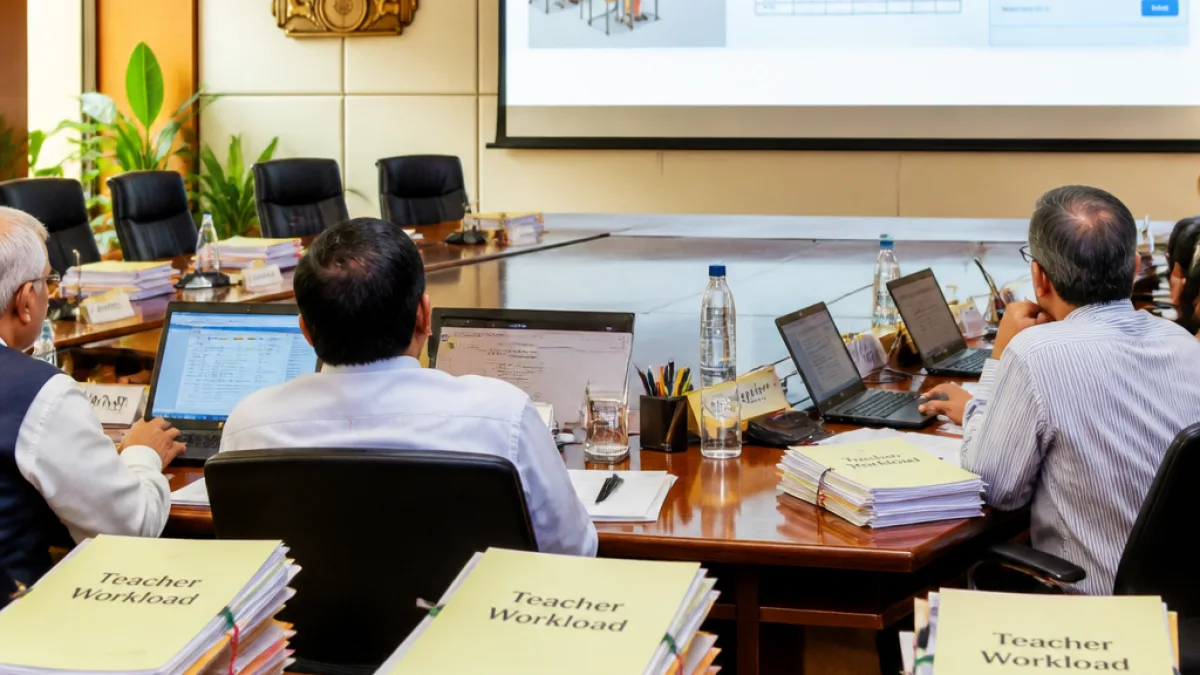
Dr Vaja chaired a high‑level meeting in which he directed the constitution of a special committee comprising senior officials from the Education Department, Gujarat Council of Educational Research and Training (GCERT), Samagra Shiksha and the Commissioner of Schools. The panel has been asked to undertake a detailed study of teachers' additional responsibilities — including tasks related to teacher training and online data entry — and submit its findings to the state government for a final decision.
The initiative is being presented by the state as part of a mission‑mode effort to simplify administrative processes that take teachers away from pedagogic work. Officials present at the meeting included Principal Secretary of the Education Department Milind Torawane, Director of Primary Education Prakash Trivedi, and senior officers from GCERT and Samagra Shiksha Abhiyan, according to the state account.
"The classroom is a teacher’s true workplace,"
Dr Vaja stressed that unnecessary online data entry and other non‑academic tasks should be reduced so that teachers can devote more time to children’s teaching and learning. He also linked the move to broader developmental aims, saying education is vital to realising the vision of Viksit Bharat 2047 as articulated by Prime Minister Narendra Modi and that teachers play a central role in that effort.
Areas identified for review
The committee will examine a range of areas flagged during the meeting, including:
- Administrative and inter‑departmental responsibilities currently assigned to teachers;
- Data‑entry obligations on multiple online portals that teachers must maintain;
- Processes around teacher training and how training duties are scheduled and recorded;
- Possible consolidation or streamlining of reporting requirements to reduce duplication.
Officials said the committee will submit a report to the state, which will make the final decision balancing the interests of both teachers and students. No timeline for the committee's report was provided in the official brief.
Operational implications for schools and staff
The move, if followed by administrative reforms, could change the day‑to‑day responsibilities of thousands of teachers in Gujarat's government schools. Teachers in many states have long reported that administrative tasks — including frequent online returns, census exercises and ad hoc duties assigned by other departments — reduce available time for lesson planning, remedial instruction and classroom engagement.
Streamlining could involve delegating certain data‑entry functions to administrative staff, consolidating portal requirements, or introducing centralised data teams at block or district level. Any changes will need coordination among the Education Department, GCERT and Samagra Shiksha, which are members of the newly formed panel.
| Committee Members | Role |
|---|---|
| Education Department senior officials | Overall policy, implementation inputs |
| GCERT representatives | Teacher training and curriculum implications |
| Samagra Shiksha officials | School‑level programme coordination |
| Commissioner of Schools | Operational and monitoring perspective |
Education sector stakeholders will watch how recommendations translate into administrative orders, staffing changes or IT reforms. Any reduction in data burdens may require upfront investments in administrative manpower or technical consolidation to ensure statutory reporting and monitoring continue without loss of oversight.
Background and context
Gujarat administers a network of government primary and secondary schools where teachers routinely perform both academic and non‑academic functions. The state has invested in digital monitoring and multiple online portals in recent years; while these provide data for planning and monitoring, they have also increased teachers' reporting workload.
Dr Vaja framed the step as part of the government's commitment to address teachers' concerns and improve education quality. The official statement underlined collaboration among the government, teachers and students to strengthen learning outcomes.
The committee's report will determine next steps. Until it presents recommendations, schools are expected to continue following existing directives from the Education Department and related agencies.
City: Gandhinagar