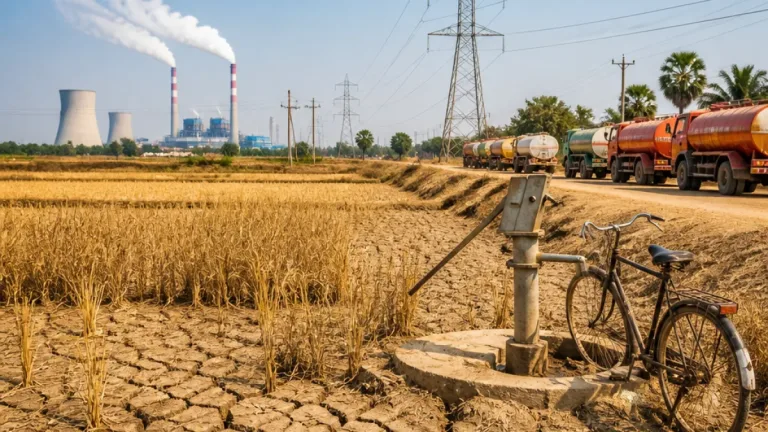
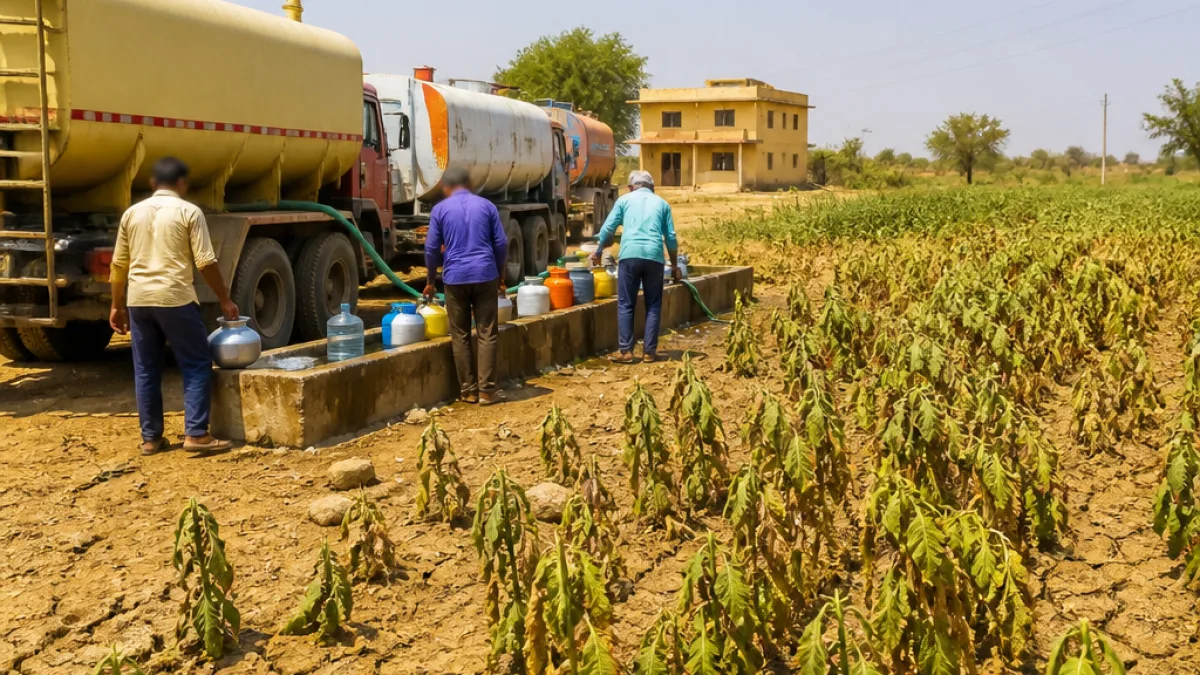
Maharashtra, Solapur: A late monsoon and prolonged dry spells have put large parts of Solapur district on alert for drought, officials said, as farmers report failed crops and the administration supplies drinking water to villages by tanker.
Farmers count losses after rain fails to arrive
Farmer Ganesh Patil of Raleras village described a dramatic turnaround compared with last year: where fields were submerged and crops lost to excess water in the previous season, this year his soybean plants have withered for want of moisture. Patil said he sowed in July after the delayed monsoon and spent nearly ₹1 lakh on seeds, fertilisers and sowing operations across his 10-acre holding, expecting returns of about ₹6 lakh. With crops failing, he told reporters he was rotavating the field so the plants would decompose into manure and planned to keep the land fallow pending meaningful rain.
District rainfall figures underline the severity of the shift. In August last year, Solapur recorded about 175 mm of rain compared with roughly 32 mm this August. September 2025 saw 365 mm against an average monthly rainfall of 176 mm, while so far this September the district has received only 9 mm, officials said.
Administration assessing triggers; water tankers deployed
District Collector S Karthikeyan visited several villages and field locations — including Boramani and Dhotri in South Solapur taluka, and Walsang, Konhali, Kurnur, the Kurnur dam area, and Navindagi in Akkalkot taluka — to review crop conditions, soil moisture, availability of fodder and drinking water needs, according to the district administration.
“We are assessing the situation in all 11 talukas. For declaring drought, low rainfall and extended dry spells serve as key official triggers. Currently talukas like Malshirad, Sangola, Mohol and Barshi meet the criteria for trigger 1 and trigger 2 assessment. The other talukas meet the trigger 1 criteria. Water supply to 42 villages is being done through tankers; if need arises we will increase tankers for drinking needs,” the collector said.
The administration has directed field teams to collect detailed information on rainfall gaps, crop damage, soil moisture status and livestock fodder shortages to prepare a formal assessment. Officials said trigger-based assessments form the basis for any official drought declaration and for seeking relief measures from the state.
- At present, 42 villages receive drinking water from tankers, with more to be added if required.
- Four talukas — Malshirad, Sangola, Mohol and Barshi — meet both first and second drought trigger thresholds; the remaining talukas satisfy trigger‑1.
- Field visits covered both crop and water infrastructure sites, including the Kurnur dam area.
Local consequences and next steps
Farmers face immediate livelihood losses and may delay sowing of the rabi jowar crop if rains do not arrive by mid‑October, as several cultivators indicated. Reduced soil moisture and fodder scarcity for cattle were observed during official inspections, increasing pressure on rural households dependent on agriculture and livestock.
While the administration has begun tanker supplies and intensified field assessment, farmers and local leaders are likely to press for formal drought recognition to unlock state relief packages, credit support and fodder procurement. Officials said data from the ongoing assessments will determine any formal request to the state government for drought relief.
| Item | Recent figure | Reference |
|---|---|---|
| August rainfall (this year) | 32 mm | District reports |
| September rainfall (so far) | 9 mm | District reports |
| Villages on tanker supply | 42 | Collector statement |
With sowing decisions still pending for many growers, the next two to four weeks will be crucial. Administrators said they will continue assessments and ramp up tanker supplies, while monitoring rainfall forecasts to decide on relief measures and formal drought declaration procedures.