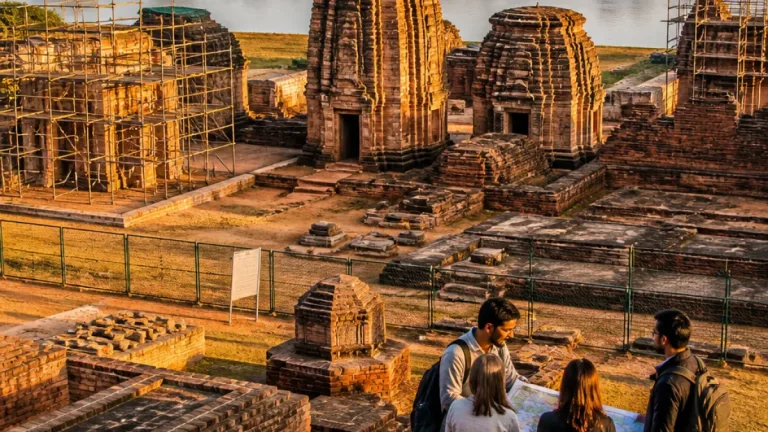
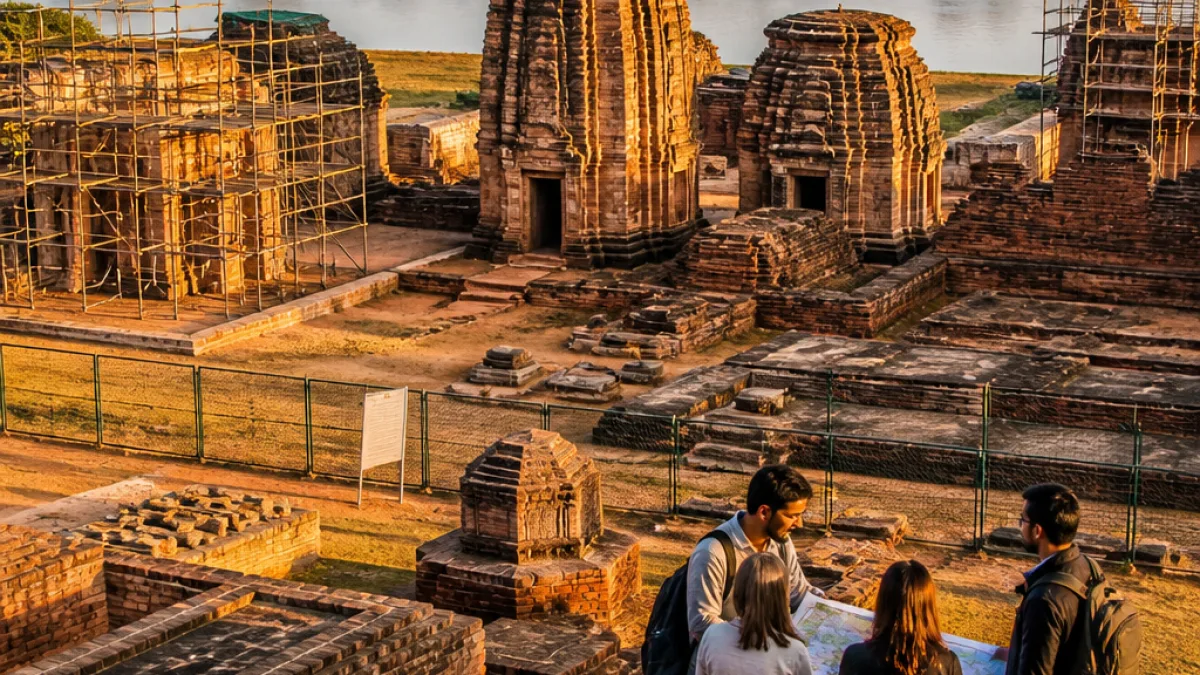
Sirpur, the archaeological landscape on the eastern banks of the Mahanadi in Mahasamund district, has been placed on UNESCO's Tentative List, bringing the 5th–12th century site a step closer to possible inscription as a World Heritage Site.
What the tentative listing means
Placement on the Tentative List is a formal preliminary stage required by UNESCO before a State Party can submit a full nomination dossier for World Heritage consideration. The Archaeological Survey of India (ASI) and the Special Area Development Authority (SADA), Sirpur now have one year to prepare and submit a detailed nomination dossier outlining Sirpur's Outstanding Universal Value (OUV), measures for conservation, buffer zones and management systems.
M Kalimuthu, Superintending Archaeologist of the ASI's Raipur circle, said the dossier will cover authenticity, integrity, justification of OUV, conservation plans and proposed buffer zones. He added that, after national technical review, the dossier would be forwarded to UNESCO's World Heritage Centre for evaluation.
"Sirpur has made it to the Tentative list of UNESCO. The development will help boost tourism at the site and put it on the global map,"
Dhammshil Ganvir, Chief Executive Officer of SADA, Sirpur, confirmed the development and highlighted its potential to raise Sirpur's profile among both domestic and international visitors.
Why Sirpur is significant
Sirpur is one of the uncommon archaeological landscapes in India where monuments of Hinduism, Buddhism and Jainism coexist within a single urban fabric. The site contains multiple categories of remains, including temples and monastic complexes:
- 22 Shiva temples
- Five Vaishnava temples
- 10 Buddhist viharas
- Three Jain viharas
The Lakshmana Temple, dedicated to Lord Vishnu and built in brick, is cited as one of the finest examples of brick temple architecture in India.
Process and next steps
Once the dossier is submitted by India, the World Heritage Centre may commission an advisory mission involving bodies such as ICOMOS (International Council on Monuments and Sites) and IUCN (International Union for Conservation of Nature) to assess the site in situ. Public engagement and stakeholder consultation are expected to be important components of the nomination process.
| Stage | Responsible | Key elements |
|---|---|---|
| Tentative List | State Party (India) | Formal entry on UNESCO list; site recognised as candidate |
| Dossier preparation (1 year) | ASI, SADA and state authorities | OUV justification, authenticity, integrity, buffer zones, management & conservation plans |
| Advisory mission & evaluation | UNESCO/ICOMOS/IUCN | On-site inspection, technical assessment |
| Decision | World Heritage Committee | Inscription or deferral/recommendation for further work |
Local impact and conservation challenges
Inclusion on the Tentative List can attract conservation funding, technical assistance and increased tourism, but it also raises practical considerations for local planning. Authorities will need to balance visitor management with preservation of archaeological fabric, define and regulate buffer zones to protect landscape context, and put in place long-term maintenance and monitoring.
Experts typically expect a nomination dossier to document threats and mitigation measures, from environmental factors such as erosion or river dynamics to human pressures including unregulated development and visitor impact. The ASI and SADA will be required to set out a management system that addresses these risks and details roles and responsibilities for conservation.
Public participation and stakeholder consultation
According to officials, public engagement will be an important part of strengthening the nomination. Stakeholder consultation commonly includes local government, religious communities connected to the monuments, tourism bodies, conservation professionals and residents whose livelihoods are linked to the site.
If the dossier meets technical requirements and is favourably evaluated, Sirpur could proceed to full World Heritage consideration by the World Heritage Committee. Meanwhile, SADA and ASI officials will work on the detailed documentation and conservation strategies required by the nomination process.
Location: Sirpur, eastern bank of the Mahanadi, Mahasamund district — about a two-hour drive from Raipur.