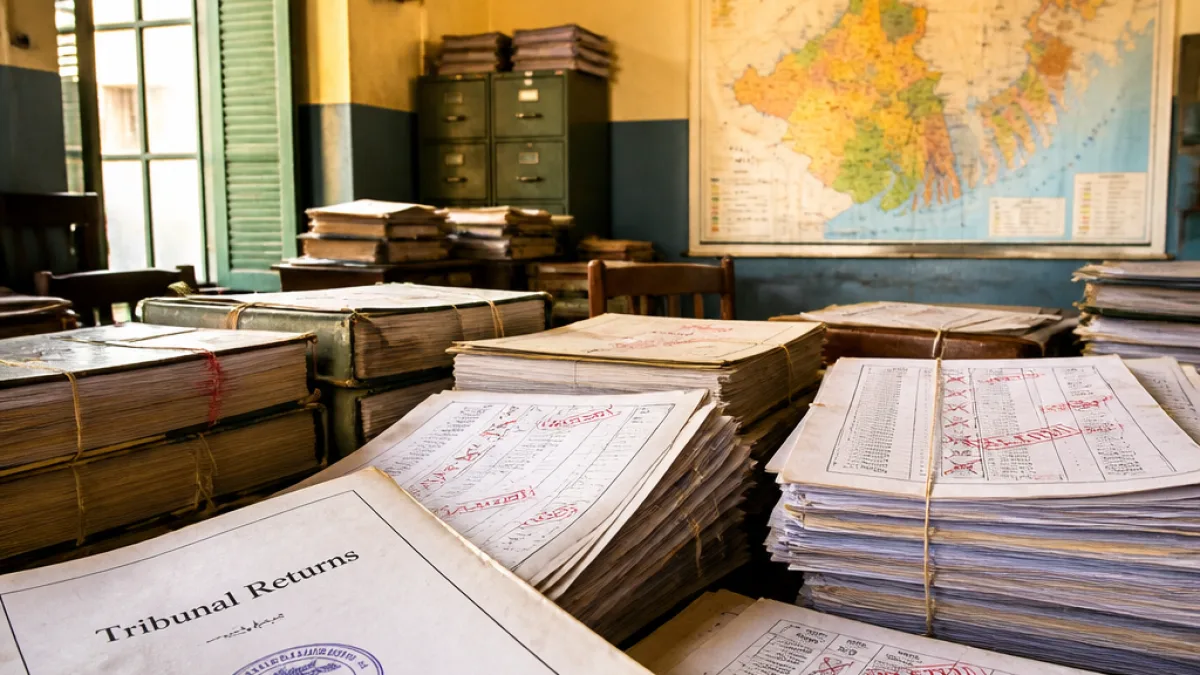
The first tranche of tribunal returns following the Supreme Court’s March 10, 2026 direction on Special Intensive Revision (SIR) of electoral rolls in West Bengal reveals a stark picture: a large majority of those struck off the rolls did not pursue the appellate remedy made available to them. The figures supplied to the apex court show that of the 27,16,393 electors marked not eligible by judicial officers during the SIR exercise, only about 7 lakh submitted appeals to the Appellate Tribunals set up under the court’s order.
Scale of removals and responses
The Election Commission’s adjudication return, presented 168 days after the creation of tribunals, categorised the outcomes of the SIR adjudication and ensuing appeals. According to the documents, 27,16,393 electors were adjudged not eligible and consequently removed from the electoral rolls; of these, roughly 7,00,000 filed appeals against their deletion. From that pool of appellants, only 75,443 have been recorded as restored so far.
That leaves a significant group — approximately 20,16,393 people, or about 74.23% of those removed by adjudication — who did not use the tribunal mechanism at all. The commission’s return does not dispute these broad divisions, and the Supreme Court has directed a category-wise account to be produced for further scrutiny.
The premise was that removal from the roll would not be final. A person wrongly struck off would have somewhere to go.
What the numbers mean
Legal practitioners and election analysts caution that the raw figures mask complex ground realities. The 75,443 restorations represent only 2.78% of everyone found not eligible and 10.78% of those who actually appealed. The bulk of appeals before the tribunals, however, were not solely restoration petitions. Many of the roughly 38 lakh matters listed before the tribunals consist of challenges lodged by the commission and private objectors seeking deletions of other electors.
Senior counsel appearing in the Supreme Court, as recorded in the return, informed the bench that of the approximately 38 lakh appeals pending before the tribunals, only about 7 lakh were filed by individuals seeking reinstatement. The remaining appeals were aimed at challenging other voters’ inclusion; the Election Commission did not contest these proportions and has been ordered to provide a detailed breakdown.
Local consequences and civic concerns
The SIR exercise and the subsequent pattern of tribunal appeals have immediate consequences for representation in West Bengal’s civic and electoral life. Removal from the rolls ahead of elections can disenfranchise citizens unless they are aware of and able to access remedial procedures. Rural districts such as Murshidabad — where the initial legal challenge that prompted the Supreme Court’s direction originated — exemplify the barriers voters may face in navigating bureaucratic and legal processes.
The public interest petition that set the process in motion was filed by Mostari Banu, a 44-year-old homemaker from Bhagwangola in Murshidabad, who challenged the ECI’s SIR on the premise that deletions should not be final and that an effective appellate remedy must be available. That argument formed the core of the Supreme Court’s order directing the creation of Appellate Tribunals in the state.
Numbers at a glance
| Category | Figure |
|---|---|
| Electors found not eligible (removed) | 27,16,393 |
| Appeals filed (approx.) | 7,00,000 |
| Electors restored after appeal | 75,443 |
| Removed electors who did not appeal | 20,16,393 |
Pending questions and next steps
The Supreme Court has sought a category-wise account from the commission, which could clarify how many appeals concern restoration versus objections to other electors, and whether procedural or informational gaps discouraged large numbers from approaching the tribunals. The returns as filed also raise questions about outreach, accessibility and the timelines within which affected electors were expected to act.
For many in West Bengal’s hinterland, practical hurdles such as distance to legal aid, limited awareness of appeal rights and the short window for filing could have contributed to the low rate of restoration petitions. The tribunal process and the court’s scrutiny will be watched closely by political parties, civil society and voter-rights groups as the state moves toward future elections.
- 27,16,393 electors removed by SIR adjudication.
- ~7,00,000 appeals filed before the tribunals; 75,443 restorations so far.
- About 20,16,393 removed electors did not approach the tribunals.
This developing record will be central to ongoing litigation and policy discussions about the conduct of electoral roll revision exercises and the safeguards necessary to protect every eligible voter’s franchise in West Bengal.