NASHIK
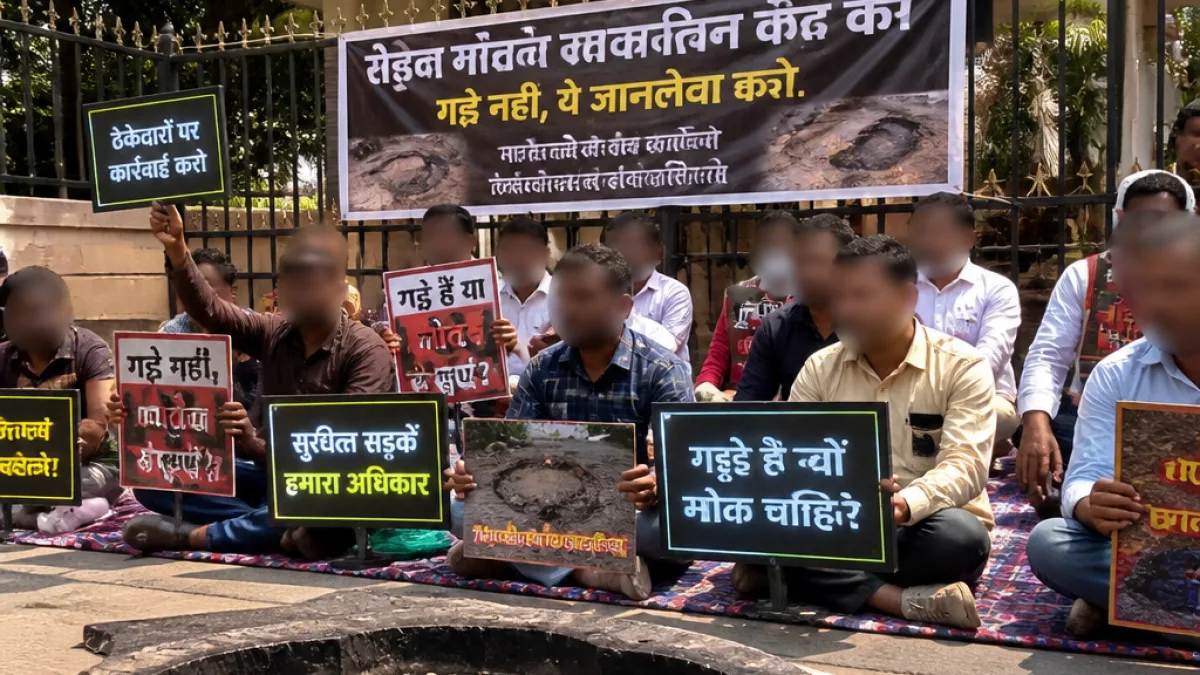
Members of the Nationalist Congress Party (Sharad Pawar) faction on Thursday staged a sit-in and hunger strike outside Rajiv Gandhi Bhavan, the headquarters of the Nashik Municipal Corporation (NMC), to protest the worsening condition of roads across the city and press for accountability from the civic administration, the Times of India reported.
The agitation, led by NCP (SP) city president Chhabu Nagare, saw party workers raising slogans against the NMC and the ruling Bharatiya Janata Party. Protesters carried placards highlighting pothole-related hazards and some wore digital display boards with messages targeting the civic body, the report said.
"Adopt durable repair technologies such as cold mix instead of temporary pothole filling with macadam and murum," Nagare demanded, according to the report.
Party activists alleged that despite substantial spending on road repairs, many stretches remain damaged and potholes continue to endanger motorists. They pointed to previous development claims made by Chief Minister Devendra Fadnavis, questioning why Nashik still lacks good roads years after the state said it had "adopted" the city, the Times of India noted.
The protesters set out a list of demands and grievances, asking the civic administration to provide clarity on past expenditure and to take immediate safety measures at excavation and repair sites:
- Issue a white paper detailing expenditure on road repairs and pothole filling over the past four years.
- Adopt durable road-repair technologies such as cold mix rather than temporary measures like macadam and murum.
- Install warning boards, reflectors and other safety measures at road excavation and repair locations.
- Take strict action against contractors and officials responsible for substandard work, including criminal action where warranted.
- Provide compensation of ₹20 lakh to families of victims allegedly killed in pothole-related accidents, alongside educational support and employment for eligible family members.
According to the report, Nagare alleged that poor-quality roads and potholes had contributed to serious accidents and claimed that seven citizens had lost their lives in such incidents. The protesters demanded compensation and other relief for the victims' families and sought legal action against those responsible for substandard works.
The NCP (SP) also questioned the status of promised infrastructure projects, including the proposed Nashik metro, and demanded transparency on why such projects had not translated into better road conditions, the report added.
| Issue | Demand |
|---|---|
| Road repair methods | Use cold mix; avoid temporary macadam/murum fixes |
| Financial transparency | White paper on four years of road expenditure |
| Safety at repair sites | Warning boards, reflectors and other measures |
| Accountability | Action against contractors/officials; criminal probe where required |
| Victim relief | Compensation of ₹20 lakh; education and jobs for families |
The sit-in and fast underscore mounting public frustration in Nashik over recurrent road damage, repair quality and municipal responsiveness. Local residents and motorists have long complained about potholes and unsafe stretches, especially during the monsoon when road surfaces deteriorate further. By demanding a white paper and stronger oversight, the NCP (SP) is pressing the NMC to explain its spending priorities and to adopt longer-lasting repair techniques rather than short-term fixes.
For Nashik's civic administration, the protest highlights two immediate challenges: ensuring commuter safety by improving on-site precautions at repair locations, and demonstrating transparent, effective use of funds to restore public confidence. How the NMC responds to the party's demands — including the call for criminal action and high-value compensation to bereaved families — will shape political and civic debate in the weeks ahead.