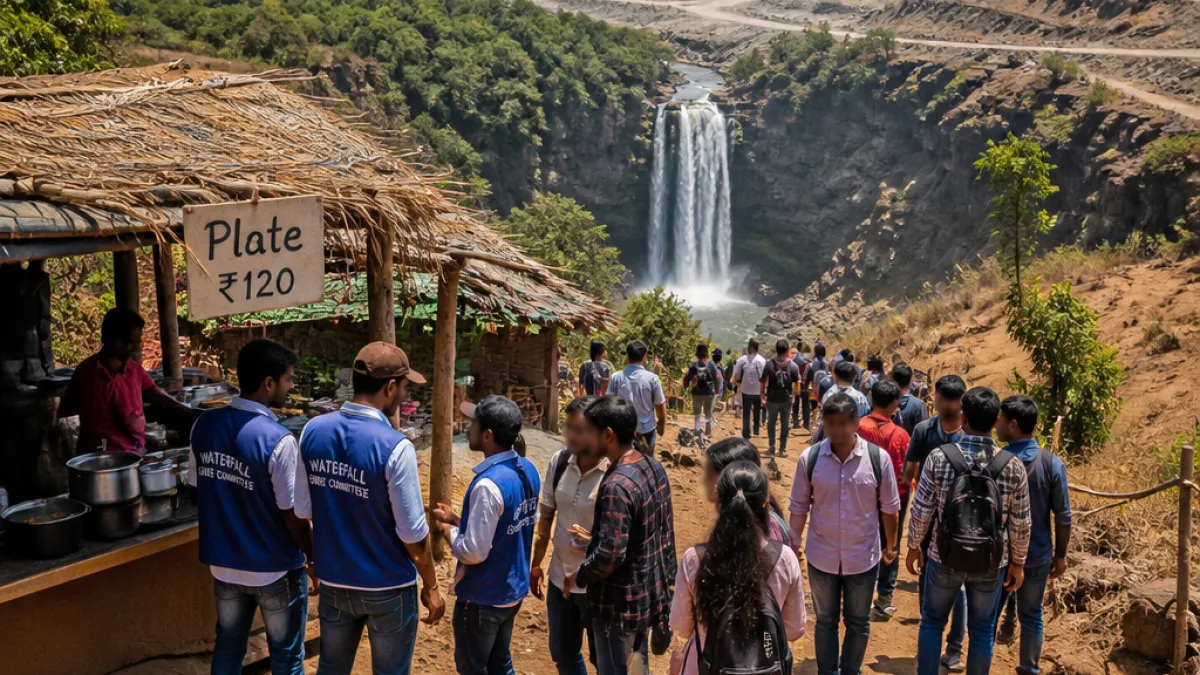
Bijapur, Chhattisgarh — The Nambi waterfall, long known locally as one of the highest cascades in Chhattisgarh, is attracting a growing number of visitors after years of restricted access during intense Naxal activity. Local young people have organised themselves into a committee to manage visitors, run a kitchen and provide guided services, generating fresh sources of income in the district.
Community-run services and rising footfall
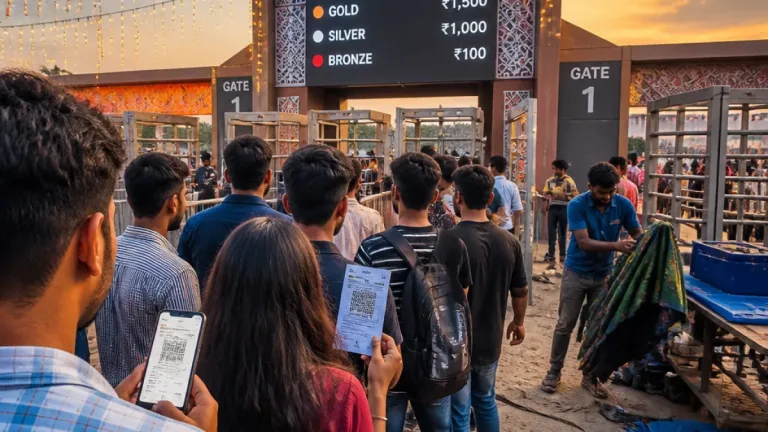
According to local accounts, the committee comprises 27 members who share responsibilities including guiding visitors, operating a makeshift kitchen and issuing entry tickets. The group reports combined earnings of more than ₹2 lakh in two months from these activities. Committee members say they have served over 2,000 tourists since July, a notable change from the period when people could not safely visit the area.
One of the committee leaders, Gajendra Kattam, described how tasks are divided and the services offered. The kitchen charges ₹120 per plate for food provided to guests.
“There are 27 people in our group. In our group, some work as visitors, some are assigned some to kitchen duties, and others are tasked with issuing of tickets... So far, over 2,000 tourists have visited the place since July,” Kattam said.
Infrastructure, security and visitor safety
Visitors and officials note improvements in basic access. Govardhan Sahu, a visiting tourist who is also the Tehsildar of Dantewada, said a proper road has been constructed, which has helped bring in tourists and prompted positive reactions.
At the same time, officials and locals emphasised safety concerns tied to residual hazards in the area. Sahu urged the development of small canteen or homestay options run by residents to broaden the local hospitality offering, and he recommended round-the-clock security escorts for visitors. He also cautioned that some routes remain affected by mining activity and recalled an incident in which a blast in a mining area resulted in one person being injured.
Local impact and opportunities
Locally organised tourism at Nambi provides immediate work opportunities for young people who act as guides, cooks and ticket managers. The committee’s reported income suggests a meaningful supplementary livelihood for participating families. The visible arrival of tourists may also stimulate further micro-enterprises such as homestays, local transport and souvenir sales if the flow continues.
At present, services are basic and largely run by villagers themselves. The committee’s model—simple, low-cost food and on-site guidance—has allowed them to monetise visits without large external investment. Residents and officials appear to favour gradual growth coupled with attention to safety and infrastructure.
What visitors should know
- Access: A proper road to the site has been reported to be in place, easing travel to the waterfall.
- Services: Village-run kitchen offers meals at ₹120 per plate; guided services are available through the local committee.
- Safety: Visitors are advised to seek security escorts and heed warnings about routes near mining activity; one blast-related injury in a mining area has been reported.
- Local economy: The committee says it earned over ₹2 lakh in two months and hosted more than 2,000 tourists since July.
| Parameter | Reported figure |
|---|---|
| Committee members | 27 |
| Income (two months) | More than ₹2 lakh |
| Tourists since July | Over 2,000 |
| Meal charge | ₹120 per plate |
The transformation of Nambi from a restricted area during insurgency to an emerging tourist spot underscores broader changes in parts of Bastar division where security and development measures have reduced the operational space for Naxal groups. While the reported numbers remain modest compared with established tourist destinations, they indicate a nascent local tourism economy taking shape.
Locally managed initiatives such as the Nambi committee highlight how community participation can translate improved access into livelihoods. Observers say sustained progress will depend on a combination of better infrastructure, predictable security arrangements and support for basic services such as food and accommodation run by residents.
For visitors planning a trip, officials recommend checking local advisories on safe routes and, where possible, coordinating with local authorities or the committee for guidance and escorted access.