Mumbai Aug 21: The Maharashtra Food and Drug Administration (FDA) has suspended the licences of seven Mumbai food establishments, including the Bombay Presidency Radio Club in Colaba and a McDonald’s kiosk at Metro House, Colaba, following a two‑day statewide inspection drive on August 19‑20, officials said.
Findings at inspected Mumbai outlets
FDA teams inspected a total of 89 hotels, restaurants and dhabas across Maharashtra during the drive, issuing improvement notices to 71 establishments and suspending the licences of 13 outlets statewide, the department said in an advisory shared with reporters and via photographs released to media.
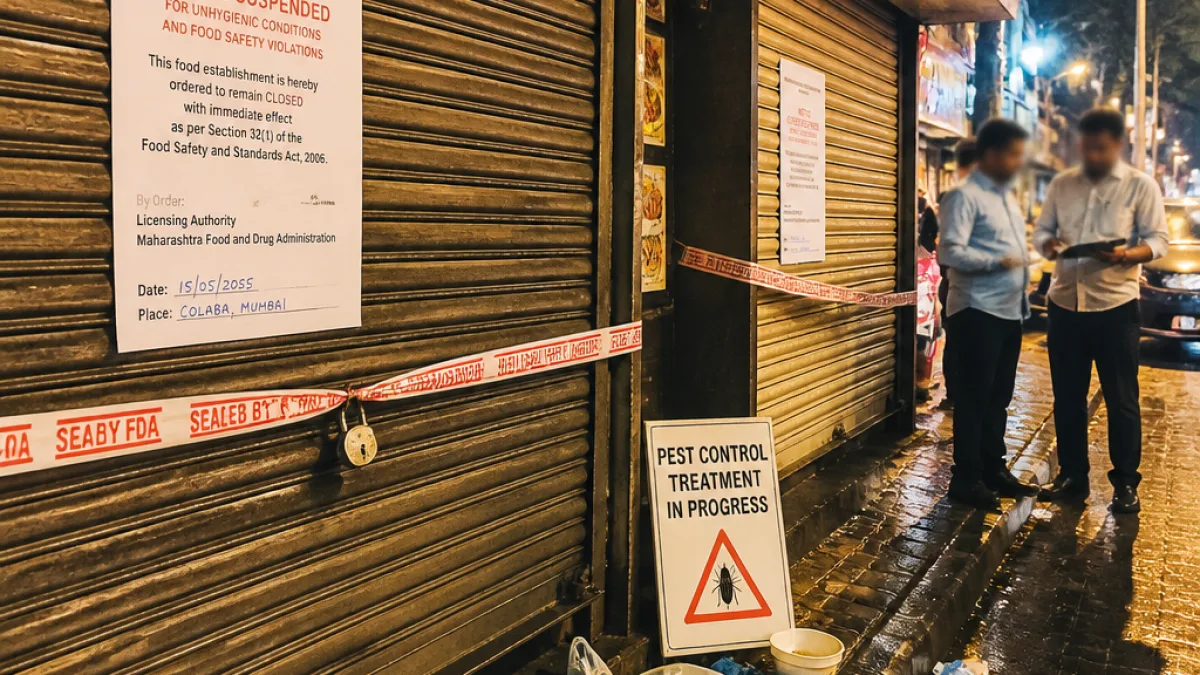
In Mumbai, the Radio Club’s kitchen was reported to have a large‑scale infestation of live flies, dead cockroaches and pest‑trap wrappers placed near the dishwashing area, the FDA said. Inspectors also flagged peeling paint and plaster over the food preparation zone, washing powder stored beside food items, utensils kept directly on the floor and staff helmets and clothing stored alongside food.
- Bombay Presidency Radio Club (Colaba): non‑compliance score 47%; licence suspended under Section 32(3) of the Food Safety and Standards Act, 2006.
- McDonald’s (Hardcastle Restaurants Pvt Ltd) kiosk, Metro House, Colaba: licence suspended after re‑inspection found 18 of 20 previously flagged deficiencies were unrectified, including uncalibrated refrigeration units and live cockroaches.
- Status Restaurant: inspectors reported heavy layers of oil and grease on equipment, rusted metal and food waste in areas photographed and documented by FDA teams.
The FDA alleged that the McDonald’s outlet had submitted a 148‑page compliance report on August 12 claiming all deficiencies were resolved. When re‑inspected on August 19, the department said the on‑ground conditions did not match the report and flagged the discrepancy as a potential offence under Section 61 of the Act, which deals with the submission of false information to authorities. The department also said the outlet was found to be using cheese‑analogue products.
“The compliance report submitted by the outlet did not match what inspectors found on the ground,” the FDA statement said, flagging that such discrepancies may constitute an offence under Section 61 of the Food Safety and Standards Act.
Scope of the inspection drive and immediate consequences
The statewide exercise was carried out on August 19 and 20. In Maharashtra, teams inspected 89 food service units; 71 were issued improvement notices, while licences of 13 establishments were suspended pending rectification and further action, the FDA reported.
| Metric | Number |
|---|---|
| Establishments inspected (Maharashtra) | 89 |
| Improvement notices issued | 71 |
| Licences suspended (statewide) | 13 |
In Mumbai, affected patrons and nearby businesses may face short‑term disruption as suspended outlets remain closed or operate under restrictions until corrective action is verified. Suspension under Section 32(3) of the Food Safety and Standards Act bars the establishment from selling food until conditions are addressed and re‑inspection confirms compliance.
FDA officials said the action forms part of ongoing regulatory surveillance aimed at protecting public health and ensuring adherence to food safety standards. The department has documented photographic evidence of hygiene breaches in several Mumbai outlets and placed these on record as part of the inspection reports, officials added.
Owners of the suspended outlets have been served notices and may be required to produce evidence of corrective measures when the FDA calls for re‑inspection. The department did not immediately provide the names of the other four Mumbai establishments whose licences were suspended beyond those listed in its advisory.
Local consumers in south Mumbai areas such as Colaba — frequented by tourists and office workers — may expect intensified inspections at other outlets as the FDA continues follow‑up checks. The department has the authority to initiate further penalties if non‑compliance or false reporting is established after investigation.
State and municipal health authorities routinely cite pest control, improper storage of cleaning agents near food, uncalibrated cold‑chain equipment and inadequate staff hygiene as recurring compliance issues in urban outlets; the latest action underlines continued enforcement against such lapses in Mumbai.