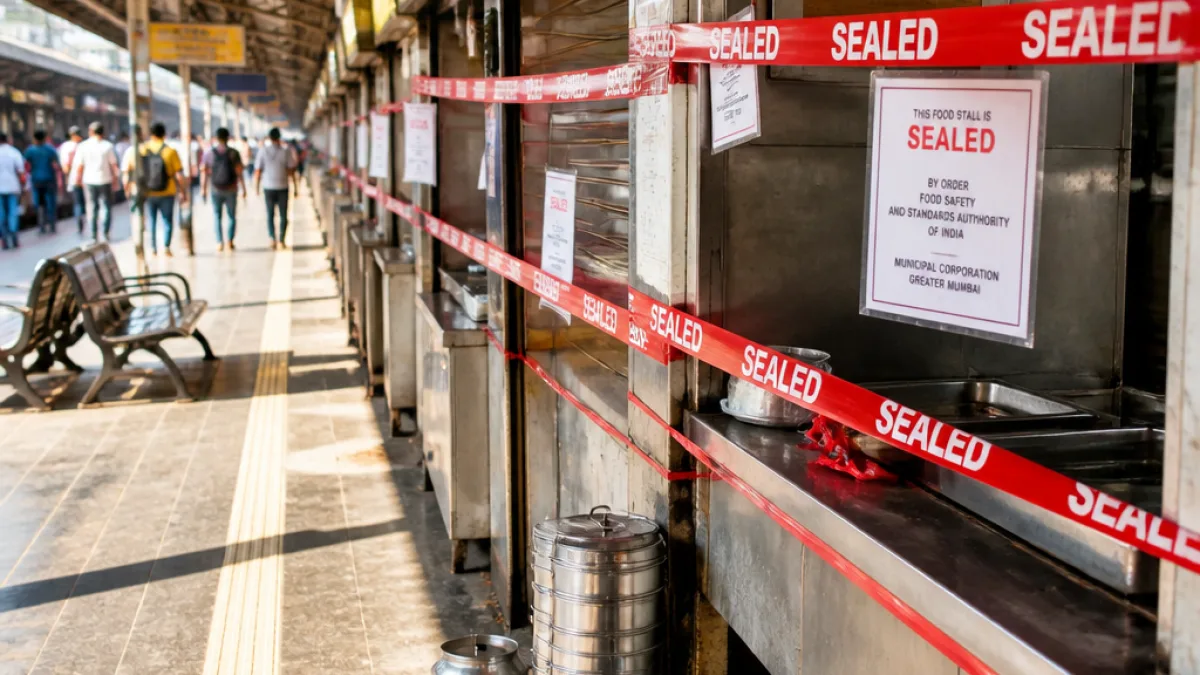
Mumbai: Railway food stalls sealed after hygiene, quality violations
Mumbai authorities have moved against unhygienic food operations at suburban railway stations, with the Food and Drug Administration (FDA), Mumbai, and Western Railway sealing 22 food stalls after inspections uncovered hygiene and food-quality deficiencies. Of the 22, 11 closures were at Bandra station, according to a report by Moneycontrol shared on professional networks.
The joint action follows routine and complaint-based checks at stalls operating on railway premises. The FDA and railway officials said the closures were prompted by violations of food safety and hygiene norms and substandard quality detected during inspections.
- Number of stalls closed: 22
- Bandra station: 11 stalls closed
- Enforcement agencies: Mumbai FDA and Western Railway
The closures are part of a wider drive to ensure safe food for the millions who use Mumbai's suburban train network daily. Station food outlets serve commuters across income groups and any lapse in hygiene can have rapid public-health consequences in a densely populated city like Mumbai.
"The FDA and Western Railway have shut 22 food stalls across Mumbai stations after hygiene and quality violations; Bandra accounted for 11 closures," the Moneycontrol post stated.
Officials did not, in the published report, list the names of the vendors or give a detailed inventory of the specific violations at each outlet. Neither were timelines for reopening nor the remedial steps required from stall operators specified in the item shared online.
Local impact and regulatory context
Mumbai's suburban rail system ferries lakhs of passengers every day; station vendors are both an amenity and a public-health risk if standards slip. The FDA enforces food safety under applicable laws and can order immediate closures where there is a risk to consumers. Western Railway controls licences for vendors operating on railway property and coordinates with civic agencies for enforcement.
Typical issues that prompt such action — though not enumerated in the report — include inadequate food storage, presence of pests, unhygienic preparation surfaces, lack of potable water, expired ingredients, improper waste disposal and non-compliance with licensing and labelling norms. Closure orders are generally followed by an opportunity for vendors to rectify deficiencies and reapply for licences subject to fresh inspection.
| Agency | Action |
|---|---|
| FDA, Mumbai | Conducted inspections; ordered closures |
| Western Railway | Co-ordinated enforcement on railway premises |
Commuters at Bandra and other affected stations may notice fewer food options in the short term. Vendors facing closure often cite loss of livelihood and supply-chain difficulties; however, food-safety authorities prioritise consumer protection, especially where large numbers of people are exposed.
What comes next
Moneycontrol's item shared on LinkedIn carried the summary of the action; the detailed enforcement orders, records of sampling (if any), and compliance notices will determine whether stalls can resume business and under what conditions. The FDA typically issues notices specifying lapses and required corrective actions; Western Railway would be expected to enforce licence and tenancy conditions for return to operation.
For regular users of Mumbai's suburban trains, the episode is a reminder that food safety on last-mile and station-level retail remains an ongoing concern. Passengers are advised to exercise caution and report visible hygiene problems to station authorities or the FDA helplines. Further official details on the specific stalls, violations and corrective timelines were not provided in the report.
— Maharashtra desk