New Delhi/Kolkata: Trinamool Congress MP Mahua Moitra has approached the Office of the United Nations High Commissioner for Human Rights (OHCHR), alleging that senior Muslim Indian Administrative Service (IAS) and Indian Police Service (IPS) officers in West Bengal were excluded from official functions held during Union Home Minister Amit Shah’s visits because of their faith.
Complaint lodged with UN special rapporteur
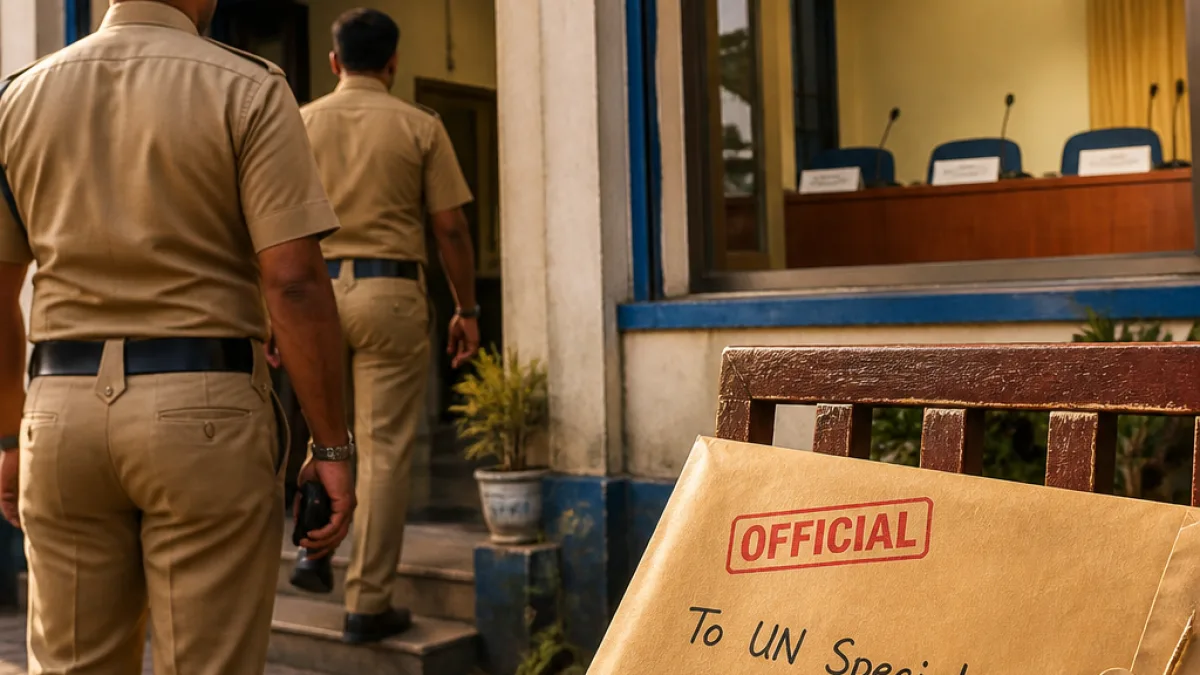
In a letter addressed to Prof Nicolas Levrat, the UN Special Rapporteur on Minority Issues, Moitra said three senior officers were either asked to leave or instructed not to attend official events on three separate occasions in July and August. She asserted that officers of other religions were permitted to remain at the same events.
"The one factor these three officers share, and the one factor that sets them apart from the colleagues who were permitted to remain, is their religion,"
Moitra named Siliguri Police Commissioner Waquar Raza, the West Bengal Police Special Task Force chief Jawed Shamim and a senior IAS officer Khalil Ahmed in the submission, and sought that the Special Rapporteur seek an explanation from the Government of India on the reasons and authority behind the alleged exclusions.
Records and evidence sought
The TMC MP requested preservation of CCTV footage, tour diaries and other records related to the Home Minister’s visits. In her communication she cited provisions of the Universal Declaration of Human Rights and the International Covenant on Civil and Political Rights, urging international scrutiny of what she described as a pattern of "deliberate exclusion" that could affect the confidence and security of minority communities.
According to reporting, Moitra had earlier raised the allegations on social media; subsequently a police complaint was filed against her and she was summoned to the Diamond Harbour Police Station.
Local implications and administrative context
If substantiated, the allegations would raise questions about protocols governing official events during visits by central ministers, the role of security and administrative officials in sequencing and participant lists, and the safeguards for non-discrimination of public servants. The complaint also brings into focus the relations between the state administration and the visiting central delegation in a politically charged environment.
Neither the Government of India nor West Bengal authorities are reported to have publicly responded to the letter at the time of reporting. The OHCHR was yet to acknowledge receipt or indicate any next steps publicly.
- Alleged incidents: Three separate occurrences during visits in July and August.
- Officials named: Waquar Raza, Jawed Shamim, Khalil Ahmed.
- Action sought: Explanation from central government; preservation of CCTV and tour records; international review under human-rights covenants.
Data snapshot
| Officer | Designation (as cited) | Allegation |
|---|---|---|
| Waquar Raza | Siliguri Police Commissioner | Asked to leave / not allowed to attend event |
| Jawed Shamim | West Bengal Police Special Task Force chief | Asked to leave / not allowed to attend event |
| Khalil Ahmed | Senior IAS officer | Asked to leave / not allowed to attend event |
Local political observers say such allegations, whether upheld or not, tend to sharpen communal discourse and can have administrative repercussions if enquiries find procedural lapses. The filing of a police complaint against the MP and her subsequent summons to a local police station add an immediate legal dimension to the matter.
The matter will test administrative transparency around high-profile visits and the mechanisms available to verify claims about access and participation at official functions. Preservation of CCTV footage and tour diaries — as sought in the letter — would provide documentary evidence should an independent probe be undertaken.
As this is a developing issue with potential legal and diplomatic ramifications, further statements from the Union Ministry of Home Affairs, the West Bengal government and the OHCHR may clarify next steps. For now, the dispute sits at the intersection of minority rights claims, administrative protocol and partisan politics in the state.