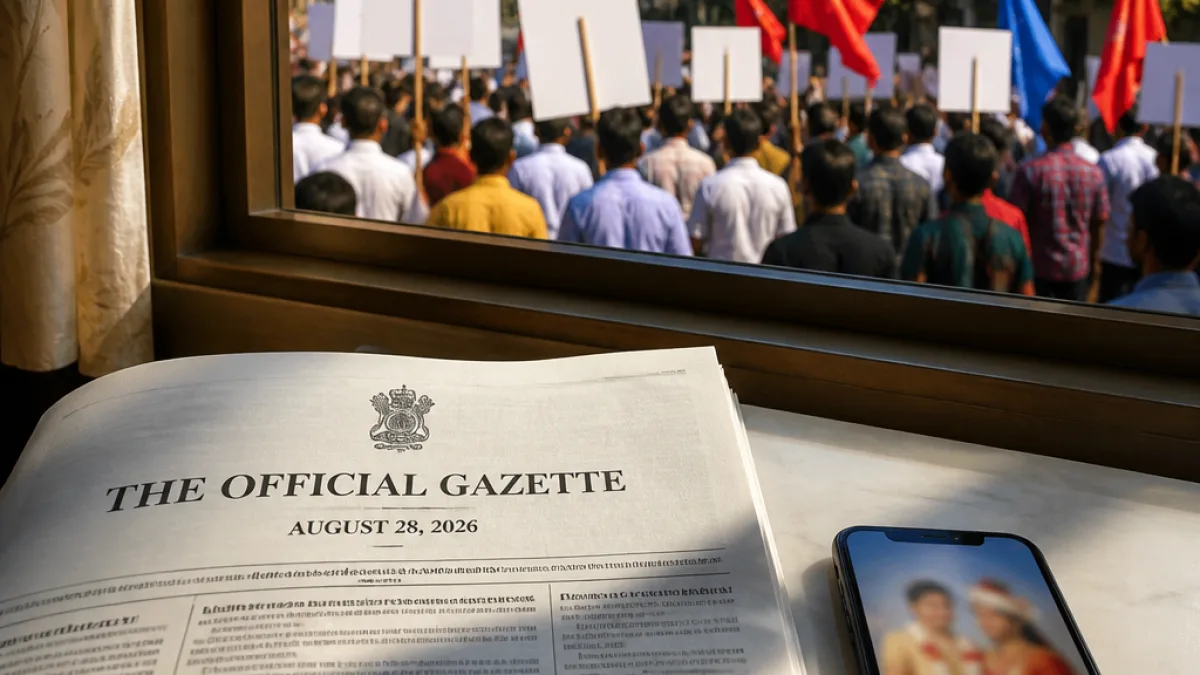
Mumbai, 18 August — The Maharashtra government has notified that the Maharashtra Freedom of Religion Act will be implemented across the state from 28 August 2026, the official gazette publication shows. The statute was introduced in the Assembly earlier this year with the stated objective of curbing conversions obtained through coercion, fraud, inducement or other unfair means.
Government rationale and political backing
The law was presented in the state Assembly as Legislative Assembly Bill No. 20 of 2026. Maharashtra Minister of State for Home Pankaj Bhoyar defended the measure in March, saying recent years had seen instances of forced religious conversions that disrupted public order and harmed social harmony. In the Assembly, he said he was introducing the bill to address those incidents.
Shiv Sena (UBT) chief Uddhav Thackeray also expressed support for the legislation. Speaking to reporters after reviewing the text, he said that while freedom of religion is a constitutional right, the party endorsed action where threats or coercion were used to force conversion.
"If someone uses threats to force conversion, action should be taken against them… We support the bill," said Uddhav Thackeray, according to reporting.
Chief Minister's clarification
Chief Minister Devendra Fadnavis has sought to allay fears that the law bans conversion itself. He said the measure does not prohibit conversion per se but is targeted at preventing conversions carried out through force and fraud, according to official statements reported when the bill was tabled.
Opposition and civil liberties concerns
The law has drawn sharp criticism from some national leaders. All India Majlis-e-Ittehadul Muslimeen chief Asaduddin Owaisi described the Maharashtra statute as more draconian than existing laws elsewhere and warned of serious implications for privacy and interfaith marriages.
"The Maharashtra anti-conversion bill is worse than the worst of such laws," Owaisi wrote on X, according to published reports.
Opponents argue that laws of this kind can criminalise genuine conversions, create legal hurdles for interfaith couples, and require administrative permissions or scrutiny that may infringe on individual autonomy. Supporters counter that the state must act when conversions are achieved by deceit or coercion and that public order could be affected otherwise.
What the notification does — and does not — say
The official gazette notification sets the date of implementation as 28 August 2026. It does not, in the notification itself, expand on operational details such as the investigative procedure, prescribed penalties, or the roles of police and district administrations in enforcement; those procedural elements are contained in the statute as passed in the Assembly.
Observers and legal experts who have commented publicly since the bill's introduction have focused on:
- How intent and voluntariness will be established in cases of alleged conversion.
- Whether and how the law will interact with personal laws and marriage processes.
- Safeguards for freedom of conscience and privacy rights under the Constitution.
Timeline
| Event | Date |
|---|---|
| Bill introduced in Assembly (Legislative Assembly Bill No. 20 of 2026) | 17 March 2026 |
| Gazette notification of implementation | 18 August 2026 |
| Act comes into force across Maharashtra | 28 August 2026 |
Practical impact and next steps
From a citizen perspective, the immediate practical consequences will depend on how the state enforces the law and what rules are framed for investigation and prosecution. The government has argued that the Act targets unlawful methods of conversion — force, fraud, allurement, marriage obtained by misrepresentation, undue influence or inducement — while critics warn that broad or vague definitions could produce overreach.
Legal practitioners and civil-society actors are likely to seek clarity on processes such as complaint registration, burden of proof, timeframes for inquiry, and appeal mechanisms. The controversy also suggests that challenges in courts are possible on grounds of constitutional rights, should cases arise under the new law.
With the statute set to come into force in ten days, political debate in Maharashtra is expected to intensify as parties, rights groups and faith-based organisations assess how the law will play out in practice.
Reporting from Mumbai.