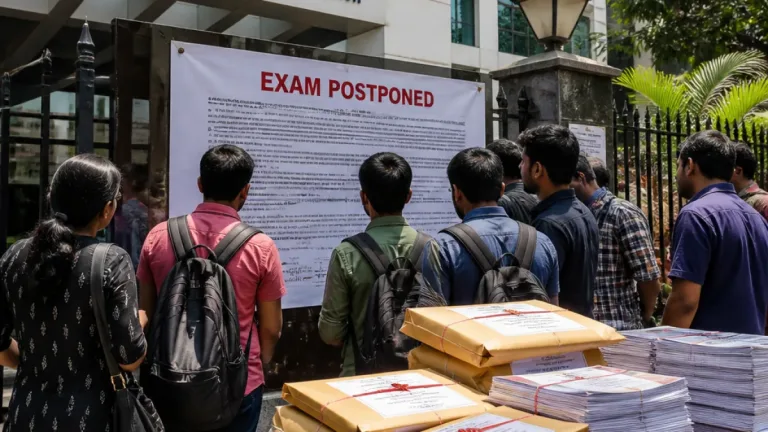
MUMBAI: The Maharashtra government on Wednesday announced the formation of a high‑level panel to propose reforms to the state's examination apparatus and study the Centre's recently enacted anti‑paper leak law, officials said. The move follows repeated instances of paper leaks and irregularities in recruitment and other important examinations across the state.
Panel, leadership and mandate
The committee will be chaired by Additional Chief Secretary, General Administration Department, V Radha, and include senior officials such as State Director General of Police Sadanand Date, Information Technology Secretary Virendra Singh, Animal Husbandry Secretary Dr N Ramaswamy and Nashik Divisional Commissioner Praveen Gedam, according to an official release issued after a meeting chaired by Chief Minister Devendra Fadnavis at his official residence, Varsha.
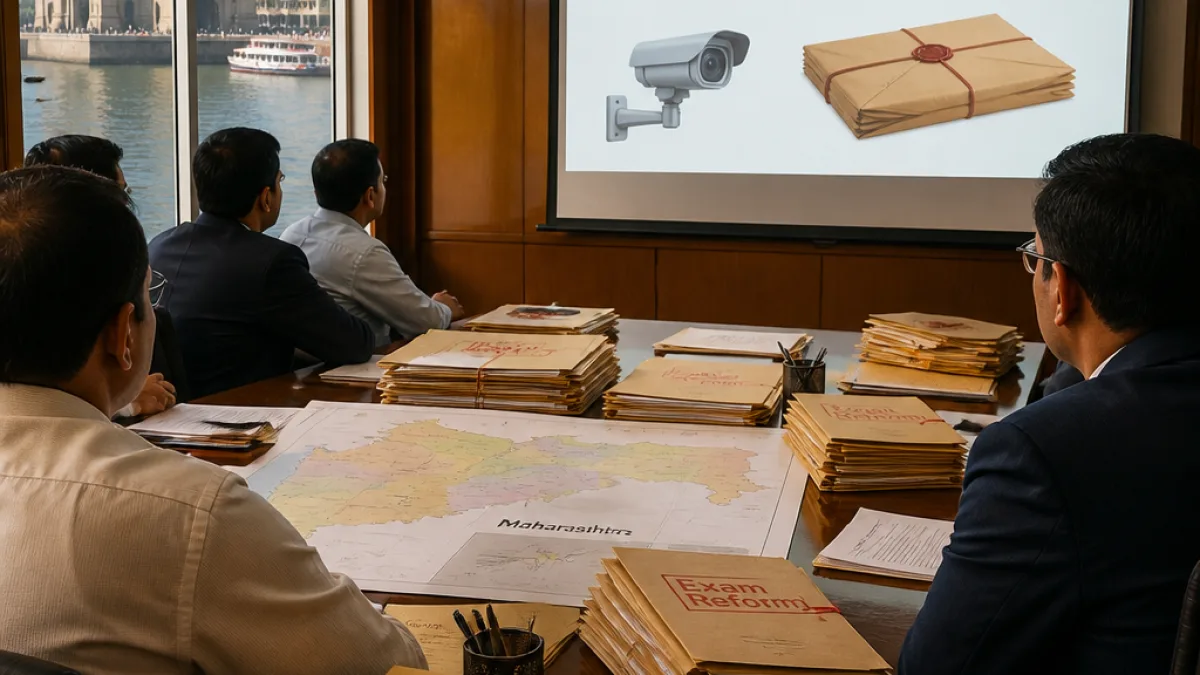
The panel has been tasked to travel to every revenue division in Maharashtra to interact with stakeholders — including students, owners of educational institutions and other concerned parties — and gather views that will shape a comprehensive state policy on examinations.
| Role | Name |
|---|---|
| Chair | V Radha (Addl Chief Secretary, GAD) |
| DGP | Sadanand Date |
| IT Secretary | Virendra Singh |
| Animal Husbandry Secretary | Dr N Ramaswamy |
| Divisional Commissioner | Praveen Gedam (Nashik) |
Centre’s law to be examined for state adoption
Officials said the panel will also study the Union government's anti‑paper leak legislation and laws in other states so that any measures recommended for Maharashtra are informed by national best practice. Though the state already has its own law addressing paper leaks, the chief minister directed authorities to complete, within the next fortnight, the process of extending the more stringent central legislation to the state, the release added.
"Complete, within the next fortnight, the process of extending the more stringent central legislation to the state." — official release after the meeting chaired by the Chief Minister
Secure infrastructure and logistics
Alongside legal changes, the government has directed creation of secure venues for examinations. The chief minister asked that at least 25,000 secure classrooms be established across Maharashtra to conduct recruitment examinations, a step aimed at reducing opportunities for malpractice during paper distribution and evaluation.
Officials said the panel's field visits are intended to map vulnerabilities in the current system — from printing and transport of question papers to on‑site invigilation and digital safeguards — and to solicit direct feedback from affected communities, particularly students and private and public examination bodies.
Political and administrative context
The order to form the panel was issued at a special meeting attended by Deputy Chief Ministers Eknath Shinde and Sunetra Ajit Pawar, both of whom made suggestions during deliberations, the statement said. Repeated paper leaks in recent years have triggered public outrage and multiple legal and administrative responses at both state and central levels.
By combining law, technology and infrastructure measures, the government is signalling a multi‑pronged approach: adopt tighter legislation, strengthen physical examination venues and deploy technology and policing to deter and detect leaks.
Next steps and timeline
The high‑level panel will submit recommendations that will form the basis of a comprehensive examination policy for Maharashtra. Officials have been given a tight timeframe to consider central legislation for state adoption, and the panel's outreach across revenue divisions is expected to conclude before formal policy drafting begins.
- Panel chair: V Radha (Additional Chief Secretary, GAD)
- Immediate directive: Complete process to extend central anti‑paper leak law within a fortnight
- Infrastructure target: Establish at least 25,000 secure classrooms for recruitment exams
The government's approach seeks to balance legislative change with practical safeguards on the ground. How quickly the panel can translate findings from divisional visits into enforceable policy, and whether state adoption of the central law will face legal or administrative hurdles, will determine the effectiveness of the measures against entrenched examination malpractices in Maharashtra.