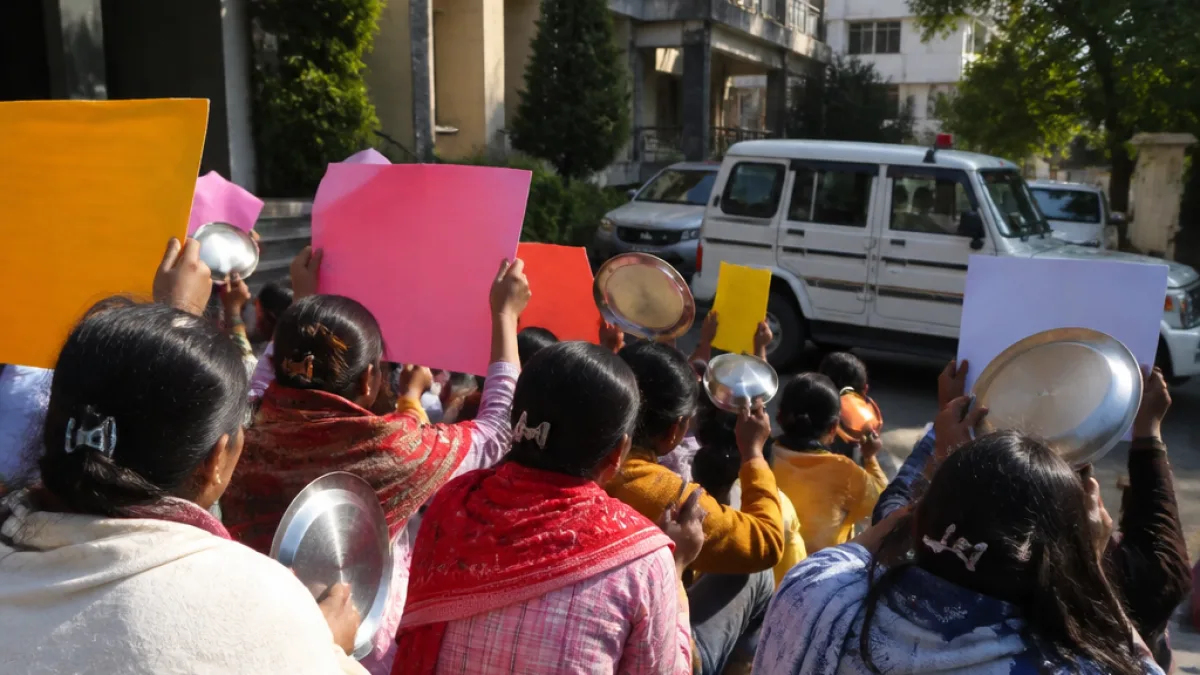
Pune: The Maharashtra government on Saturday accepted all demands put forward by tribal students who had been on a hunger strike for 17 days at the Manjari Hostel and other hostel premises, a senior state minister said.
Officials confirm acceptance, review within three months
Tribal Development Minister Ashok Uike said in Mumbai that Chief Minister Devendra Fadnavis had addressed the students' demands positively during a meeting and had given assurances on implementation. A review meeting to examine any hurdles in carrying out the decisions will be held in three months, Uike said.
“The government has accepted all demands presented by student representatives during a meeting with Chief Minister Devendra Fadnavis today,”
The students had been staging hunger protests at hostel premises in Pune, Nagpur and Nashik. Officials said representatives of the student body met the Chief Minister and secured agreement on the demands. Tribal leaders and the students acknowledged support from national and regional political figures during the agitation.
What changed: age-limit norm and more
One immediate outcome was the quick scrapping of an age-limit norm for admission to tribal students' hostels — a demand that had been highlighted publicly during an interaction between a tribal student and Leader of Opposition Rahul Gandhi at a recent event in Pune.
- All demands accepted: The state government has agreed to the package of demands presented by student representatives.
- Age-limit scrapped: The administration revoked the age-restriction rule for admissions to tribal hostels.
- Implementation review: A follow-up meeting has been scheduled for three months to sorts out any issues in execution.
Students thanked Mr Gandhi and NCP (SP) MLA Rohit Pawar for their public support, which student leaders said helped pressurise authorities to act. Tribal Development Minister Uike confirmed he would meet students and urge them to end the fast following the government assurances.
Background and local impact
The hunger strike began over grievances related to hostel admission rules and other undetailed welfare measures for tribal students. Protest sites included the Manjari Hostel near Pune and hostel premises in Nagpur and Nashik, signalling a multi-district mobilisation by tribal students in the state.
For affected students and families, the key immediate relief is removal of the age bar, which campaigners said had prevented eligible tribal youth from accessing hostel accommodation and welfare schemes. Officials did not provide a timeline for other items in the package; the three-month review is intended to iron out operational difficulties.
Next steps and monitoring
State authorities will need to formalise the decisions in administrative orders and notify the hostels and district tribal welfare offices about revised norms. The scheduled review meeting will be the main checkpoint for monitoring implementation and addressing on-ground obstacles flagged by local officers or student representatives.
| Issue | Action taken |
|---|---|
| Admission age-limit | Scrapped by the state government |
| Student protests | Hunger strike at Manjari Hostel and sites in Pune, Nagpur, Nashik |
| Follow-up | Review meeting scheduled in three months |
While the government’s acceptance of demands is a substantive step, the effectiveness will depend on how quickly district administrations and hostel authorities implement the changed rules and address related welfare measures. Student leaders have said they will assess the official measures during the review period before formally ending protest actions in all centres.
Officials and students are now expected to coordinate the logistics of ending the fast and to set out a timeline for notifications and enrolment calls at the affected hostels. The three-month review will be a key moment to judge whether the agreement translates into tangible benefits for tribal school and college-going youth across Maharashtra.
Reporting from Pune.