Mumbai, Aug 19: The Maharashtra government has notified snakebite as a notifiable disease, requiring all health facilities and registered medical practitioners to report suspected and confirmed bites as well as deaths, officials said on Tuesday. The move aims to bolster surveillance, ensure timely clinical response and improve planning for anti-snake venom (ASV) supplies across the state.
Why the change: a cluster in Gadchiroli
The decision follows a recent tragedy in Gadchiroli district, where three tribal schoolgirls died and three others were admitted to hospital after a venomous snakebit them at a state-aided residential school in Japtalai village on August 9. The state subsequently cancelled the school's licence, and the health department moved to tighten monitoring.
Health Minister Prakash Abitkar said the notification would make prevention and treatment of snakebites more systematic, prompt and effective, and would help in planning availability of ASV. The government intends to capture reliable, up-to-date data to guide resource allocation and public-health action.
New reporting structure and obligations
Under the notification, every hospital, medical college and private practitioner must report snakebite cases to the relevant district health officer or district surgeon. The rules specify that serious or fatal incidents be communicated immediately using available communication channels.
- Reporting channels include the Health Management Information System (HMIS), the Integrated Disease Surveillance Programme (IDSP) or any other government-specified reporting system.
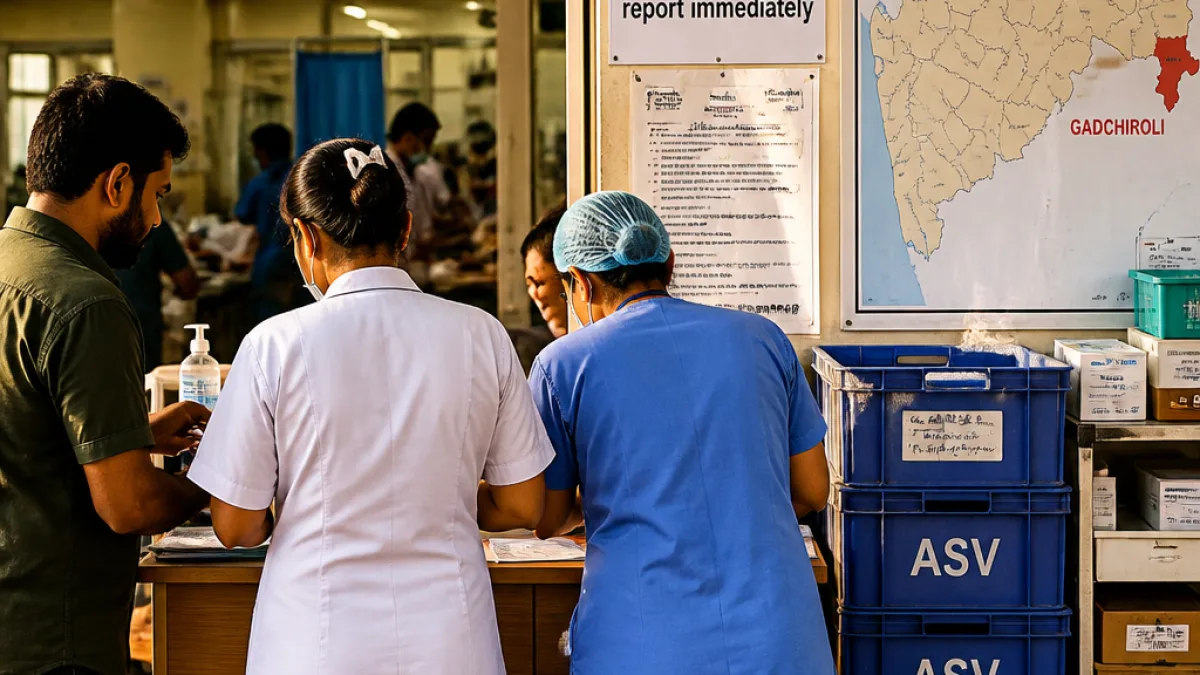
- Health facilities treating snakebite patients must maintain records of ASV received, used and currently in stock.
- Patient records must note date and place of the bite, age, gender, circumstances and symptoms of envenomation.
These data will be collated to produce an updated picture of snakebite incidence and outcomes, enabling district- and state-level authorities to deploy ASV and clinical support where needed.
Nodal mechanism from state to district
The notification sets up a nodal structure to co-ordinate prevention and control activities. At the state level, the director (hospitals) has been named to oversee implementation. At district level, the district surgeon and district health officer will act as nodal officers. In municipal corporation areas, the medical health officer or the additional medical health officer will be the designated nodal officer.
| Administrative Level | Designated Nodal Officer |
|---|---|
| State | Director (Hospitals) |
| District | District Surgeon / District Health Officer |
| Municipal Corporation Areas | Medical Health Officer / Additional Medical Health Officer |
Intended outcomes and operational details
Officials said mandatory reporting and stock records are intended to address two recurring problems: under-reporting of snakebite cases and uneven distribution of ASV. By linking case reports to stock data, authorities hope to ensure adequate availability of ASV in locations with higher incidence.
The government will use HMIS and IDSP platforms — existing surveillance systems — to register cases, which should reduce duplication and allow faster aggregation and analysis. Serious and fatal cases will be flagged immediately so that district health teams can respond to potential clusters.
Public-health experts and district administrators in rural districts such as Gadchiroli, Yavatmal and parts of Marathwada have long argued that snakebite burden is under-estimated because many cases are treated outside formal systems. The new order is expected to bring more bites into official statistics, informing training needs, stocking policies and community prevention efforts in high-risk talukas and tribal hamlets.
What this means for patients and clinicians
For clinicians, the change imposes a legal reporting duty and record-keeping requirement on ASV inventory. For patients and families, the measure aims to shorten delays in referral to centres with ASV and trained staff. Districts with recurring bites will be able to plan targeted awareness drives on prevention, first aid and early transport to health centres.
Implementation will depend on training of frontline staff in private and public sectors, timely data entry into HMIS/IDSP and robust supply-chain management for ASV. District health officers have been asked to operationalise the nodal arrangements and ensure communication channels are in place for immediate reporting of severe incidents.
Officials said further operational guidelines and standard reporting formats would be circulated to health facilities shortly.