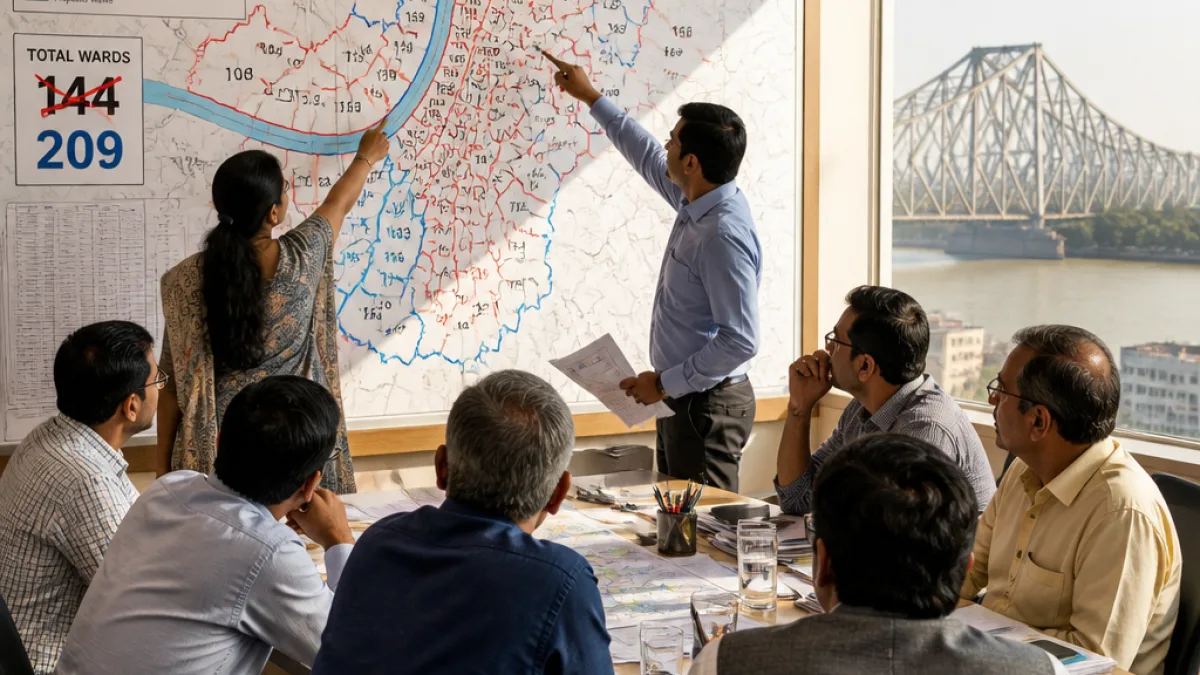
The West Bengal Assembly on Thursday cleared legislation that will substantially redraw civic boundaries in the twin cities of Kolkata and Howrah, increasing the number of municipal wards in Kolkata from 144 to 209 and in Howrah from 50 to 68. The move, the state government says, aims to create smaller wards with more uniform populations to improve the delivery of civic services.
Reasoning behind the delimitation
Presenting the bills, the state Minister for Urban Development and Municipal Affairs, Agnimitra Paul, argued that the reorganisation is based on population figures. The minister said the intention is to make wards roughly similar in the number of electors so that citizens receive services more quickly.
“We decided to increase the number of wards on the basis of population. Citizens will get better services,” said Agnimitra Paul, according to the Assembly record.
The Kolkata Municipal Corporation (KMC) began the exercise in mid-July to redraw the boundaries of the existing 144 wards. The new plan envisages wards that would each contain around 16,000–18,000 voters, a significant change from the current situation where population per ward varies widely.
Disparities that prompted the change
Officials have pointed to stark contrasts: while several wards now hold only 8,000–10,000 electors, others have swollen to 50,000–60,000 voters. The imbalance is acute in some pockets. For instance, Ward 66 — covering parts of Topsia, Tangra and Tiljala — is estimated to contain close to 80,000 voters, the Assembly record shows.
- Current KMC wards: 144
- Proposed KMC wards: 209
- Current HMC wards: 50
- Proposed HMC wards: 68
- Target electors per new ward: 16,000–18,000
Political context and timing
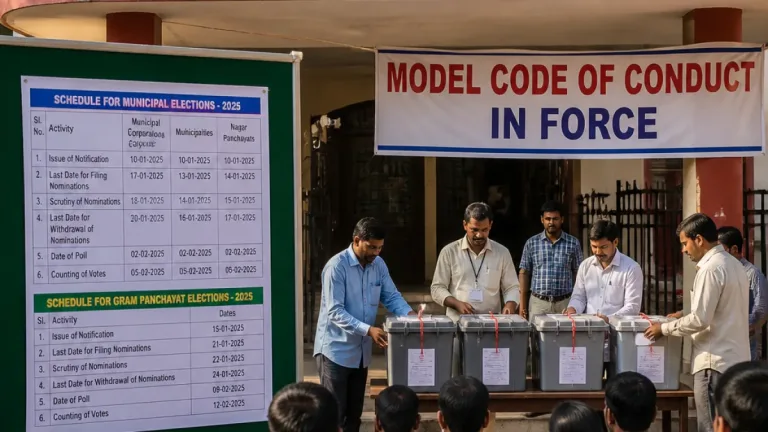
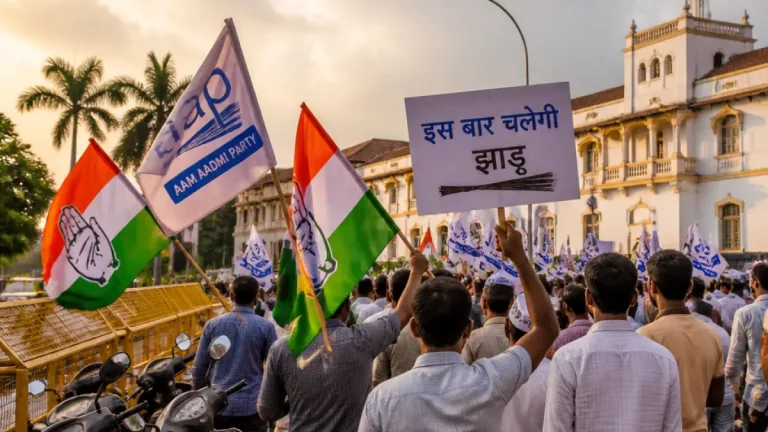
The delimitation comes months ahead of municipal elections in both cities, which are expected to be held later this year, likely in November or December. Political observers and leaders have linked the reorganisation to electoral strategy.
In the last KMC polls in 2021, the Bharatiya Janata Party (BJP) had won only three of the 144 wards, the Assembly record noted. However, since then the party has increased its foothold in the city and now holds seven of Kolkata’s 11 Assembly constituencies, including Bhabanipur, where the Chief Minister was defeated in April.
Some political figures have suggested the split in the ruling Trinamool Congress earlier this year and the delimitation exercise may influence the municipal contest — though the legislation’s stated objective remains administrative rationalisation.
| Metric | Before | After |
|---|---|---|
| Kolkata municipal wards | 144 | 209 |
| Howrah municipal wards | 50 | 68 |
| Approx. electors per new ward | Varies widely | 16,000–18,000 |
Implications for civic governance
Proponents of the change say smaller wards will allow councillors and municipal machinery to respond faster to local needs — from sanitation and drainage to street lighting and primary healthcare outreach. Critics, however, warn that the timing and manner of delimitation could carry political overtones in an already charged municipal environment.
The KMC official who discussed ward populations pointed to the urgency: some city wards currently manage electorates three to five times larger than the proposed standard, creating logistical and representative challenges.
With the Assembly having passed the bills, the next steps will involve detailed mapping, administrative notifications and electoral preparations ahead of the municipal polls later this year. How the new boundaries alter neighbourhood representation and party fortunes in Kolkata and across the Hooghly river in Howrah will be closely watched by political parties, civic activists and voters alike.
Reporting from Kolkata.