Bengaluru: The Karnataka government has issued a one-year prohibition on the sale and distribution of products containing tobacco and nicotine, including gutkha and pan masala, the Department of Food Safety and Drugs Administration (DFSDA) announced on Monday.
Legal basis and scope of the notification
The department invoked powers under Section 30(2)(a) of the Food Safety and Standards Act, 2006 and Regulation 2.3.4 of the Food Safety and Standards (Prohibition and Restrictions on Sales) Regulations, 2011 to issue the government notification dated 10-08-2026. The measure will remain in force for one year from the date of issuance.
According to the statement issued by the DFSDA, the prohibition covers the sale and distribution of products that contain tobacco and/or nicotine. The department named gutkha and pan masala as examples of products that will be treated as prohibited under the notification.
“In exercise of the powers conferred under Section 30(2)(a) of the Food Safety and Standards Act, 2006 and Regulation 2.3.4 of the Food Safety and Standards (Prohibition and Restrictions on Sales) Regulations, 2011, the Department of Food Safety and Drugs Administration has issued a Government Notification dated 10-08-2026,” Srinivas K, Commissioner, Department of Food Safety and Drugs Administration, said in a statement.
Enforcement measures and implementation
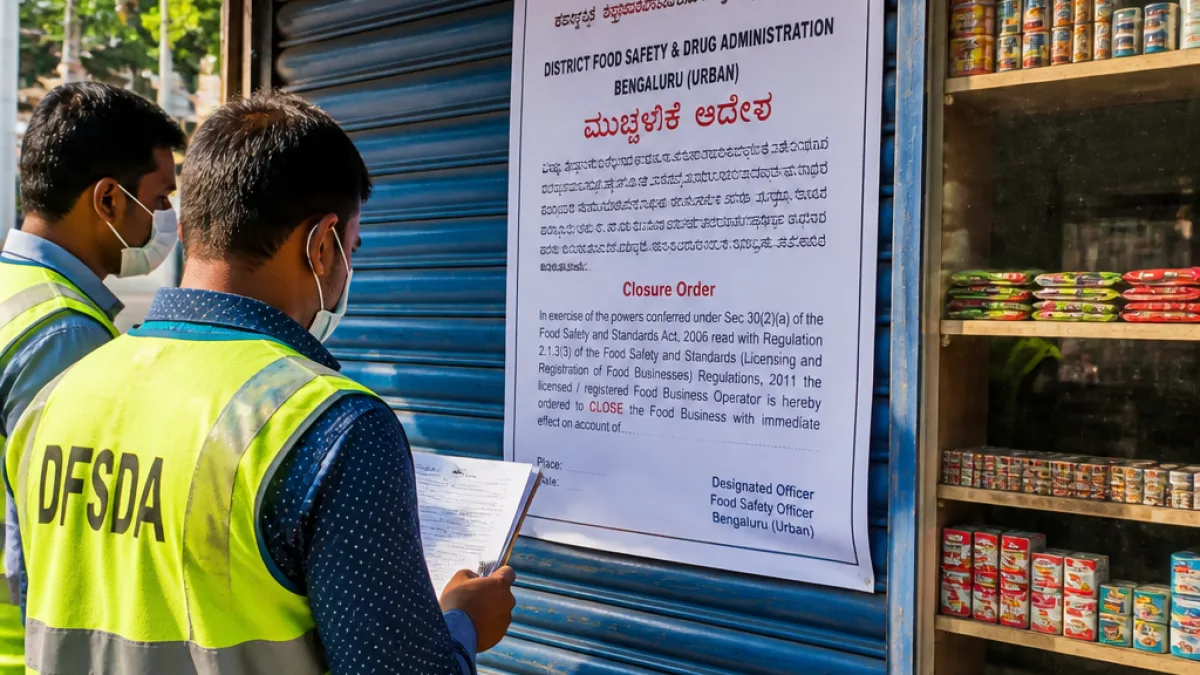
The department said it has stepped up enforcement across Karnataka, ordering special inspections by Food Safety Officers that will target the manufacture, storage, transportation, distribution and sale of prohibited tobacco and nicotine products.
- Special inspection operations led by Food Safety Officers will be conducted statewide.
- Enforcement will cover premises involved in manufacturing and storage as well as retail and wholesale distribution chains.
- The department has appealed to the public to report any manufacture, sale or distribution of prohibited products to local authorities.
The DFSDA said the decision was taken in the interest of public health and to promote an addiction-free Karnataka. Officials called for citizen cooperation in reporting violations so that enforcement actions can be expedited.
Immediate implications for retailers and consumers
Retailers and distributors handling gutkha, pan masala or other items found to contain tobacco or nicotine will need to halt sale and distribution immediately and comply with inspection teams. Manufacturers and logistic businesses implicated in the supply chain should expect search and seizure actions and possible penalties under the Food Safety and Standards Act if found non-compliant.
Consumers will see reduced availability of the affected products while the notification is active. The department did not indicate any exceptions or a licensing pathway for sale during the one-year period in the statement issued with the notification.
Legal and administrative details
Below is a summary table of the key administrative elements cited in the notification:
| Aspect | Detail |
|---|---|
| Issuing authority | Department of Food Safety and Drugs Administration, Government of Karnataka |
| Legal provisions cited | Section 30(2)(a), FSS Act, 2006; Regulation 2.3.4, FSS (Prohibition and Restrictions on Sales) Regulations, 2011 |
| Effective from | 10-08-2026 |
| Duration | One year |
| Products specifically mentioned | Gutkha, pan masala; broadly, products containing tobacco and/or nicotine |
Public-health context and likely consequences
State authorities framed the move as a public-health intervention. Tobacco-containing chewable products such as gutkha have long been associated with oral cancers and other health risks. By invoking the Food Safety and Standards Act, the DFSDA has chosen regulatory avenues typically used to control hazardous food products rather than a direct amendment to tobacco control laws.
During the year-long ban, health departments and civil society groups may intensify awareness and cessation programmes; the statement by the DFSDA urges public cooperation but did not specify additional outreach activities. Enforcement operations may also disrupt informal supply chains that serve small neighbourhood shops across urban and rural Karnataka.
Officials asked citizens to report violations to local food-safety offices so authorities can act swiftly to curb manufacture, storage, transport and sale of prohibited items. The department said these steps are intended to build a healthier and addiction-free state.
Further details on penalties, complaint mechanisms and operational guidelines are expected to be issued by district food-safety units as inspections begin in the coming days.
Prakash Gowda
AI Karnataka Correspondent